 ultimate-guide
Best Ways to Brew Loose Leaf Tea: A 2026 Guide
Table of Contents
- Why Loose Leaf Tea Beats Tea Bags
- Loose Leaf Tea Water Temperature Chart: A Complete Guide
- How Much Loose Leaf Tea Per Cup: Getting the Ratio Right
- Steeping Time for Green vs Black Tea: A Side-by-Side Comparison
- How to Brew Tea Without an Infuser: 4 Practical Methods
- Step-by-Step: The Best Ways to Brew Loose Leaf Tea
- Troubleshooting Common Brewing Mistakes
- Tasting Notes: How to Evaluate Your Brew
- Frequently Asked Questions
Last Updated: September 18, 2026
Why Loose Leaf Tea Beats Tea Bags
Loose leaf tea is whole or partially broken leaves that steep freely in water instead of a paper pouch. Unrestricted expansion releases more aroma, body, and flavor.
Loose Leaf Tea Water Temperature Chart: A Complete Guide
Water temperature is the biggest variable most people ignore: too hot turns delicate leaves bitter, too cool tastes thin.
Here is a working chart for common tea types:
| Tea Type | Water Temperature | Steep Time | Tea per 12 oz |
|---|---|---|---|
| Green tea | 160-180 F | 2-3 minutes | 2-3 g |
| Black tea | 195-212 F | 3-5 minutes | 2.5-3 g |
| Oolong | 185-205 F | 3-5 minutes | 2.5-3 g |
| White tea | 175-185 F | 4-5 minutes | 3 g |
| Herbal and rooibos | 212 F | 5-10 minutes | 3 g |
Why Temperature Matters More Than You Think
Heat controls how fast tannins and amino acids dissolve. Minimally oxidized green tea breaks down under a full boil; fully oxidized black tea can take the heat.
How to Hit Your Target Temperature Without a Variable Kettle
Most kitchens lack a temperature-controlled kettle. Reliable workarounds:
- Two-kettle blend. Mix one part cold water to three parts boiling for ~175 F; one part cold to four parts boiling for ~185 F.
- Rest-and-pour. After a full boil, wait 30 seconds for 200-205 F, 60-90 seconds for 190-195 F, and two to three minutes for 175-180 F. Verify with a thermometer the first few times.
- Ice-cube trick. Drop one ice cube in the mug before pouring boiling water over green or white tea.
- Instant-read thermometer. A basic digital probe costs less than most boxes of tea and removes all guesswork.
Temperature Adjustments by Leaf Style
Leaf style matters as much as tea type:
- Whole leaf tolerates the top of its range; intact structure slows extraction.
- Broken leaf extracts faster, drop 5 to 10 degrees and shorten the steep.
- Fannings and dust (most tea bags) extract almost instantly and go bitter fast.
- Pressed and rolled oolongs want the hottest end of their range to open, then a cooler second steep.
A Note on Water Quality
Temperature is only half the water story. Hard water, heavy in dissolved minerals, mutes aroma and can leave a film on the surface of the cup. Very soft or heavily filtered water can taste flat because it lacks the minerals that carry flavor. If your tap water tastes strongly of chlorine or minerals, a basic carbon filter is enough to fix it.
How Much Loose Leaf Tea Per Cup: Getting the Ratio Right
Start with one teaspoon of loose leaf per 8 ounces, or roughly 2.5 to 3 grams per 12-ounce mug, then adjust by taste. Leaf size changes the math: a teaspoon of fine broken leaf weighs more than whole, fluffy leaf, so weight beats volume. Use a scale if you have one; otherwise start with a teaspoon and taste.
- Whole leaf: 1 heaping teaspoon per 8 oz
- Broken leaf: 1 level teaspoon per 8 oz
- Herbal blends: 1.5 teaspoons per 8 oz for fuller body
- Multiple steepings: add 20% more leaf for the second and third pours
Steeping Time for Green vs Black Tea: A Side-by-Side Comparison
Steeping time for green vs black tea differs by roughly two minutes at the same temperature: green wants shorter, cooler, gentler; black rewards a longer, hotter pour that extracts malt and body.
Green Tea: Shorter, Cooler, Gentler
Green tea steeps best at 160-180 F for two to three minutes; past three minutes astringency climbs fast. Our Jasmine, a hand-picked green tea layered with fresh jasmine blossoms, is medium-bodied and holds up for multiple steepings at these temperatures.

Black Tea: Longer, Hotter, Bolder
Black tea wants 195-212 F for three to five minutes and stands up to milk and sugar. Our English Breakfast, a blend of African and Indian leaf, is strong enough for milk and sweet enough to drink alone.

How to Brew Tea Without an Infuser: 4 Practical Methods
You don't need special equipment to brew loose leaf tea, these four methods use tools already in most kitchens.
- Two-cup decanting. Steep leaves in a mug or pot, then pour through a fine mesh strainer into a second cup. Leaves get full room to expand, but you must pour the moment steeping is done or they keep extracting. Best for single servings.
- Tea ball or basket. Fill loosely, never packed tight. A rim-spanning basket beats a clamp-style ball, more surface area, easier to rinse, and wide enough for wet leaf to roughly double in size.
- French press. Add leaves, pour water over, press gently after steeping, and decant promptly. The mesh catches small pieces and the glass shows the leaf opening. A 32-ounce press brews two to three mugs.
- Saucepan and strainer. Simmer water and leaves, then strain. Best for herbals and Masala Chai, which benefit from sustained heat. Keep heat low; a hard boil drives off aromatics and can scorch the leaf.
Matching the Method to the Tea
- Delicate green and white teas do best with decanting or a wide basket, where you control the pour.
- Rolled oolongs need room to unfurl across steeps, basket or French press beats a small ball.
- Herbals and chai tolerate the saucepan; their flavors are robust and heat-stable.
- Iced tea is easiest in a French press or large jar, strained and chilled. Cold brewing overnight is the lowest-effort path to a smooth glass.
Capacity Math: How Much Leaf Fits
A brewing vessel should hold at least four times the volume of the dry leaf, since whole leaf expands dramatically when wet.
- A 2-inch tea ball holds about one teaspoon of whole leaf; more and the leaf can't open.
- A rim-spanning basket holds two to three teaspoons, enough for a 12-ounce mug.
- A 32-ounce French press handles 8 to 10 grams, roughly three mugs.
Cleaning and Maintenance
Old leaf oils go stale and carry into the next cup.
- Rinse metal and mesh infusers with hot water immediately; a soft brush clears holes without bending them.
- Skip the dishwasher for fine mesh, which can warp and loosen the weave.
- Weekly, soak a stained infuser in baking soda and warm water to lift tannin buildup.
- In hard-water areas, descale glass and ceramic teapots with a diluted white vinegar rinse.
Troubleshooting the Brew
If the cup isn't right, fix one variable at a time.
- Bitter, drying: Lower temperature 10-15 degrees and cut steep time by a minute.
- Weak, watery: Add half a teaspoon of leaf before increasing time, more leaf adds flavor, more time adds astringency.
- Cloudy: Fine particles through a coarse strainer; switch to finer mesh.
- Flat aroma: Check storage, tea absorbs odors and moisture, so keep it airtight, away from light and spices.
- Residue: Rinse your strainer between steeps; old residue carries stale oils.
Step-by-Step: The Best Ways to Brew Loose Leaf Tea
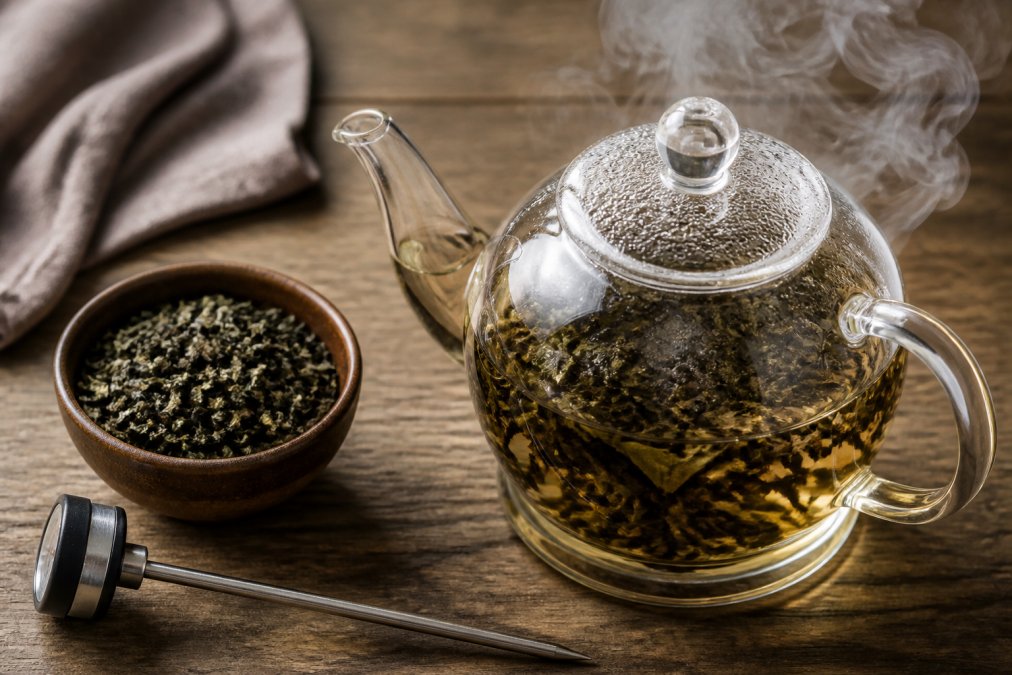
The best ways to brew loose leaf tea come down to two methods: Western-style for a hot cup and cold brewing for iced tea. Both reward attention to temperature and time.
Method 1: Western-Style Brewing
Total time: 6-8 minutes. Difficulty: Beginner.
- Heat fresh water to your tea type's temperature; use filtered water if tap tastes strongly of minerals.
- Measure 2.5 to 3 grams (about one teaspoon) into your vessel.
- Pour water over the leaves and start a timer.
- Steep 2 to 5 minutes; taste at the low end and extend if needed.
- Decant or remove the infuser, leaves left in water keep extracting tannins and turn the cup harsh.
Expected result: A clear, aromatic cup with body and no harsh edge. Our Earl Grey, a Ceylon black tea with bergamot oil and cornflowers, brews at 195 F for 5 to 10 minutes.

Method 2: Cold Brewing for Iced Tea
Cold brewing trades speed for smoothness: 3 grams of leaf per 12 ounces of cold water, refrigerated 8 to 12 hours, then strained. The long, cool infusion pulls sweetness and aroma while leaving bitterness behind.
Troubleshooting Common Brewing Mistakes
Bitterness almost always traces back to one of four causes: water too hot, steep too long, too much leaf, or leaves left sitting in the cup. Fix the cause and the flavor follows.
- Bitter, drying cup: Lower the water temperature by 10 to 15 degrees and cut steep time by a minute.
- Weak, watery cup: Increase leaf by half a teaspoon before you increase time. More leaf adds flavor; more time adds astringency.
- Cloudy brew: Usually fine particles from broken leaf passing through a coarse strainer. Switch to a finer mesh.
- Flat aroma: Check your storage. Tea absorbs odors and moisture, so keep it in an airtight container away from light and spices.
- Residue in the cup: Rinse your strainer between steeps. Old leaf residue carries stale oils into the next pour.
Tasting Notes: How to Evaluate Your Brew
Evaluating a brew trains your palate faster than any gadget. Slurp a small amount so it hits your whole tongue, then note four things: aroma, body, astringency, and finish. Astringency, the drying sensation on the sides of your mouth, should feel brisk, not harsh. A good finish fades cleanly instead of turning sour.
Frequently Asked Questions
What are common mistakes when brewing loose leaf tea?
The most common mistakes are using water that is too hot, steeping for too long, and not measuring the tea correctly. Water above 195 F can scorch green and white teas, making them bitter. Steeping black tea beyond 5 minutes releases excess tannins, which creates a harsh, astringent cup. Also, using too little tea leaves results in a weak, flavorless brew. Always follow the recommended water temperature and steeping time for your specific tea type.
Can I brew loose leaf tea without an infuser?
Yes. You can brew loose leaf tea without an infuser by using a French press, a tea strainer, or a simple two-cup method. Add leaves directly to your brewing vessel, pour hot water over them, and after steeping, pour the tea through a fine mesh strainer into another cup. For a cleaner cup, let the leaves settle at the bottom before decanting. This method works well for large-leaf teas like Earl Grey or English Breakfast.
How much loose leaf tea for 1 cup of tea?
For a standard 8-ounce cup, use about 1 teaspoon of loose leaf tea. However, this varies by tea type. For dense teas like Matcha or fine green teas, use 1/2 to 1 teaspoon. For large-leaf teas like Jasmine or Moroccan Mint, use 1.5 to 2 teaspoons. A digital scale is more accurate: use 2.5 grams per 12 ounces of water for most black teas, or 3 grams for herbal blends like Hibiscus Berry Tea.
Does water temperature matter for different types of tea?
Yes, water temperature is critical. Green and white teas need cooler water, around 160-180 F, to avoid bitterness. Black and oolong teas require hotter water, 195-212 F, to fully extract flavor. Herbal teas like Apple Cider Rooibos need a full boil at 212 F. Using the wrong temperature can make tea taste flat or harsh. A loose leaf tea water temperature chart is a helpful tool to keep on hand.