 listicle
What Is the Best Coffee Roast for French Press?
Last Updated: October 29, 2026
Quick Summary
The best coffee roast for French press is a medium-dark to dark roast, because immersion brewing extracts slowly and rewards beans with body, sweetness, and low acidity. If unsure where to start, start with medium-dark, which stays sweet rather than ashy across a range of steep times.
- A French press steeps grounds for four minutes, and the metal mesh filter lets flavor-carrying oils into the cup.
- Medium-dark roast delivers caramel and brown sugar notes with full body and high forgiveness across steep times.
- Dark roast is most forgiving on body but least forgiving on bitterness, turning ashy if over-steeped or ground too fine.
- A light roast needs a finer grind and a steep closer to five minutes, yet still tastes thin in a French press.
- Use a coarse grind like coarse sea salt, about 60 grams of coffee to 900 milliliters of water, and steep four minutes.
Table of Contents
- Why Roast Level Decides Your French Press Cup
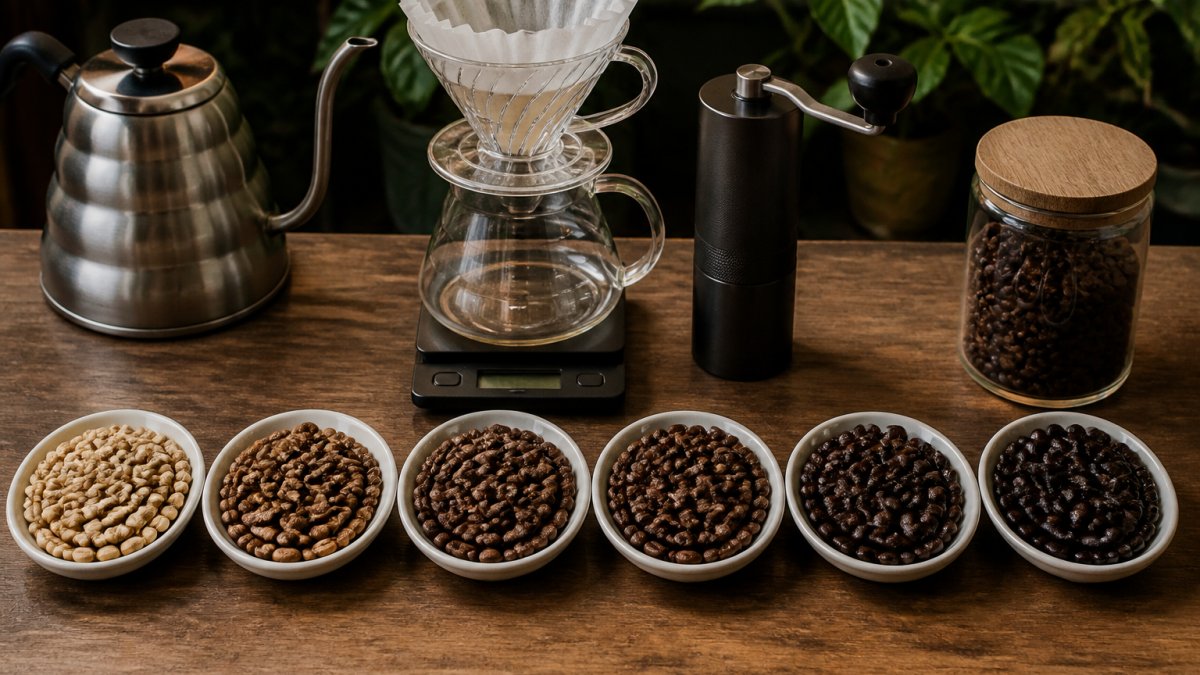
- Light vs Medium vs Dark: Roast Comparison for French Press
- Best Coffee Beans for French Press: 7 Roasts Worth Brewing
- French Press Coffee Grind Size: Why Coarse Wins
- The Best Coffee-to-Water Ratio for French Press
- French Press Coffee Brewing Time: How Long to Steep
- Troubleshooting Weak, Bitter, or Muddy French Press Coffee
- Freshness, Roast Date, and Storage That Protect Flavor
- Frequently Asked Questions
Why Roast Level Decides Your French Press Cup
The best coffee roast for French press is a medium-dark to dark roast, because immersion brewing extracts slowly and rewards beans with body, sweetness, and low acidity.
The French press is an immersion brewer: grounds sit in hot water for four minutes, then a metal mesh filter lets oils and fine particles through. Those oils carry flavor and bitterness. Too light a roast leaves the cup thin and sharp; too dark and over-extracted turns muddy and ashy. The sweet spot is middle-to-dark, where caramelized sugars give the brew weight.
Below, we break down how each roast behaves, which of our roasts we would brew first, and the grind, ratio, and timing that make the difference.
Light vs Medium vs Dark: Roast Comparison for French Press
Most guides say use a dark roast and move on. That is directionally right but incomplete: roast level changes how fast a bean extracts, how much body it delivers, and how forgiving it is when grind or steep time drifts.
How Roast Level Changes Extraction in a French Press
Roasting makes beans more porous, so water reaches soluble compounds faster. In a French press, where grounds sit submerged for four minutes, that faster extraction is usually an advantage: sweetness and body arrive before bitterness.
Second mechanism: oils. A paper filter strips most oils out; a French press does not (The cholesterol-raising factor from coffee beans).
Side-by-Side Roast Comparison
| Roast Level | Flavor in French Press | Body | Acidity | Forgiveness | Best For | Watch Out |
|---|---|---|---|---|---|---|
| Light | Fruity, floral, tea-like, citrus | Thin | High | Low, easy to under-extract | Pour-over drinkers experimenting | Can taste sour or watery after four minutes |
| Medium | Balanced, nutty, cocoa, caramel | Medium | Medium | Medium, forgiving but can go flat | Everyday drinking, guests | Needs a slightly finer grind to avoid flatness |
| Medium-dark | Caramel, brown sugar, cocoa, molasses | Full | Medium-low | High, steady across a range of steep times | Most French press drinkers | Can turn bitter if you push past five minutes |
| Dark | Smoky, bittersweet, dark chocolate, ashy edge | Heavy | Low | High on body, low on bitterness control | Black coffee and milk drinkers | Bitter or ashy if over-steeped or ground too fine |
What Each Roast Tastes Like in the Cup
Light roast. You taste origin first: berry, citrus, stone fruit, floral notes. In a French press that brightness has less body to balance it, so the cup feels sharp and sometimes sour.
Medium roast. Enough sweetness to round off acidity, enough structure to feel like coffee rather than tea.
Dark roast. Maximum body and the classic French press experience: heavy, bittersweet, cocoa-driven.
A Decision Guide by Flavor Preference
Use your taste preference, not a generic recommendation, to pick a roast:
- Fruity, bright, tea-like: light roast, expect a thinner cup, and grind finer to compensate.
- Chocolatey, nutty, balanced: medium or medium-dark roast. Medium-dark gives more body; medium gives more clarity.
- Caramel, brown sugar, dessert-like: medium-dark roast.
Roast Level vs Grind and Steep Time
Roast and grind are not independent. A dark roast is more porous, extracts faster, and tolerates a slightly coarser grind. A medium roast needs a touch finer grind to pull out enough sweetness in four minutes.
The same logic applies to steep time. Four minutes is standard for medium-dark and dark roasts; medium roasts can go four to four and a half minutes; light roasts need closer to five but still taste thin in this brewer.
Best Coffee Beans for French Press: 7 Roasts Worth Brewing
Our picks below lean medium to dark, because that is where a French press shines. Every bag is $23.99.
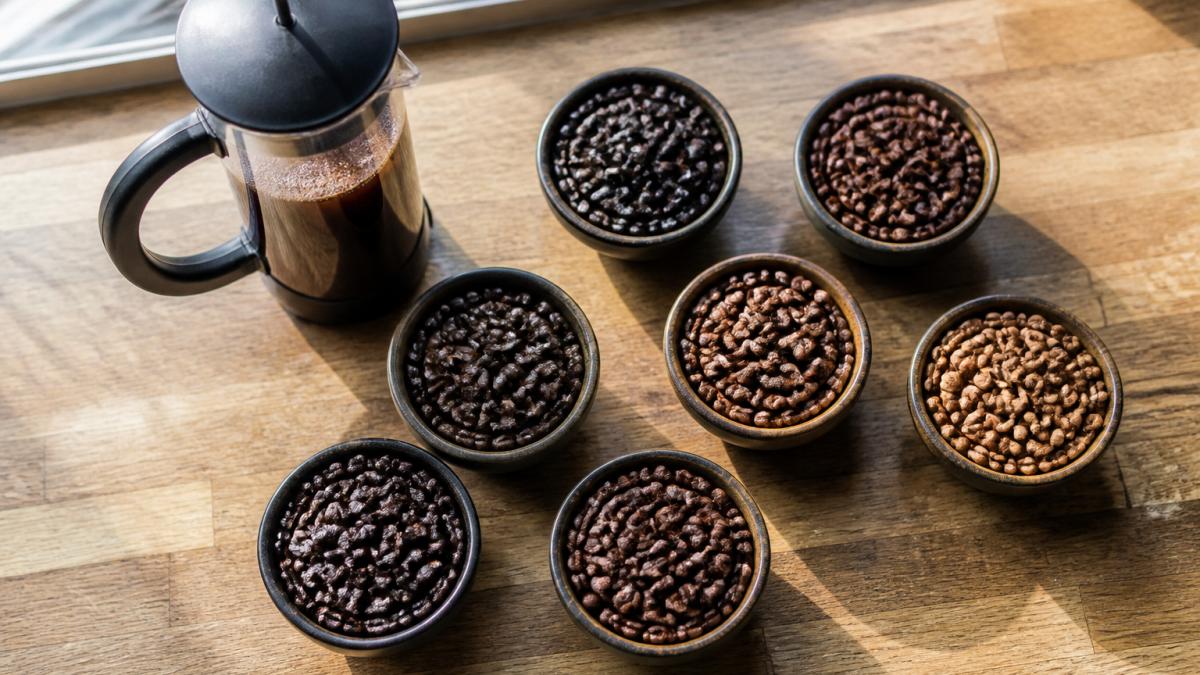
French Roast: The Bold, Smoky Standard
If you want the classic French press experience, start here. Our French Roast is a dark roast built for body, with the smoky, bittersweet edge that stands up to a four-minute steep.
Best for: black coffee drinkers who want a heavy, bold cup. Skip if: you prefer bright, fruity notes.
You can shop the French Roast.

Sumatra: Earthy and Syrupy
Sumatra is the roast for anyone who wants texture. Its cupping notes run to dark chocolate, dried fruit, and a long, syrupy body with medium acidity.
This is a single-origin coffee from the Aceh region, processed by wet-hulling.
Best for: drinkers who like earthy, low-acid, full-bodied coffee. Skip if: you want a clean, bright cup.
Order Sumatra if that profile sounds like your morning.

Bali Blue: Molasses and Dark Chocolate
Bali Blue is a medium-dark roast with dark chocolate, molasses, and brown sugar notes. It threads the needle between the brightness of a medium roast and the depth of a dark one, which makes it one of the most versatile French press options we offer.
The molasses sweetness pairs well with a medium-dark roast.
Best for: drinkers who want sweetness and depth without smoke. Skip if: you want maximum boldness.
Brew Bali Blue and taste the difference a medium-dark roast makes.

Honduras: Caramel and Brown Sugar
Honduras is a medium-dark roast with caramel, spice, and brown sugar notes, grown by a cooperative of smallholder farmers in Marcala. The caramel sweetness gives a French press cup a rounded, almost dessert-like quality without added sugar.
Best for: caramel and brown sugar lovers. Skip if: you want a sharp, high-acidity cup.
Try Honduras for a smoother, sweeter French press.
Cowboy Blend: Cocoa, Caramel, and Vanilla
Cowboy Blend combines dark and medium roasted coffees for cocoa, caramel, and vanilla tones. The blend approach gives it a rounded cocoa, caramel, and vanilla flavor.
Best for: drinkers who want a crowd-pleasing, dessert-leaning cup. Skip if: you want a single-origin, terroir-driven coffee.
Pick up Cowboy Blend for a French press that tastes like a treat.
Guatemala and Brazil Santos: Medium Roasts with Range
Guatemala is a medium roast with dark chocolate, bright fruit, and butterscotch notes. Brazil Santos is a medium roast with an elegant, smooth cup and cocoa notes.
Guatemala suits drinkers who want a little fruit alongside the chocolate.
Best for: drinkers who want balance and a touch of brightness. Skip if: you want maximum body.
House Blend and Breakfast Blend: Everyday Smoothness
House Blend is a medium roast with nutty, sweet chocolate, and mild citrus notes, blended for consistency. Breakfast Blend is a smooth medium roast from South American coffees. Neither is a bold French press roast, but both are reliable, easy-drinking options for a daily cup.
Best for: everyday drinking and guests who prefer milder coffee. Skip if: you want a bold, heavy cup.
French Press Coffee Grind Size: Why Coarse Wins
Coarse grind is the correct grind size for a French press. Aim for the texture of coarse sea salt, with visible chunks rather than powder.
Here is what most guides get wrong: they say grind coarse and stop there. The grind has to match the roast.
Grind fresh, right before brewing.
The Best Coffee-to-Water Ratio for French Press
The best coffee-to-water ratio for French press is about 1:15 by weight, or roughly 1 part coffee to 15 parts water. For a standard 34-ounce press, that means about 60 grams of coffee to 900 milliliters of water.
Ratios are personal, so treat this as a starting point:
- 1:12 for a strong, heavy cup
- 1:15 for a balanced everyday cup
- 1:17 for a lighter, tea-like cup
Use a scale if you have one. Scoops vary wildly, and a ratio you can repeat is a ratio you can adjust.
French Press Coffee Brewing Time: How Long to Steep
French press coffee brewing time is four minutes for a standard medium-dark or dark roast. Pour water just off the boil, around 200°F, over the grounds, stir once, and let it steep.
At four minutes, a dark roast gives body and sweetness without the ashy edge of over-steeping. A medium roast can go four to four and a half minutes for a little more extraction. Light roasts need closer to five minutes but still tend to taste thin in this brewer.
Press the plunger slowly and pour immediately. Leaving the coffee sitting on the grounds keeps extracting and turns the cup bitter.
Troubleshooting Weak, Bitter, or Muddy French Press Coffee
Weak, bitter, or muddy French press coffee almost always traces back to grind, ratio, or steep time.
- Weak or watery: grind finer, add more coffee, or steep longer. A light roast in a French press is the usual culprit.
- Bitter or ashy: grind coarser, steep less, or use a slightly cooler water temperature. Dark roasts over-extract easily.
- Muddy or gritty: your grind is too fine, or your filter mesh is worn. Coarsen the grind and rinse the press before brewing.
Watch out: plunging too fast forces fine particles through the mesh and into your cup, which is the fastest way to get a muddy brew even with a good grind.
Freshness, Roast Date, and Storage That Protect Flavor
Freshness matters more in a French press than in almost any other brewer, because the metal mesh lets the coffee's oils straight into the cup. Those oils carry the aroma and mouthfeel that make a press cup taste rich, and they are the first thing to fade.
Why Roast Date Beats Best-By Date
Look for a roast date on the bag, which tells you when the coffee was actually roasted. Coffee is generally considered at its best in the first few weeks after roasting.
Degassing: The Window Most Guides Skip
Freshly roasted coffee releases carbon dioxide for a period after roasting, which can change how it brews. Some drinkers let a bag rest for a few days after the roast date before brewing. If your coffee tastes sharp or gassy right after delivery, give it a few days.
How to Store Beans for a French Press
Storing beans whole generally helps them hold flavor longer than pre-ground coffee, because less surface area is exposed to oxygen. Grind right before you brew, within minutes, not hours.
A few practical rules:
- Buy in amounts you will finish while the coffee is fresh. Coffee that sits for a long time loses flavor regardless of storage.
- Keep the bag sealed. Limiting exposure to air helps preserve freshness.
- Do not store beans in the freezer unless the bag is truly airtight. Moisture and freezer odors migrate into the beans.
A Simple Freshness Checklist
Before you brew, check three things: the roast date on the bag, whether the beans still smell sweet rather than flat, and whether you are grinding right before brewing. If all three pass, the roast level you chose has a fair chance to show up in the cup. If any fail, fix freshness before changing grind, ratio, or steep time, those variables cannot rescue stale coffee.
Frequently Asked Questions
Is medium or dark roast better for French press?
Both work, but they produce different cups. Medium roasts keep more of the bean's origin character, so you get brighter fruit and cocoa notes with moderate body. Dark roasts push toward chocolate, caramel, and smoky tones with a heavier, syrupy mouthfeel that many French press drinkers prefer. If you like bold and rich, go dark. If you want complexity and acidity, go medium. A medium-dark option like Bali Blue splits the difference.
Can you use light roast coffee in a French press?
Yes, but light roasts need attention. They are denser and less soluble, so a standard four-minute steep can leave the cup thin and sharp. Grind slightly finer than usual, use water just off the boil around 200 to 205 degrees Fahrenheit, and extend the steep to five minutes. Done right, a light roast in a French press delivers fruity, tea-like flavors you will not get from a dark roast.
Should French press coffee be coarse ground?
Coarse ground is the standard for French press coffee grind size because the metal mesh filter lets fine particles through. A coarse grind, roughly the texture of sea salt, keeps the sludge out of your cup and slows extraction during the four-minute steep. If your coffee tastes muddy or gritty, grind coarser. If it tastes weak despite correct ratios, grind one notch finer.
What is the best coffee-to-water ratio for French press?
Start with 1:15, meaning one gram of coffee for every 15 grams of water. For a standard 34-ounce French press, that is about 60 grams of coffee to 900 grams of water. Want a stronger cup? Move to 1:12. Want it lighter? Try 1:17. Weigh your coffee rather than scooping it, since scoop size varies wildly and throws off the best coffee-to-water ratio for French press brewing.
What is the difference between French roast and coffee brewed in a French press?
They are unrelated. French roast describes a dark roast level where beans are roasted until oily and smoky. A French press is a brewing device that steeps coarse grounds in hot water and filters them with a metal mesh. You can brew any roast in a French press, and French roast beans can be brewed any way. The shared word is coincidence, not a rule.
The French press rewards a little attention: the right roast, a coarse grind, a repeatable ratio, and a four-minute steep. Get those right and the cup changes completely. If you are ready to brew a roast built for body and sweetness, explore theITDGroup LLC's freshly roasted coffee, where every batch is roasted to order and shipped close to the roast date. Get started with theITDGroup LLC and find the roast that makes your French press the best part of your morning.