 ultimate-guide
Is Small Batch Coffee Actually Better? A 2026 Guide
Table of Contents
- What 'Small Batch' Actually Means in Coffee Roasting
- The Benefits of Small Batch Roasting: Control, Consistency, and Freshness
- Small Batch vs Commercial Coffee: What Changes at Scale
- What Are Single Origin Coffee Beans, and Why Pair Them With Small Batch?
- How to Evaluate Small Batch Coffee Quality Yourself
- The Economics: Is Small Batch Coffee Worth the Premium?
- Conclusion: When Small Batch Coffee Is Actually Better
- Frequently Asked Questions
Last Updated: September 23, 2026
What 'Small Batch' Actually Means in Coffee Roasting
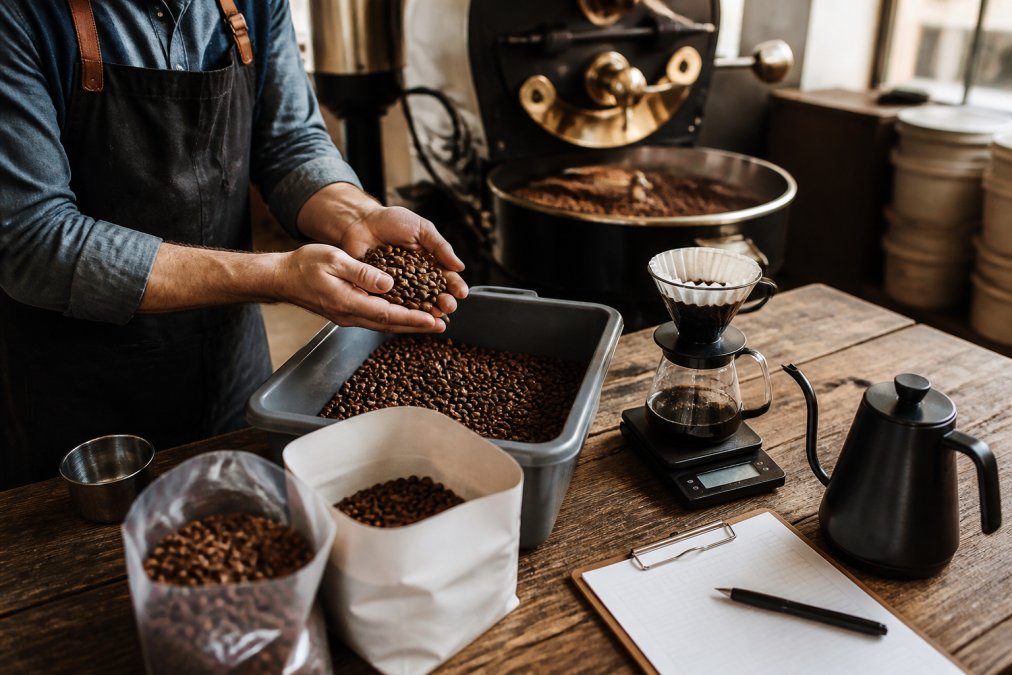
Small batch coffee is coffee roasted in limited quantities, typically on drums holding 5 to 30 kilograms, rather than the hundreds of kilograms handled by industrial roasters. The smaller volume gives the roastmaster closer control over every variable that shapes flavor.
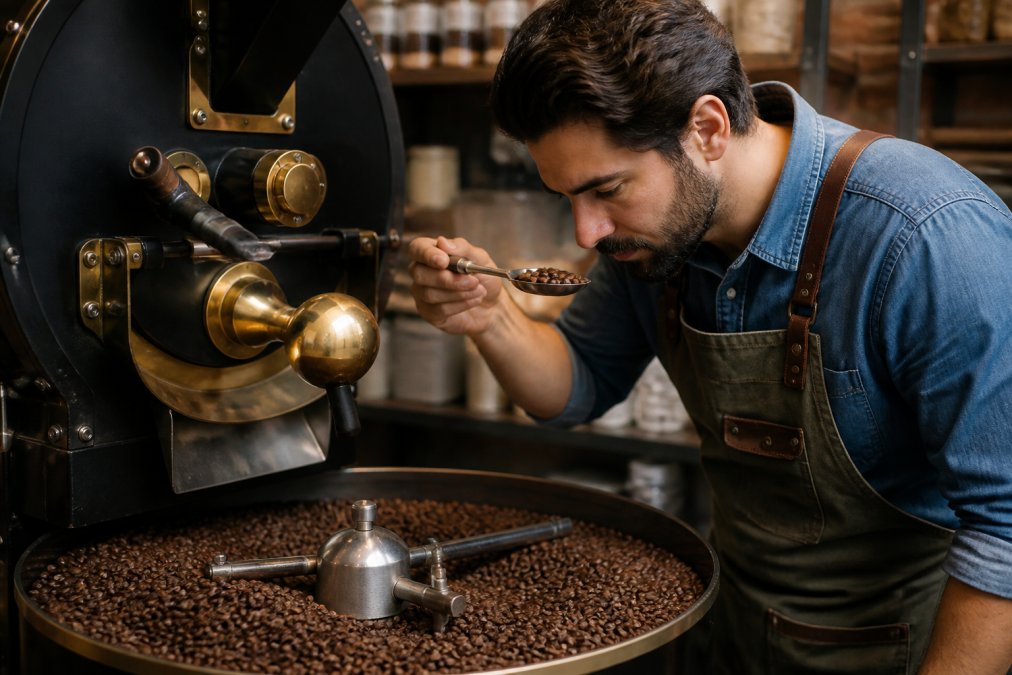
This guide from theITDGroup LLC examines what changes when you shrink a roast, where the advantages are real, and where "small batch" is marketing, not roasting.
Most buyers assume small batch means better. The truth is narrower: small batch means more controllable. Whether that control is used well determines whether your cup is superior or just priced like it.
Batch Size Numbers: 5 kg vs. 500 kg Drums
The gap between craft and industrial roasting is roughly two orders of magnitude. A typical small-batch drum roaster holds 5 to 15 kilograms of green coffee; a commercial production roaster holds 300 to 500 kilograms or more per cycle.
The Benefits of Small Batch Roasting: Control, Consistency, and Freshness
The benefits of small batch roasting come down to three things: tighter control over the roast curve, easier repeatability batch to batch, and a shorter path from roast date to your grinder. None guarantee better coffee alone, but together they remove most of the reasons a good green bean turns into a mediocre cup.
Small Batch vs Commercial Coffee: What Changes at Scale
Small batch vs commercial coffee is less a quality contest than a trade-off between precision and volume. Commercial roasting exists because most coffee is sold as a commodity judged on price, shelf stability, and uniformity across enormous volumes. Those goals push roasters toward darker, more forgiving profiles that mask variation in green bean quality.
Heat Transfer in Small vs. Large Drums
Heat moves through a coffee roast by three routes: conduction from the drum surface, convection from hot air, and radiation from the drum walls. The ratio between them changes with drum size, and that ratio, not the drum's brand or the roaster's skill, makes large-batch coffee behave differently.
- Longer development time. Extending the time between first crack and drop lets heat soak inward, but it also drives off the volatile aromatic compounds, terpenes, esters, and aldehydes, that carry origin character. The result is a flatter cup even when the green coffee was excellent.
- Higher charge temperatures and faster drum speeds. Cranking the initial heat and tumbling the beans faster evens out contact, but it also risks scorching or tipping the bean surfaces before the interior develops.
- Darker roast targets. Darker roasts are more uniform because roast flavor (caramelization, Maillard byproducts) overwhelms bean-to-bean variation. That is a feature for a commodity blend and a liability for a single origin.
Consistency, Quality Control, and Roast Profile Limits
Consistency in small batch roasting comes from repetition. A roaster working the same 10-kilogram drum day after day builds a record of how a given single origin behaves, and can adjust for bean density and moisture content batch to batch.
What Are Single Origin Coffee Beans, and Why Pair Them With Small Batch?
Single origin coffee beans are sourced from one specific farm, cooperative, or region rather than blended from multiple origins. The point is traceability: you can taste the terroir of one place and trace it back to the producer.
How to Evaluate Small Batch Coffee Quality Yourself
You don't need a lab to judge whether small batch coffee is actually better. You need four pieces of information and a consistent brewing method.
Reading Roast Dates, Degassing, and Freshness Windows
Freshness windows for coffee are shorter than most packaging suggests. After roasting, beans release carbon dioxide in a process called degassing. For the first few days, that gas interferes with extraction and produces uneven cups.
Cupping at Home: Taste Acidity, Body, and Aftertaste
Cupping is the industry's standard method for evaluating coffee, and it's simple to replicate at home with a scale, a grinder, and a few identical cups.
- Weigh 8.25 grams of coffee per 150 milliliters of water
- Grind coarsely, roughly the texture of sea salt
- Pour water just off the boil over the grounds
- Wait 4 minutes, then break the crust with a spoon and smell
- Skim the surface, let it cool to warm, then taste
- Score acidity, body, sweetness, and aftertaste separately
The Economics: Is Small Batch Coffee Worth the Premium?
Small batch coffee costs more because it costs more to make. A 10-kilogram roaster produces roughly 2-4% of the output of a 400-kilogram commercial drum per cycle, which means:
- Labor per pound is higher. A roastmaster's time is spread across 10 kilograms instead of 400. Even at identical hourly wages, the labor cost embedded in each pound of small batch coffee is many times higher.
- Roasting sessions are more frequent. To fill the same weekly order volume, a small roaster fires the drum dozens of times where a commercial roaster fires it a handful of times. Setup, warm-up, and cool-down overhead repeat with every session.
- Green coffee buying power is lower. Commercial roasters buy container loads and negotiate on volume. Small roasters buy by the pallet or the bag, often at spot prices, and pay more per pound for the same green coffee.
- Batch failures are more expensive per unit. A dropped or scorched 10-kilogram batch is a smaller absolute loss but a larger share of that day's production, so the roaster has to price in a margin for error.
A Price-to-Value Framework for the Consumer
Whether the premium is worth it depends on what you are buying the coffee for. A simple way to decide:
- If you drink coffee primarily for caffeine, or you routinely add milk, sugar, or flavored syrups, the flavor differences between small batch and well-executed commercial coffee are largely masked. The premium buys you little in the cup.
- If you drink coffee black, brew with a consistent method, and care about origin character, the specific acidity, sweetness, and aromatics of a particular farm or region, small batch is where that character survives the roast. The premium is buying you a roast profile tuned to a specific bean rather than a blend engineered to taste the same everywhere.
- If you value traceability and producer relationships, the premium partly funds the supply chain transparency that commodity coffee does not support. Whether that is worth the money is a values question, not a flavor question.
What the Premium Does Not Buy
The most common mistake buyers make is assuming 'small batch' on a label means the coffee is fresh. Plenty of small batch roasters sell beans that sat in distribution for months. Without a roast date, the batch size claim tells you almost nothing.
Conclusion: When Small Batch Coffee Is Actually Better
Small batch coffee is genuinely better when three conditions line up: the beans are single origin and worth preserving, the roast date is recent, and the roastmaster uses the smaller batch to tune the profile rather than justify a higher price. When any is missing, small batch becomes a label rather than an advantage.
Frequently Asked Questions
What does the term 'small batch' actually mean in coffee roasting?
Small batch refers to roasting in drums that hold roughly 5 to 30 kilograms of green coffee per cycle, compared with commercial drums that hold 60 to 500 kilograms or more. The smaller load lets the roastmaster adjust airflow, gas, and drum speed in real time, so each small batch coffee hits its target roast profile within a narrow window. It is a production method, not a protected label, so batch size varies by roaster.
Is small batch coffee always fresher than mass-produced coffee?
Not automatically. Freshness depends on roast date and packaging, not batch size. A small batch roasted six weeks ago and left in a paper bag will taste stale. A large commercial roast packed in one-way valve bags the same week can arrive fresher. Check the roast date, not the marketing. Small batch coffee from a roaster that roasts to order, like theITDGroup LLC, ships within days of roasting, which shortens the time between roast and brew.
Does small batch roasting allow for better quality control?
Yes, in most cases. Smaller loads respond faster to adjustments, so the roastmaster can correct a deviating roasting curve before it flattens the aromatic profile. Large commercial batches have more thermal inertia, meaning a correction made now may not show up for minutes. Small batch also makes it practical to cup every roast and pull samples for defects. The trade-off is that small batch roasters have less margin for error on bean density and moisture content.
Is it worth paying a premium for small batch roasted coffee?
It depends on how you brew and how often. If you drink coffee daily and care about flavor clarity, acidity, and a specific roast level, the $23.99 range for a 12-ounce bag of small batch coffee like theITDGroup LLC's Whiskey Barrel Aged or Dubai Chocolate is roughly $2 per cup, less than most café drinks. If you mainly drink coffee for caffeine and add milk and sugar, a cheaper commercial roast will do the job. Buy small batch when the flavor is the point.
If you've been burned by "fresh roasted" claims that didn't hold up, the fix is to buy from a roaster who puts a roast date on the bag and roasts after you order. theITDGroup LLC roasts to order, sources beans from trusted farms, and delivers directly to your door so freshness isn't a promise, it's a date. Find your perfect roast and taste the difference a real roast date makes.