 listicle
Best Artisanal Tea for Home Brewing: 2026 Guide
Table of Contents
- What Makes Artisanal Tea Worth Brewing at Home
- Quick Comparison: Best Artisanal Teas for Home Brewing
- Best Ways to Brew Loose Leaf Tea at Home
- Artisanal Tea Brewing Temperature Guide
- How to Store Loose Leaf Tea for Freshness
- Top Artisanal Teas for Home Brewing
- Troubleshooting Common Brewing Problems
- Cost Per Cup: Artisanal Tea vs. Tea Bags
- Frequently Asked Questions
Last Updated: September 23, 2026
What Makes Artisanal Tea Worth Brewing at Home
Artisanal tea is loose leaf tea produced in small batches with attention to origin, harvest timing, and processing method rather than mass-market blending. The difference shows up in the cup: fuller flavor, clearer aroma, and leaves that can be steeped more than once. According to the Tea Association of the USA, loose leaf tea continues to gain ground among home brewers who want more control over what ends up in their cup.
At theITDGroup LLC, we source carefully selected teas. Freshness and provenance change everything about how a tea tastes.
Here's what most guides get wrong: they treat artisanal tea as a luxury upgrade when it's really a brewing upgrade. Better leaves reward good technique. Poor technique ruins even the best leaf.
Below, we'll show you how to pick, brew, and store the best artisanal tea for home brewing, with specific temperatures, ratios, and a cost breakdown.
Quick Comparison: Best Artisanal Teas for Home Brewing
The best artisanal tea for home brewing depends on the flavor profile you want and how you plan to drink it. Herbal infusions skip caffeine entirely.
| Tea | Type | Caffeine | Brew Temp | Steep Time | Best For |
|---|---|---|---|---|---|
| Earl Grey | Black | Moderate | 195 F | 5-10 min | Citrus-forward mornings |
| Moroccan Mint | Green | Low | 175 F | 2-3 min | Iced refreshment |
| Jasmine | Green | Low | 175 F | 2-3 min | Multiple steepings |
| Masala Chai | Black | Moderate | 195 F | 5-10 min | Milk-based drinks |
| English Breakfast | Black | Moderate | 195 F | 5-10 min | Milk and sugar |
| Matcha | Green (powder) | Moderate | 175 F | Whisk, no steep | Traditional preparation |
| Hojicha | Green (powder) | Low | 175 F | Whisk, no steep | Toasted, low-bitterness cups |
| Mango Treat | Flavored | Low | 195 F | 5-10 min | Hot or iced |
| Apple Cider Rooibos | Herbal | None | 212 F | 5-10 min | Caffeine-free evenings |
| Hibiscus Berry Tea | Herbal | None | 212 F | 5-10 min | Cold brew |
Best Ways to Brew Loose Leaf Tea at Home
The best way to brew loose leaf tea at home is to control three variables: water temperature, leaf-to-water ratio, and steeping time. Get those right and the leaf does the rest.

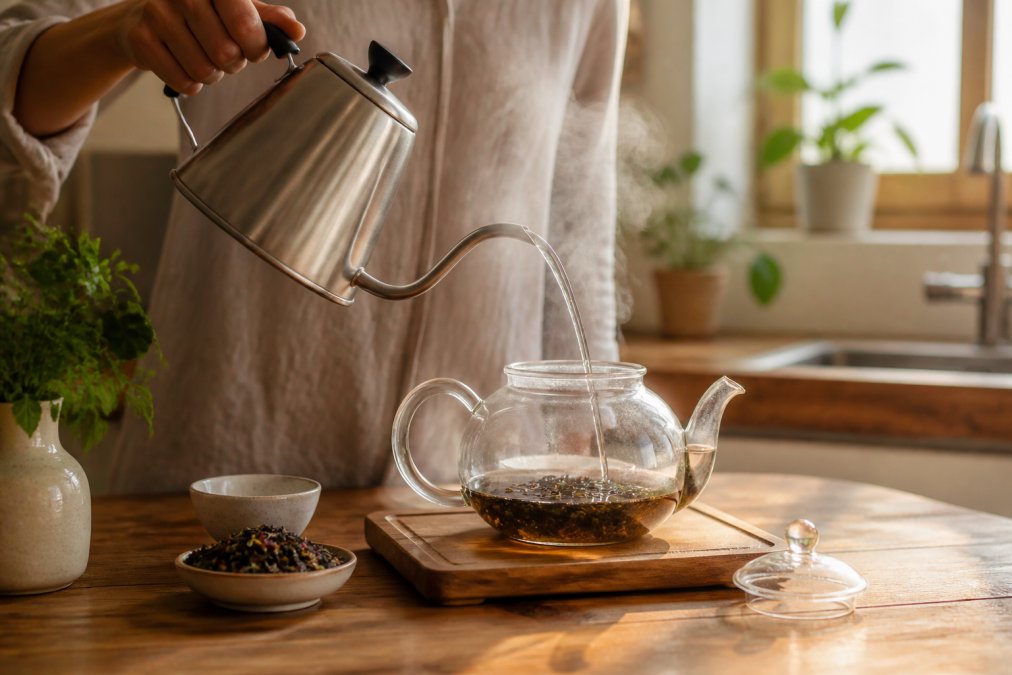
Weigh your leaf rather than scooping it. A kitchen scale removes the guesswork, and most blends here call for roughly 2.5 to 3 grams per 12 ounces of water.
Western Style vs. Cold Brew
Western style means steeping a larger volume of water for a few minutes and drinking the result immediately. Cold brew means steeping the same leaf in cold water for hours, usually overnight in the refrigerator.
Cold brew produces a sweeter, less astringent cup because hot water pulls tannins faster than cold water does.
Brewing Vessel Comparison
Your brewing vessel changes extraction more than most people expect. A wide-mouth infuser basket gives leaves room to expand. A narrow strainer compresses them.
| Vessel | Best For | Trade-Off |
|---|---|---|
| Glass teapot with infuser | Watching leaf unfurl, multiple cups | Retains heat poorly |
| Ceramic teapot | Heat retention, black teas | Cannot see the leaf |
| Gaiwan | Multiple short steepings | Small volume, needs practice |
| French press | Full-leaf expansion, easy cleanup | Fine particles slip through |
| Tea sachets | Convenience, travel | Less room for leaf to open |
Artisanal Tea Brewing Temperature Guide
Water temperature is the single biggest lever on how a tea tastes. Too hot and delicate leaves turn bitter. Too cool and you get a thin, flat cup.
- 175 F: Green teas and matcha. Protects delicate leaf from scorching.
- 195 F: Black teas. Full extraction without flattening the aroma.
- 212 F: Herbal infusions. Rooibos and hibiscus need full boil to release flavor.
How to Store Loose Leaf Tea for Freshness
Storing loose leaf tea for freshness comes down to blocking four things: air, light, moisture, and odor. Tea absorbs whatever is around it.
Top Artisanal Teas for Home Brewing
Every tea below is a single offering from our current lineup, priced at $22.99. Each has a distinct brewing profile, so pick by the cup you actually want to drink.

Earl Grey
A timeless blend of Ceylon black tea, blue cornflowers, and bergamot essential oil. Tasting notes run orange, floral, and malt, with high astringency and a full body.
Moroccan Mint
Old green tea meets fresh mint, a smooth, vibrant blend that’s refreshing hot and next-level iced.
Jasmine
Hand-picked green tea paired with freshly plucked jasmine blossoms at just the right moment. The result is medium-bodied, sweet, and silky, with fruity notes over a green base.
This one rewards multiple steepings.
Masala Chai
Bold, spicy, and full-bodied, with the aromatic intensity you expect from traditional Indian masala chai. It works as a milk-based drink or on its own.
English Breakfast
A blend of African and Indian teas built to stand up to milk and sugar. Rustic and sweet, with enough strength to carry you through a morning.
Matcha
Refined and lingering, this matcha is crafted for traditional preparation and mindful daily rituals. It is a powder, so there is no steeping step.
Hojicha
A roasted green tea powder made from selected leaves and stems, stone-milled into a fine powder. It brews into a smooth cup with toasted cereal notes and balanced umami.
Mango Treat
Sweet, smooth, and summery, with a hint of mango over an already fruity base. It performs as a hot tea and holds up beautifully iced.
Apple Cider Rooibos
A naturally caffeine-free herbal blend of rooibos, cinnamon, orange peel, and spices. Rooibos is grown in South Africa and known as Red Bush Tea.
Hibiscus Berry Tea
An organic blend of hibiscus flowers, rosehips, orange peel, rooibos, and berry flavors. Notes of blueberry and currant, with low astringency and high sweetness.
Troubleshooting Common Brewing Problems
Bitterness almost always traces back to water temperature or steeping time. If your tea turns harsh, drop the temperature by 10 degrees before you change anything else.
A few common fixes:
- Thin, watery cup: Increase leaf weight or extend steeping time by 30 seconds.
- Harsh or bitter: Lower water temperature; green teas especially scorch above 180 F.
- Weak aroma: Check your storage. Stale leaf smells flat before it tastes flat.
- Cloudy cold brew: Fine particles from the leaf. Strain through a paper filter.
- Inconsistent cups: Weigh your leaf instead of scooping.
Cost Per Cup: Artisanal Tea vs. Tea Bags
Artisanal loose leaf tea usually costs more per bag but less per cup. The math comes down to how many times you can steep the same leaf.
Frequently Asked Questions
What is the best artisanal tea for home brewing?
The best artisanal tea depends on your taste and caffeine preference. For a bold, malty cup, English Breakfast works well with milk and sugar. For something floral and delicate, Jasmine green tea offers multiple steepings. If you want caffeine-free, Apple Cider Rooibos delivers spicy, sweet notes. Each option from theITDGroup LLC costs $22.99 and comes as loose leaf, so you control strength and flavor.
Does water temperature really affect the flavor of artisanal tea?
Yes. Water temperature controls how quickly tannins and flavor compounds extract from the leaves. Green and white teas brewed above 180 F turn bitter and astringent because the leaves are delicate. Black teas like Earl Grey need 195 F to fully open up their malt and citrus notes. Herbal infusions such as Hibiscus Berry Tea can handle 212 F. Using a thermometer or a kettle with preset temperatures removes the guesswork.
How should I store loose leaf tea to keep it fresh?
Keep loose leaf tea in an airtight container away from light, heat, and moisture. A tin or opaque ceramic jar works better than a clear glass one because light degrades the leaves over time. Store it in a cool cupboard, not above the stove or in the fridge. Most artisanal teas hold their flavor for six to twelve months when stored properly. Buy in quantities you will finish within that window.
What is the difference between cold brewing and hot brewing artisanal tea?
Cold brewing steeps tea in cold water for 8 to 12 hours, producing a smoother, less astringent cup with lower caffeine levels. Hot brewing extracts flavor in minutes but pulls out more tannins, which adds body and astringency. Moroccan Mint and Mango Treat work well both ways. Hibiscus Berry Tea is specifically recommended for cold brew. Try both methods with the same tea to see which profile you prefer.
Is loose leaf artisanal tea more expensive than tea bags?
The upfront cost is higher. A 12-ounce bag of artisanal tea costs $22.99, while a box of tea bags might run $4 to $8. But loose leaf often goes further, as many varieties can be steeped multiple times. Tea bags also lose aroma faster because the leaves are broken into small pieces with more surface area exposed to air.