 listicle
What's the Best Grind Size for Pour Over Coffee?
Last Updated: October 25, 2026
Quick Summary
The best grind size for pour over coffee is a medium grind, roughly the texture of regular sand, because it lets water pass through the bed at a steady rate and pulls sweetness and clarity into the cup. Start medium, then adjust one small step at a time based on taste and drawdown time.
- Medium-fine suits fast-flowing drippers like the V60, while flat-bed brewers and thicker filters do better at medium.
- Chemex grind size runs coarser, closer to sea salt, because its thick filter and deep bed slow the flow.
- Use a coffee-to-water ratio near 1:16 as a starting point for your first brew.
- If the cup tastes sour and thin, the grind is too coarse; if bitter and drying, it is too fine.
- Change grind only, one small step, and keep dose, water temperature and pour schedule fixed.
Table of Contents
- Why Grind Size Decides Your Pour Over Cup
- The Best Grind Size for Pour Over Coffee: Start Medium
- Chemex Grind Size: Coarser for Thick Filters
- V60 Grind Size: Medium-Fine for a Faster Flow
- Your Coffee Grind Size Chart by Brewer and Filter
- How to Adjust Coffee Grind Size by Taste and Time
- Pick a Bean That Rewards a Good Grind
- Frequently Asked Questions
Why Grind Size Decides Your Pour Over Cup
Grind size controls how fast water moves through the coffee bed. Finer particles slow the flow and expose more surface area, so more compounds dissolve. Coarser particles speed things up and extract less.
Grind size is the average particle size of ground coffee, measured by how it feels between your fingers and how quickly water drains through it.
Watch out: the most common mistake is changing three variables at once. Change grind only, keep everything else the same, and taste the result before adjusting again.
The Best Grind Size for Pour Over Coffee: Start Medium
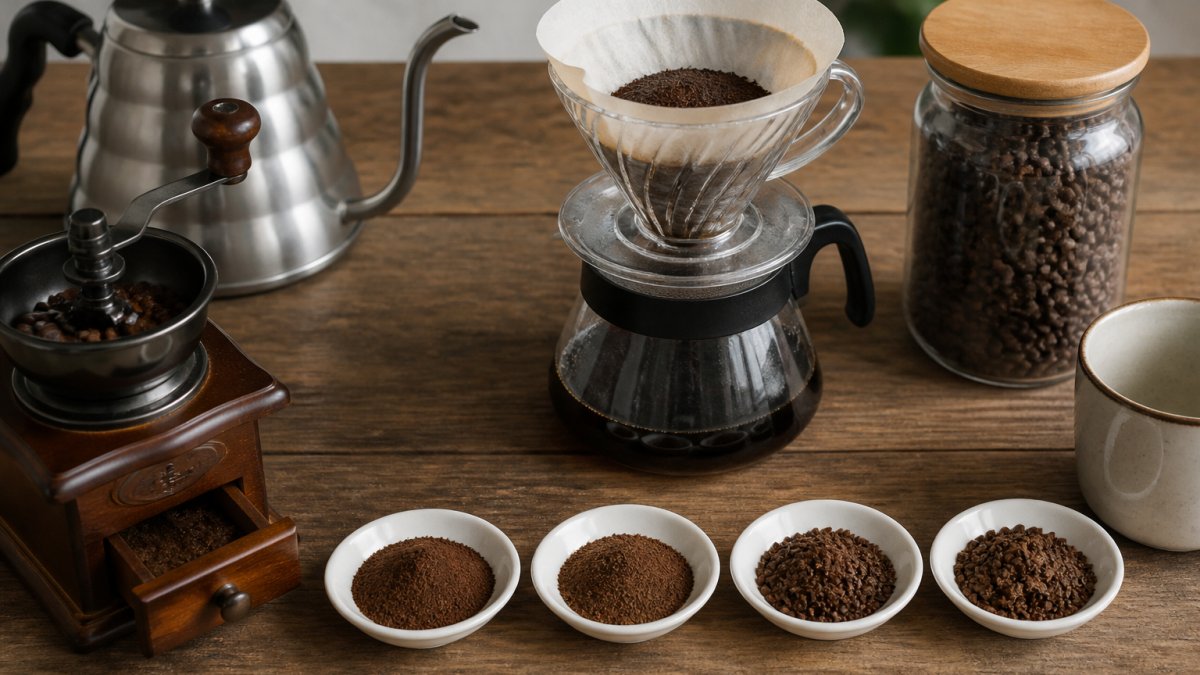
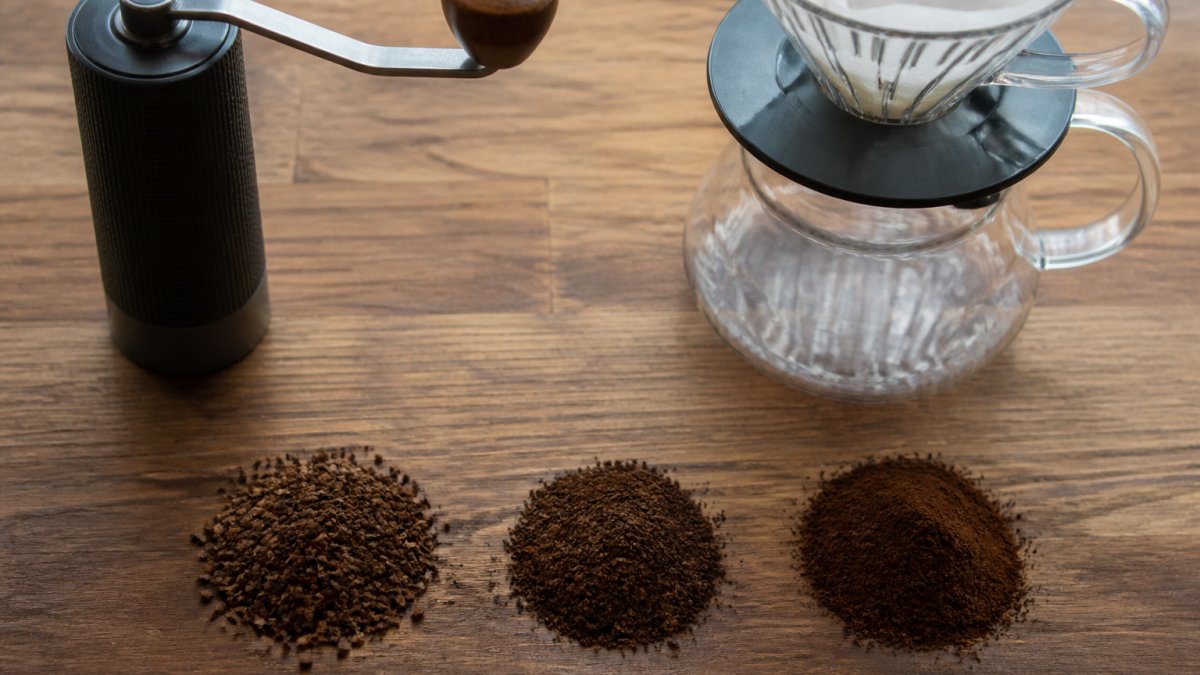
Medium is the correct starting point for the best grind size for pour over coffee, and it gives you a reference point to adjust from. Think regular sand: gritty but not powdery, holding together slightly when you press it. This setting suits most cone drippers and flat-bed brewers with standard paper filters.
Here is how we would set up a first brew:
- Weigh your dose in grams so you can repeat the recipe.
- Grind at a medium setting, closer to coarse than fine.
- Use a coffee-to-water ratio near 1:16 as a starting point.
- Bloom with a small pour, wait about 30 seconds, then finish pouring.
- Note the total brew time and the taste before changing anything.
That first cup is a baseline, not a verdict. If it tastes balanced, you are done. If not, the next two sections tell you which direction to move.
Medium vs. Medium-Fine: Which One to Pick
Medium-fine sits between regular sand and powder, and it suits drippers with fast flow and thin filters. Choose medium for flat-bed brewers and thicker filters. Choose medium-fine when your brewer drains quickly and the cup tastes weak or sour at a medium setting.
The practical test is drawdown time. If your brew finishes far too fast and tastes thin, go finer. If it stalls and tastes bitter, go coarser.
Chemex Grind Size: Coarser for Thick Filters
Chemex grind size runs coarser than most brewers because the filter is thick and the bed is deep. A coarse grind, closer to sea salt than sand, keeps the flow moving through that heavy paper.
Grind coarser than you would for a cone dripper, pour in slower stages, and give the bed room to drain between pours. If the brew still chokes, coarsen one more step before touching anything else.
V60 Grind Size: Medium-Fine for a Faster Flow
V60 grind size leans medium-fine, because the cone shape and thin paper filter drain quickly. A finer grind slows the water just enough to build contact time. Too coarse and the water races through, leaving sour, under-extracted coffee with a thin body.
Start medium-fine, then adjust by taste. If the cup tastes sharp and hollow, go finer. If it turns drying and bitter, back off toward medium. The V60 rewards small, deliberate changes more than any brewer we know.
Your Coffee Grind Size Chart by Brewer and Filter
Use this chart as a starting point, then adjust by taste and drawdown time. Every grinder numbers its settings differently, so treat these as textures and time ranges rather than numbers.
| Brewer | Grind Texture | Reference Feel | Starting Dose / Ratio | Target Drawdown (after bloom) | First Adjustment |
|---|---|---|---|---|---|
| Chemex (6-cup) | Coarse | Sea salt | 30 g coffee / 480 g water (1:16) | 3:30-4:30 total | Coarsen one step if drawdown exceeds 5:00 or cup tastes muddy |
| V60 (02) | Medium-fine | Fine sand | 15 g coffee / 250 g water (1:16.7) | 2:00-2:45 total | Go finer one step if drawdown finishes under 1:45 and cup tastes sour |
| Flat-bed dripper (e.g., Kalita-style) | Medium | Regular sand | 20 g coffee / 320 g water (1:16) | 2:30-3:15 total | Coarsen one step if bed stalls or cup turns bitter |
| Cone dripper with thick filter | Medium | Regular sand | 20 g coffee / 320 g water (1:16) | 2:45-3:30 total | Go finer one step for more sweetness if cup is weak |
| Any brewer, weak or sour cup | One step finer | Slightly finer sand | Keep dose and ratio fixed | Note the new time | Change grind only, then taste |
Two things decide where you land: filter thickness and how fast the dripper drains. Thick paper needs a coarser grind. Fast flow needs a finer one.
If you are still building your brewing routine, our guide on how to brew pour-over coffee at home walks through the full method step by step before you start dialing in grind.
How to Adjust Coffee Grind Size by Taste and Time
Learning how to adjust coffee grind size comes down to reading two signals: flavor and drawdown time. Taste first, then confirm with the clock. If the cup tastes sour and thin, the grind is too coarse. If it tastes bitter and drying, it is too fine. But flavor alone can mislead, because water temperature, ratio, and pour technique also move the cup. That is why you change one variable at a time and record what happened.
A Repeatable One-Variable Method
- Lock the recipe. Fix dose, water weight, water temperature, and pour schedule. Write them down.
- Brew a baseline. Note total brew time from first pour to last drop, and write a one-word taste note (sour, weak, balanced, bitter, harsh).
- Change grind only, one small step. On most burr grinders, one click or one numbered increment is a small step. Do not jump from coarse to fine.
- Brew again with the same recipe. Compare taste and time to the baseline.
- Keep the change if the cup improved. If it got worse, return to the baseline and step the other direction.
- Stop when balanced. Record the setting and the time so you can repeat it.
Flavor and Drawdown Diagnosis
Use this table to map what you taste and see to a likely grind adjustment, while remembering that other causes can produce the same symptoms.
| What you taste or see | Likely grind cause | Grind adjustment | Other possible causes to rule out |
|---|---|---|---|
| Sour, sharp, thin body | Too coarse; water passes too fast | Go one step finer | Water too cool; ratio too weak; under-poured |
| Weak but not sour | Too coarse or dose too low | Go one step finer, then check dose | Ratio too wide; stale beans |
| Bitter, drying, harsh finish | Too fine; over-extraction | Go one step coarser | Water too hot; over-agitated bed; long steep |
| Good flavor, brew finishes too fast | Slightly too coarse | Go finer in a small step | Pour too fast; filter clogged unevenly |
| Good flavor, bed stalls | Slightly too fine | Go coarser in a small step | Fine migration; filter folded; too much agitation |
| Cup swings sour to bitter with no middle | Uneven particles from the grinder | Improve grinder consistency before chasing settings | Blade grinder; worn burrs |
Why Grinder Numbers Do Not Transfer
A setting of "20" on one grinder is not the same particle size as "20" on another. Burr geometry, burr wear, calibration, and the grinder's zero point all shift what a number means. This is why copying a stranger's setting rarely works. What transfers is texture and drawdown time, not the number.
Particle consistency matters as much as average size. If you are unsure which you own, our comparison of burr grinders versus blade grinders explains the difference in particle consistency.
If you are brewing a lighter roast while you tune grind and taste, our light roast brewing guide covers how roast level shifts the ideal setting.
Pick a Bean That Rewards a Good Grind
Great grind technique only shows up when the beans deserve it. Freshly roasted, single-origin coffee gives you clear feedback: sweetness, acidity, and body all read distinctly, so you can hear what the grind is telling you.
Our single-origin lineup is roasted to order.
If you would rather explore before committing to a full bag, browse our best coffee beans for home brewing guide, or pick up a single origin favorites sample pack to compare origins side by side at the same grind setting.
The best grind size for pour over coffee is the one that makes your beans taste like themselves. Start medium, change one step at a time, and let the cup tell you when to stop.
Frequently Asked Questions
How can I tell if my pour over grind is too fine or too coarse?
Watch the drawdown and taste the cup. If the water pools on top and the brew takes much longer than four minutes, the grind is likely too fine and the cup will taste bitter or drying. If the water rushes through in under two minutes and the coffee tastes thin or sour, the grind is too coarse. A medium pour over grind should finish draining in roughly three to four minutes for a single cup.
How should I adjust coffee grind size if my pour over tastes bitter?
Bitterness usually means the water is pulling too much out of the grounds, so go coarser. Change one click or one small step on your grinder, brew again, and compare. Keep every other variable the same: same dose, same water temperature, same pouring technique. If bitterness fades but the cup turns sour, you have gone too far and should split the difference. Two or three brews is usually enough to land on the right setting.
What grind size should I use for a Chemex?
A Chemex uses a thick paper filter that slows water flow, so it wants a coarser grind than a V60, closer to medium-coarse, similar to what you would use for a French press. Start there and check the drawdown. A full Chemex should take about four to five minutes. If it stalls well past that, go coarser; if it drains fast and tastes weak, go finer in small steps.
Does the coffee-to-water ratio change my pour over grind setting?
Yes. A larger dose in the same dripper creates a deeper bed of coffee, which slows the water down. If you brew a bigger batch, expect to grind slightly coarser to keep the same brew time. A common starting ratio is about 1 gram of coffee to 16 grams of water, so a 20 gram dose pairs with roughly 320 grams of water. Adjust the grind after you have set the dose, not before.
Do I need a burr grinder for pour over coffee?
A burr grinder gives you far more consistent particle size than a blade grinder, which chops unevenly and leaves both dust and boulders in the bed. Uneven grounds extract at different rates, so the cup tastes muddy or sharp no matter how you adjust the setting. If you already own a blade grinder, pulse in short bursts and shake the grinder between pulses to even things out, but a burr grinder is the upgrade that makes grind adjustments actually repeatable.
Getting a consistent pour over means controlling the grind, and that starts with beans fresh enough to show you the difference. theITDGroup LLC roasts every batch to order, sources single-origin beans from trusted farms, and delivers them straight to your door, so your first cup and your tenth taste the same. Find your perfect roast and start dialing in your grind with coffee worth the effort.