 how-to
How to Verify Ethical Coffee Sourcing
Table of Contents
- Why Verification Matters for Ethical Coffee
- Coffee Certifications Explained
- Direct Trade vs Fair Trade Coffee
- Step 1: Check the Roaster's Supply Chain Transparency
- Step 2: Verify Origin Details and Traceability
- Step 3: Spot Greenwashing and Marketing Claims
- How to Find Transparent Coffee Roasters
- Common Mistakes to Avoid When Verifying Ethical Sources
- Frequently Asked Questions
Last Updated: September 28, 2026
Why Verification Matters for Ethical Coffee
Ethical coffee sourcing isn't just a marketing buzzword. It determines whether your morning brew supports smallholder farmers or exploitative supply chains. The challenge is simple: most coffee bags claim to be "ethically sourced" without proof. Your job is to cut through the marketing and find the real thing.
At theITDGroup LLC, we offer a premium selection of carefully sourced coffee beans. We know what real verification looks like. It's not about trusting a label. It's about following the supply chain from the farm to your cup.
Here's why it matters. Unverified "ethical" claims can mask unfair wages, environmental damage, and exploitative labor practices. When you verify ethical coffee sourcing, you're making sure your money actually reaches the farmers who grew your beans. You're supporting long-term partnerships instead of one-time transactions.
Coffee Certifications Explained
Certifications are your first line of defense against greenwashing. But not all seals carry equal weight. Some certifications require rigorous third-party audits. Others are easier to game.
Third-party certifications and accredited inspectors
Third-party certification means an independent organization audits the farm and roaster. This is different from a roaster simply claiming their coffee is ethical. Real certifications involve accredited inspectors who visit farms, verify practices, and confirm standards are met.
Look for these markers of legitimate certification:
- Accredited inspectors conduct unannounced farm visits
- Certification bodies publish audit reports or summaries
- The certification organization is independent from the roaster
- Renewal requires ongoing compliance, not one-time approval
The most credible certifications use surprise inspections. Farms that know auditors are coming can temporarily improve conditions. Unannounced visits reveal actual day-to-day practices.
Many roasters display certification logos without explaining what they mean. Ask yourself: Can I find the certifying organization's website? Do they publish standards? Can I verify the farm is actually certified? If the answer is no, the certification is likely just decoration.
Reading organic seals and sustainability standards
Organic seals confirm the farm avoids synthetic pesticides and follows environmental practices. But organic doesn't automatically mean ethical. A farm can be certified organic while paying unfair wages.
Sustainability standards go deeper. They address environmental impact, worker welfare, and community impact. The strongest standards combine multiple criteria:
- Shade-grown practices (protects bird habitats and soil)
- Carbon footprint reduction
- Water conservation methods
- Fair wages for workers
- Community investment programs
When you read a coffee label, look for specific sustainability claims backed by certifying bodies. Vague language like "sustainably grown" or "environmentally friendly" means nothing without certification. Specific claims like "shade-grown certified" or "carbon-neutral roasting" point to measurable practices.
The difference matters. A roaster might claim sustainability while using practices that don't meet any third-party standard. Real sustainability standards require documented proof and ongoing verification.
Direct Trade vs Fair Trade Coffee
These two models sound similar but operate very differently. Understanding the distinction helps you identify which farms actually benefit from your purchase.
Long-term partnerships and farm-gate prices
Direct trade means the roaster buys directly from the farm, cutting out middlemen. This creates longer relationships. The roaster visits the farm, builds relationships with the farmer, and negotiates prices directly.
The key advantage is farm-gate pricing. Instead of selling to a middleman who takes a cut, farmers receive a larger share of the final price. Direct trade roasters often pay well above commodity prices because they're buying quality and building partnerships.
But direct trade has no official certification. No auditor verifies the relationship or the price paid. A roaster can claim direct trade without proof. This is where greenwashing happens most often.
Fair trade, by contrast, uses third-party certification. Fair trade organizations set minimum prices and labor standards. Auditors verify compliance. If a farm is certified fair trade, you know it meets documented standards.
The trade-off: Fair trade provides verified minimum standards. Direct trade can offer higher prices and stronger relationships but lacks independent verification.
Smallholder farmers and economic equity
Smallholder farmers grow most of the world's coffee but receive the smallest share of profits. Middlemen, exporters, and distributors take cuts before farmers see payment. By the time money reaches the farm, the share is often unfairly small.
Both direct trade and fair trade attempt to solve this. Direct trade does it through relationship and volume. Fair trade does it through certified minimums and cooperative structures.
Look for roasters that mention working with farmer cooperatives. Cooperatives pool resources, negotiate better prices collectively, and share profits among members. This model supports smallholder farmers more effectively than individual transactions.
Economic equity also means long-term stability. Does the roaster commit to multi-year contracts? Do they invest in the farm's future? These questions reveal whether the relationship is truly ethical or just transactional.
Step 1: Check the Roaster's Supply Chain Transparency
Start here. Before buying any bag, investigate the roaster's supply chain. Transparent roasters publish detailed information about where their beans come from and how they source them.
Visit the roaster's website and look for a dedicated sourcing page or supply chain section. Real transparency includes:
- Farm names or regions (not just "Central America")
- Farmer or cooperative names
- Details about the relationship (direct trade, fair trade, or partnership model)
- Information about certifications
- Pricing transparency (what the farmer receives)
If the website offers no sourcing details, move on. Roasters hiding their supply chain are hiding something.
Contact the roaster directly. Email and ask specific questions: Where do your beans come from? What certifications do your farms hold? How much does the farmer receive per pound? Transparent roasters answer these questions. Others won't.
We believe you deserve to know exactly where your coffee comes from and who grew it. This transparency builds trust and ensures you're getting what you paid for.
Step 2: Verify Origin Details and Traceability
Once you've identified a roaster, examine the bag itself. Origin details and traceability information reveal how much the roaster actually knows about their beans.
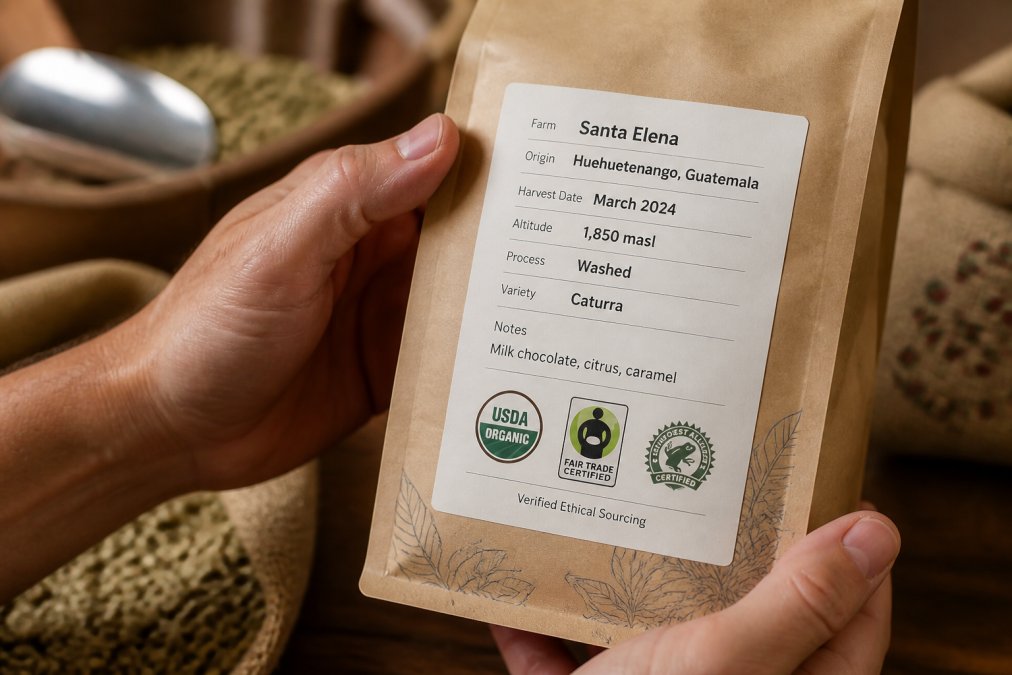
A strong label includes:
- Specific farm or cooperative name (not just country)
- Region and altitude
- Harvest date or year
- Roast date (critical for freshness)
- Certifications with issuing organization names
- Tasting notes with specific flavor descriptors
- Farmer or cooperative contact information (sometimes)
The roast date matters most. Beans are freshest 2-4 weeks after roasting. If the roast date is months old, the coffee has lost flavor and aroma. theITDGroup LLC roasts to order, so every bag ships fresh. You'll see a recent roast date on every order.
Traceability goes further. Can you trace the beans backward through the supply chain? Some roasters publish lot numbers that connect to specific farms and harvest dates. This level of detail proves the roaster knows exactly where each batch came from.
Step 3: Spot Greenwashing and Marketing Claims
Greenwashing is the biggest trap when verifying ethical coffee. Roasters use appealing language that sounds ethical without backing it up. Learning to spot these claims protects you from paying premium prices for ordinary coffee.
Common greenwashing phrases:
- "Ethically sourced" (with no certification)
- "Sustainably grown" (no standard defined)
- "Fair trade" (without certification logo)
- "Small batch" (doesn't indicate ethics)
- "Artisan roasted" (marketing, not verification)
- "Responsibly sourced" (vague and unverifiable)
The red flag is simple: If a claim lacks specific details or certification, it's likely greenwashing. Real ethical sourcing is specific. It names farms, certifications, and practices.
Compare two labels. One says "sustainably grown." Another says "shade-grown certified by the Rainforest Alliance, supporting bird habitat preservation." The second is real. The first is marketing.
Ask the roaster to back up claims with evidence. If they can't provide certification numbers, farm details, or third-party verification, the claims are empty. Transparent roasters welcome these questions. Others avoid them.
How to Find Transparent Coffee Roasters
Not all roasters prioritize transparency. Finding ones that do requires knowing what to look for. The best roasters publish sourcing information openly and invite questions.
Roaster accountability and label verification
Accountability starts with public information. Transparent roasters publish:
- Complete sourcing information online
- Certification details with verification links
- Farmer stories or farm profiles
- Pricing breakdowns (what the farmer receives)
- Annual sustainability reports
- Contact information for sourcing questions
Visit the roaster's website. Does it include a sourcing page? Can you find information about specific farms? Are certifications listed with issuing organization names? Roasters that hide this information aren't accountable.
Label verification is the next step. Once you have a bag, verify what's printed on it. Check the roaster's website to confirm the farm name, certification, and details match their published information. If details don't align, the roaster may be misrepresenting their sourcing.
Some roasters publish QR codes on bags that link to farm information or certification details.
Evaluating bean quality and roast date information
Quality and freshness are separate from ethics but equally important. A roaster can source ethically and still deliver stale beans. Evaluate both.
Common Mistakes to Avoid When Verifying Ethical Sources
Even armed with knowledge, it's easy to make mistakes. Here are the pitfalls that trap most buyers.
Frequently Asked Questions
What are the most reliable coffee certifications for ethical sourcing?
Fair Trade, Rainforest Alliance, and Organic certifications are among the most recognized. Fair Trade ensures minimum standards for farmer wages and working conditions. Rainforest Alliance focuses on environmental sustainability and social responsibility. Organic certifications verify chemical-free farming. Look for third-party accredited inspectors who verify these claims rather than self-certification.
How can I tell if a coffee roaster is truly practicing direct trade?
Transparent roasters publish specific farm names, regions, and roaster accountability details on their websites or packaging. Direct trade typically involves long-term partnerships with smallholder farmers at farm-gate prices higher than commodity rates. Ask roasters for details about their direct trade practices.
What is the difference between Fair Trade and direct trade coffee?
Fair Trade is a third-party certified system with minimum standards for wages, working conditions, and environmental practices, but prices are set by certification bodies. Direct trade eliminates middlemen, allowing roasters to negotiate directly with farmers for higher farm-gate prices and longer partnerships.
What red flags should I look for when buying coffee?
Avoid vague claims like 'ethically sourced' without certification or supply chain details. Be skeptical of 'all-natural' or 'sustainable' labels without third-party verification. Watch for missing roast dates, which indicate older stock. Beware of roasters who cannot name specific farms or regions. Missing information about cooperative membership, accredited inspectors, or origin traceability suggests greenwashing.