 comparison
Light Roast vs Medium Roast Coffee Taste: Which Cup Wins
Last Updated: November 4, 2026
Quick Summary
The light roast vs medium roast coffee taste difference is origin character versus balance: light roasts keep fruity, floral, and citrus notes with bright acidity, while medium roasts add sweetness, body, and chocolate or caramel notes through a longer roast. Choose light to taste where the coffee grew, or medium for a smooth, balanced cup.
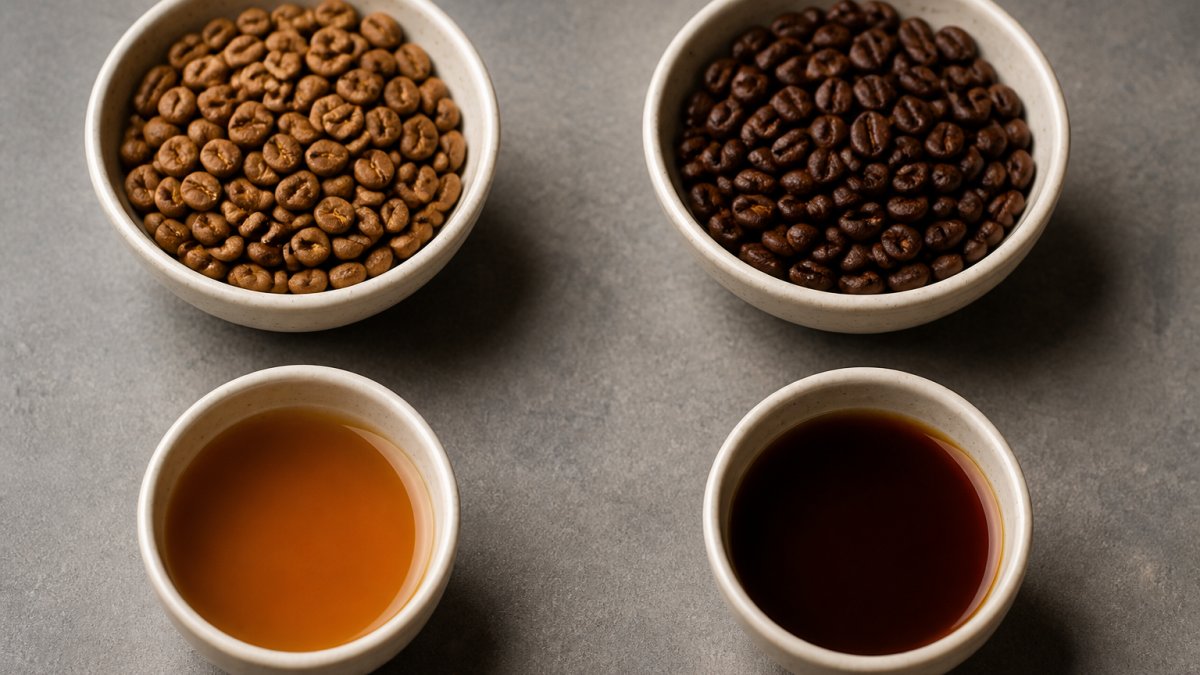
- Light roast beans look dry and cinnamon-brown, while medium roast beans are a richer chestnut brown.
- Light roast and medium roast coffee contain roughly similar caffeine, and brew strength matters far more.
- Medium roast generally tastes less acidic than light roast, making it the safer starting point for sensitive stomachs.
- Pour-over and drip suit light roast, while French press and espresso bring out medium roast body and sweetness.
- A controlled tasting takes about fifteen minutes and doses 15 grams of each coffee at a 1:16 ratio.
Table of Contents
- Light Roast vs Medium Roast Coffee Taste at a Glance
- Light Roast Taste: Bright Acidity and Origin Flavors
- Medium Roast Taste: Balanced Sweetness and Body
- Light Roast vs Medium Roast Caffeine Content
- Is Medium Roast Coffee Less Acidic Than Light Roast?
- Best Brewing Methods for Light Roast and Medium Roast
- How to Taste Light and Medium Roast Side by Side
- Find Your Perfect Roast
- Frequently Asked Questions
Light Roast vs Medium Roast Coffee Taste at a Glance
The light roast vs medium roast coffee taste question comes down to one trade-off: origin character versus balance. Light roasts keep more of the bean's fruity, floral, and citrus notes with brighter acidity, while medium roasts add sweetness, body, and chocolate or caramel notes through a longer roast.
Choose a light roast to taste where the coffee grew; choose a medium roast for a smooth, balanced cup that works with milk, sugar, or a fast morning routine. Neither is "better", they are different tools.
| Feature | Light Roast | Medium Roast |
|---|---|---|
| Flavor focus | Origin flavors, fruit, floral | Sweetness, chocolate, caramel |
| Acidity | Bright and pronounced | Mellow and rounded |
| Body and mouthfeel | Lighter, tea-like | Fuller, rounder |
| Sweetness | Subtle | Pronounced |
| Bitterness | Low | Low to moderate |
| Best brew method | Pour-over, drip | French press, espresso, drip |
| Best for | Curious tasters | Everyday drinkers |
What Light, Medium and Dark Roast Actually Mean
Roast level describes how far a coffee bean has been heated during roasting. Light roast beans stop roasting shortly after first crack, the audible pop when moisture and gases escape the bean.
That progression is why roast level changes taste so much. Coffee roasting fundamentals from the Specialty Coffee Association explain how heat drives the Maillard reaction and caramelization, the chemical steps that build sweetness and aroma.
Roast Color and Bean Appearance
Color is the fastest visual clue. Light roast beans look dry and cinnamon-brown, with no visible oil. Medium roast beans land at a richer chestnut or milk-chocolate brown, still matte but darker.
Bean density tells a similar story: light roast beans are denser and heavier, while medium roast beans feel lighter.
Light Roast Taste: Bright Acidity and Origin Flavors
Light roast coffee tastes bright, fruity, and complex, with acidity that reads as lively rather than sharp.
Single-origin light roasts show this most clearly. Our Ethiopia Natural is a medium-light roast with milk chocolate, fruity, and caramel notes, grown by smallholder farmers in the Sidama zone.
If tasting-note language feels foreign, our guide to reading coffee tasting notes explains what those flavor descriptors mean.
Medium Roast Taste: Balanced Sweetness and Body
Medium roast coffee tastes balanced: sweeter than light roast, fuller in body, and lower in perceived acidity, with chocolate, caramel, and nutty notes leading. The longer roast develops sugars and rounds off sharp edges, which is why medium roast is the most popular everyday choice for drip coffee and espresso.
Our Breakfast Blend is a medium roast built on a smooth blend of South American coffees. Our Gourmet Donut Shop is a light-medium roast blend with cocoa, caramel, toffee, and mild fruit notes.
Light Roast vs Medium Roast Caffeine Content
Light roast and medium roast coffee contain roughly similar caffeine, and roast level changes caffeine far less than brew strength does.
Here is the practical version. If you measure by weight, the difference nearly disappears. USDA FoodData Central coffee entries show brewed coffee caffeine varies far more by brew strength and serving size than by roast level.
The takeaway: pick your roast for taste, not for a caffeine boost. If you want more caffeine, use more coffee or a stronger brew ratio.
Is Medium Roast Coffee Less Acidic Than Light Roast?
Medium roast coffee generally tastes less acidic than light roast in the cup, because the longer roast rounds out the bright, sharp edges that light roast drinkers notice as acidity.
If you have a sensitive stomach, medium roast is the safer starting point, and darker roasts go further in that direction. Cleveland Clinic guidance on coffee and acid sensitivity notes that cold brew and lower-acid roasts can help people who react to coffee's acidity.
Best Brewing Methods for Light Roast and Medium Roast
The best brewing methods for light roast are pour-over and drip, which highlight clarity and acidity. For medium roast, French press and espresso work well because they bring out body and sweetness.
- Light roast + pour-over: clean, bright, and layered. Best for showing off origin flavors.
- Light roast + drip: easy everyday clarity, still bright.
- Medium roast + French press: full body and sweetness, low effort.
If you are new to light roast, our step-by-step guide to brewing light roast coffee walks through the process from start to finish. For a deeper comparison of how each roast performs in pour-over, our ranked roast-level breakdown for pour over is worth a read.
How Grind Size and Water Temperature Shift Perceived Roast Taste
Brewing variables can make a light roast taste like a medium roast, or turn a medium roast bitter. Denser light roast beans usually want a slightly finer grind and hotter water to extract fully.
Get extraction wrong and the roast level stops mattering. Under-extracted coffee tastes sour and thin, making a light roast seem harsh; over-extracted coffee tastes bitter and dry, flattening a medium roast.
How to Taste Light and Medium Roast Side by Side
A side-by-side tasting is the fastest way to learn your preference, and it takes about fifteen minutes. But most tasting advice skips the step that makes the comparison valid: controlling for everything except roast level.
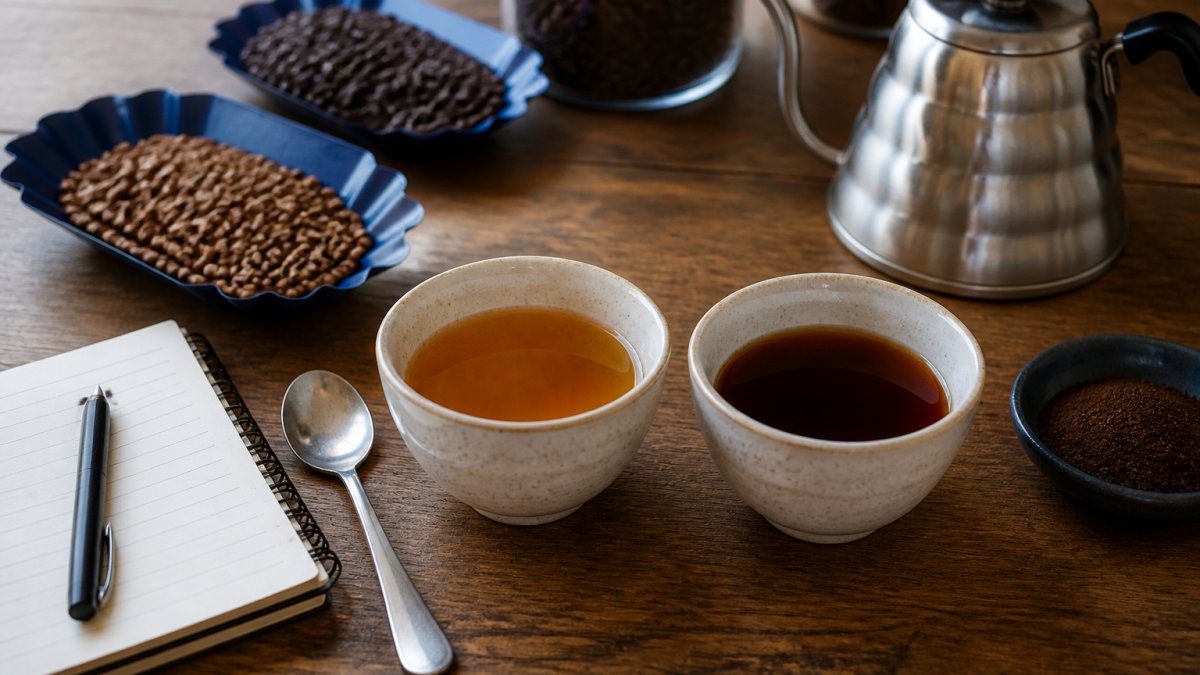
The controlled comparison method
The cleanest comparison uses the same green coffee roasted to two levels. A useful setup is the same single origin roasted to two levels, because variety, processing, and harvest stay constant. If you cannot find one coffee at two roast levels, choose two from the same region and processing method, and note that origin differences will still color your results.
Follow this sequence:
- Weigh, do not scoop. Use a digital scale and dose 15 grams of each coffee. Volume scoops vary with bean density, and light roast beans are denser, so a scoop comparison is not a fair test.
- Grind to the same setting on the same grinder. If one cup runs faster or slower, adjust grind slightly so both brews finish in a similar time window. A light roast often needs a finer grind to extract at the same rate.
- Brew with the same method, water, and temperature. A pour-over with a 1:16 ratio (15 grams coffee to 240 grams water) at 200 to 205 degrees Fahrenheit is a reliable baseline. Use the same water for both; hard or soft water changes perceived acidity.
- Let both cups cool to about 140 degrees Fahrenheit. Cooling reveals sweetness and flaws that hot coffee masks.
- Slurp, do not sip. Slurping spreads coffee across the palate and pushes aroma to the back of the nose, where most flavor perception happens.
- Score four attributes on a simple 1-to-5 scale: acidity, sweetness, body, and finish. Write the numbers before you discuss anything.
- Reveal which cup is which and compare notes. Repeat the next day with the cups in the opposite order to cancel out order bias.
Watch out: if both cups taste sour or both taste bitter, the problem is extraction, not roast level. Fix grind and ratio before you judge the roasts.
What to expect in the cup
When origin is held constant, a light roast typically shows more perceived acidity, a thinner body, and more distinct fruit or floral notes. A medium roast of the same coffee usually shows more sweetness, a rounder body, and chocolate or caramel tones, with the fruit notes softened.
Calibrate your vocabulary first
Taste terminology trips up most beginners. Acidity is a lively, mouth-watering sensation, like the tartness of a green apple; sourness is a sharp, unpleasant, under-extracted note. Body is the weight of the coffee on your tongue, from tea-like to whole-milk thick. Sweetness is a perceived sugar-like quality from roasted sugars, not added sugar. Bitterness is a drying, lingering sensation at the back of the tongue.
Keep notes you can use
A simple notebook entry with the coffee name, roast level, dose, grind setting, water temperature, brew time, and your four scores turns tasting into a repeatable experiment. After three or four sessions you will see a pattern in which attributes you consistently prefer.
Find Your Perfect Roast
Your roast choice should follow your taste, not a rule. The problem is that "I like fruity coffee" or "I want something smooth" does not translate directly into a roast level, because origin, processing, and brew method all shape the cup. Use the guide below to connect what you like to a roast and brewing approach, then test it with the side-by-side method above.
Match your preference to a roast
- You like fruity, floral, or tea-like cups. Start with a light roast, ideally a washed or natural single origin from Ethiopia or Kenya, brewed as pour-over or drip. Expect bright acidity and a lighter body. If it tastes sour rather than bright, grind finer or raise water temperature slightly.
- You like chocolate, caramel, and nutty notes. Start with a medium roast, often a South American or Central American blend, brewed as drip, French press, or espresso. Expect round sweetness and a fuller body. If it tastes bitter or dry, coarsen the grind or shorten the brew.
- You want low perceived acidity. A medium roast is the safer starting point, and a darker roast goes further.
A quick decision path
Ask yourself three questions in order. First, do I want brightness or smoothness? Brightness points light; smoothness points medium. Second, how do I brew most often? Pour-over and drip favor light roasts; French press and espresso favor medium. Third, do I add milk or sugar? If yes, lean medium. If no, either works, and your first answer should decide.
Try both without committing
You do not have to guess. Start with our light and medium offerings: for a bright, origin-forward cup, try our Blonde, a sweet blend from Central America and Africa that shines as sweet espresso. For a balanced everyday medium, our Breakfast Blend is the smooth South American cup most drinkers reach for first.


Freshness matters for flavor. Check the roast date, store beans in an airtight container away from light and heat, and grind just before brewing.
Frequently Asked Questions
Which tastes better, light or medium roast coffee?
Neither roast is objectively better; the difference is what you want from the cup. Light roast keeps more origin flavor, so fruity, floral and citrus notes come through with brighter acidity. Medium roast adds sweetness and body, often with chocolate, caramel or nutty notes, and tastes smoother to most people. If you drink coffee with milk or prefer a mellow cup, medium roast is the safer pick. If you want to taste where the beans came from, start with light roast.
Does light roast have more caffeine than medium roast?
The difference in light roast vs medium roast caffeine content is small, and it usually comes down to how you scoop. Caffeine stays fairly stable through roasting, but light roast beans are denser, so a scoop by volume can weigh slightly more and deliver a touch more caffeine. Measured by weight, the two are close. Brew ratio and grind size affect caffeine far more than roast level, so adjust your dose before blaming the roast.
Is medium roast coffee less acidic than light roast?
Yes, generally. Roasting breaks down some of the acids in green coffee, so a medium roast tastes less sharp than a light roast. That does not mean light roast is bad for your stomach; the acidity shows up mostly as brightness on the tongue. If you are sensitive to acidity, a medium roast brewed with a slightly coarser grind and cooler water is a practical starting point. Ask your doctor if you have a medical concern.
What roast do most coffee shops use?
Most coffee shops default to medium and medium-dark roasts because they work across espresso, drip and milk drinks without tasting sour or thin. Medium roast is forgiving: small mistakes in grind or water temperature are less obvious than with light roast. Light roast is more common in specialty shops that want to highlight a single origin. If you brew at home and want an easy daily cup, medium roast is the lower-risk choice.
Which coffee roast is the smoothest?
Medium roast usually tastes smoother than light roast. Light roast keeps more acidity and origin character, which can read as sharp or tea-like. Medium roast develops more sweetness and body, so the cup feels rounder and finishes cleaner. Dark roast can taste smooth too, but it often trades fruit and floral notes for smoky, bitter flavors. For a smooth everyday cup, look for a medium roast with chocolate or caramel notes and brew it with a French press or drip.
The real challenge is not choosing between light and medium roast. It is finding coffee fresh enough that the roast level still shows up in the cup. theITDGroup LLC roasts every batch to order, sources beans from trusted farms, and delivers straight to your door, so you can compare roasts at their peak instead of guessing from a shelf date. Get started with theITDGroup LLC and taste the difference freshness makes in your next cup.