 ultimate-guide
Why Fresh Roasted Coffee Tastes Better: A 2026 Guide
Table of Contents
- The Science Behind Why Fresh Roasted Coffee Tastes Better
- The Role of Carbon Dioxide and the Coffee Degassing Process
- The Coffee Degassing Process: Why Timing Your Brew Matters
- How to Store Coffee Beans for Maximum Freshness
- Signs of Stale Coffee Beans: What to Look, Smell, and Taste For
- Why Fresh Roasted Coffee Tastes Better for Your Brewing Method
- From Roaster to Cup: How theITDGroup LLC Delivers Freshness
- Frequently Asked Questions
Last Updated: September 21, 2026
The Science Behind Why Fresh Roasted Coffee Tastes Better
Fresh roasted coffee tastes better because the volatile aromatic compounds that create flavor and aroma are still intact, while carbon dioxide from roasting continues to shape how the coffee extracts. This guide from theITDGroup LLC breaks down the chemistry, timing, and storage habits that decide whether your cup tastes vibrant or flat.
Coffee is an agricultural product, and like any fresh food, it begins losing quality the moment it's exposed to air. A bag roasted last week tastes of dried orange and berry notes; one roasted three months ago tastes of cardboard.
Below, we'll show you how to identify the freshness window, store beans correctly, and match your brew method to peak flavor, the three factors that separate a memorable cup from a forgettable one.
The Role of Carbon Dioxide and the Coffee Degassing Process
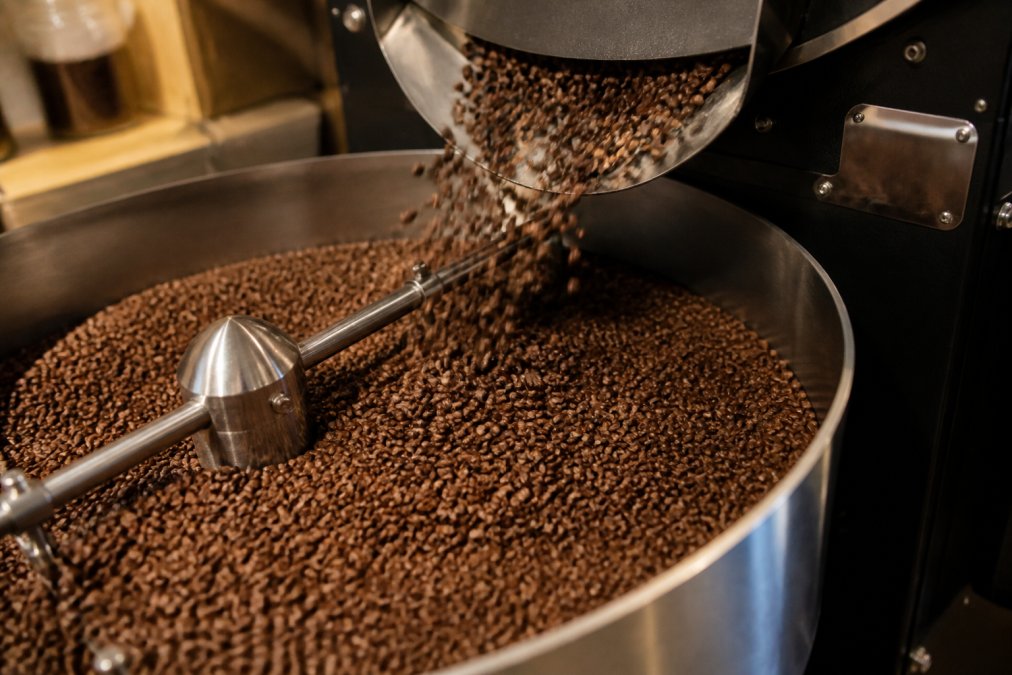
Coffee degassing is the release of carbon dioxide trapped inside beans during roasting. After the roast, beans continue venting CO2 for days, and this process directly affects how water moves through the grounds during brewing.
During roasting, the Maillard reaction and caramelization generate hundreds of volatile aromatic compounds. Those compounds, plus the CO2, sit inside the bean's porous structure. Brew too early and escaping gas pushes water away from the grounds, producing an uneven, sour extraction.
A common mistake is brewing beans the same day they arrive. Most beans need a few days to a week of rest before they hit their best, if the CO2 goes into your brew, your extraction suffers.
The Coffee Degassing Process: Why Timing Your Brew Matters
Timing isn't a minor detail. The same bean can taste underdeveloped on day two, balanced on day seven, and flat by day thirty. Carbon dioxide off-gasses fast in the first 48 hours, slows through the first week, and tapers off over the next two to three weeks. Flavor compounds degrade on a different clock, and the two curves cross at what roasters call the peak window.
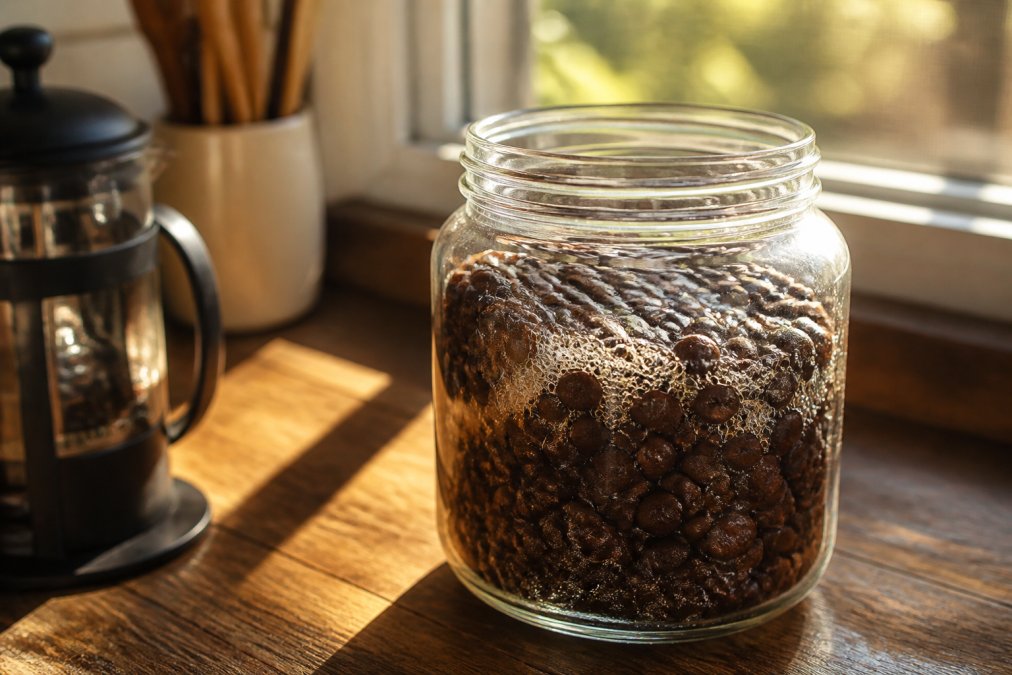
The Peak Window vs. the Freshness Myth
"Fresh" and "peak" are not the same thing. A bean roasted yesterday is fresh but still gushing CO2 and will brew unevenly. A bean roasted three weeks ago is still fresh by retail standards, but its volatile aromatics have begun to fade. The peak window sits between those extremes.
For most medium roasts, the peak window runs roughly 7 to 21 days post-roast. Inside that band, CO2 has dropped enough for water to wet the grounds evenly, while Maillard- and caramelization-derived volatiles remain concentrated enough to register as distinct flavor notes. Before day 7, extraction is unstable; after day 21, oxidation outpaces the remaining aromatics and the cup flattens.
That window shifts with roast level, bean density, and storage.
Brewing Method Sensitivity: Why Espresso and Pour-Over Need Different Rest Times
- Espresso (7-14 days rest): Espresso forces water through a compact puck at high pressure in under 30 seconds. Trapped CO2 resists that flow, producing channeling, gushers, and sour, thin shots. Espresso needs the longest rest of any common method because it has the least margin for uneven extraction.
- Pour-over and drip (3-7 days rest): These methods use gravity and a longer contact time, so a little residual CO2 actually helps, the bloom releases gas and lets water reach the grounds evenly. Pour-over can taste excellent earlier than espresso, but it also fades earlier as aromatics volatilize.
- French press and immersion (5-10 days rest): Full immersion is the most forgiving. A coarse grind and a four-minute steep tolerate more residual gas, so the acceptable rest range is wider. The trade-off is that immersion extracts more of everything, including the bitter compounds that stale coffee releases freely.
- Cold brew (10-21 days rest): Cold water extracts slowly and gently, and the long steep time means CO2 has plenty of opportunity to escape during brewing. Cold brew rewards beans near the end of the peak window, where the sharper early acids have mellowed.
Specialty Coffee Association brewing standards outlines how extraction variables interact, and the same logic applies to freshness: control the variables you can, and let the beans tell you when they're ready.
How to Store Coffee Beans for Maximum Freshness
To store coffee beans for maximum freshness, keep them whole, airtight, and away from light, heat, and moisture. Oxygen reacts with the oils and aromatic compounds on and just beneath the surface, converting bright, fruity volatiles into flat, papery compounds that read as "stale." Heat accelerates that reaction, and moisture accelerates it while adding its own off-flavors.
Practical storage rules that hold up:
- Buy whole beans and grind immediately before brewing. Grinding multiplies the surface area exposed to oxygen, so ground coffee stales in days what whole beans lose in weeks.
- Transfer beans to an airtight container with a one-way valve if the bag lacks one. The valve lets CO2 escape without letting oxygen in, the same principle behind the bags most roasters ship in.
- Skip the fridge. Humid air condenses on cold beans every time the door opens, and coffee oils absorb whatever else is in there, a bag next to last night's takeout will taste like last night's takeout.
- Store in a cool, dark cabinet, not above the stove or coffee maker. Heat is the accelerant; a spot that stays near room temperature and out of direct light is the baseline.
- Freeze larger quantities in sealed portions if you won't finish them within a few weeks. This is the one storage rule most guides get wrong by omission, so it deserves its own explanation below.
Why Freezing Works, and How to Do It Without Ruining the Beans
Done correctly, the freezer is the best long-term storage method available to a home brewer. Chemical reaction rates roughly double for every 10°C (about 18°F) of warmth and slow correspondingly as temperature drops. At around 0°F, the oxidation and volatile-loss reactions that stale coffee at room temperature slow to a crawl, keeping beans near their peak for several months rather than weeks.
Environmental Impact of Chasing Freshness
The obsession with maximum freshness has a cost. Overnight shipping, single-use packaging, and frequent small orders add emissions, and the pressure to buy "just-roasted" beans pushes buyers toward air-freighted, individually boxed deliveries with a heavier footprint than the coffee itself. Buying in slightly larger quantities and freezing properly often delivers better flavor and a lighter footprint than weekly air-freighted deliveries.
Signs of Stale Coffee Beans: What to Look, Smell, and Taste For
Stale coffee announces itself before you brew it. Learn the sensory indicators and you'll never be fooled by an old bag again.
- Aroma: Fresh beans smell sweet and complex; stale beans smell dusty
- Surface: Oily sheen on dark roasts fades as beans age
- Bloom: Fresh grounds puff up dramatically when hit with hot water; stale grounds barely react
- Taste: Flat body, hollow middle, and bitterness that dominates the flavor profile
Why Fresh Roasted Coffee Tastes Better for Your Brewing Method
Brewing method sensitivity is the variable most drinkers overlook: each method extracts differently and has its own ideal resting period.
From Roaster to Cup: How theITDGroup LLC Delivers Freshness
The gap between "roasted recently" and "roasted to order" is where most coffee subscriptions fail. theITDGroup LLC roasts each batch to order, so your beans ship close to the roast date rather than sitting in a warehouse.
Frequently Asked Questions
How long does coffee stay fresh after roasting?
Coffee stays at its best for about 2 to 4 weeks after the roast date if stored properly in an airtight container away from light and heat. After that, oxidation and degassing cause noticeable flavor loss. For peak flavor, aim to use beans within 7 to 14 days. TheITDGroup LLC roasts to order, so your beans arrive close to the roast date, giving you a wider window to enjoy them.
What are the signs of stale coffee beans?
Stale coffee beans lose their aroma, taste flat or papery, and may have a dull, faded appearance. Fresh beans smell sweet and complex, while stale ones smell like cardboard or nothing at all. If your brewed coffee tastes bitter without nuance or lacks the tasting notes on the bag, it's likely stale. Check the roast date and storage conditions to confirm.
Does coffee lose flavor if it is not fresh?
Yes, coffee loses flavor as it ages due to oxidation and the release of volatile aromatic compounds. Oxygen reacts with oils in the beans, causing rancidity and dulling the flavor profile. Within days of roasting, the most delicate notes fade. Proper storage slows this, but fresh roasted coffee always delivers more complexity and sweetness than older beans.
Why does store-bought coffee taste different than fresh roasted?
Store-bought coffee often sits on shelves for months, so it has already lost many volatile compounds and undergone oxidation. Fresh roasted coffee, like that from theITDGroup LLC, is roasted to order and shipped quickly, preserving aroma, acidity, and flavor complexity. The difference is most obvious in the cup: fresh coffee tastes lively and nuanced, while old coffee tastes flat and stale.
Freshness is a moving target, and the gap between a great cup and a forgettable one usually comes down to timing, storage, and how close your beans were to the roaster. theITDGroup LLC roasts to order, ships whole bean, and offers single-origin lots with detailed tasting profiles so you know exactly what you're brewing. Browse the catalog, pick a roast that matches your method, and get started with theITDGroup LLC to taste the difference a fresh roast makes.