 comparison
Atlas Tea Subscription Review: Plans, Cost & Value
Last Updated: October 23, 2026
Quick Summary
The Atlas tea subscription is a curated loose-leaf tea service that ships a rotating selection of single-origin and blended teas monthly. It delivers genuine tea discovery, but the value depends on how much tea you drink and whether you'll pay a per-serving premium for curation.
- A typical box holds enough tea for roughly a month of daily cups.
- A $40 box that brews 80 cups works out to about $0.50 per cup.
- Re-steeping whole-leaf tea twice can roughly double your effective cup count.
- Most tea subscriptions renew automatically, so cancel before the cutoff to avoid the next box.
- Pausing suspends shipments for one to three months, while canceling ends the subscription entirely.
Table of Contents
- Atlas Tea Subscription Review: The Verdict Up Front
- How the Atlas Tea Subscription Works
- Atlas Tea Club Review: Tea Selection and Origins
- Tea Subscription Cost: Breaking Down the Numbers
- Loose Leaf Tea Subscription vs. Tea Bags
- Is Atlas the Best Tea Subscription for You?
- Cancellation, Pausing, and Renewal Terms
- Conclusion
- Frequently Asked Questions
Atlas Tea Subscription Review: The Verdict Up Front
The Atlas tea subscription is a curated loose-leaf tea service that ships a rotating selection of single-origin and blended teas monthly.
At theITDGroup LLC, we sell loose-leaf tea ourselves, so we have a bias worth naming. Below, we break down the plans, cost per cup, cancellation terms, and shipping details most reviews skip.
What We Liked and What We Didn't
What works: The Atlas tea subscription leans into discovery. Each monthly box introduces teas you probably wouldn't pick off a shelf yourself, and the tasting notes give you a starting point for brewing.
What doesn't: The recurring cost adds up fast, and the per-serving math is rarely flattering compared to buying a single pouch you already love.
How the Atlas Tea Subscription Works
The Atlas tea subscription works like most curated tea boxes: you choose a plan, the service ships monthly, and each box contains loose-leaf teas with tasting notes and steeping instructions.
You order online, pick your teas or let the service curate, and a sealed pouch arrives each month, a low-effort way to build variety without researching every purchase.
What's Included in Each Monthly Box
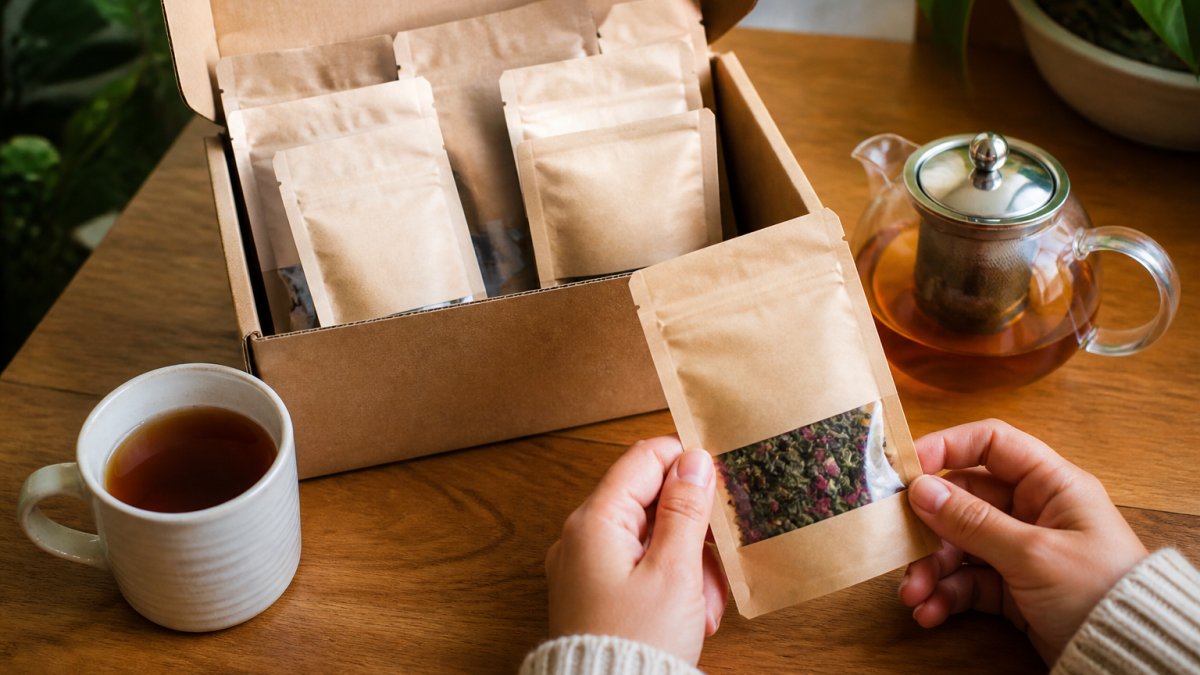
Each box includes several loose-leaf tea pouches, tasting notes, and brewing guidance. Servings depend on the plan tier, but a typical box holds enough tea for roughly a month of daily cups. Sealed packaging protects the leaves from light and air.
Choosing Your Teas and Personalization
Personalization is where tea subscriptions earn their keep or fall flat. The better services let you flag preferences, caffeine-free herbal, green over black, single-origin over blends. If a service ships a fixed rotation with no input, you're paying for curation you can't steer. Ask before subscribing whether you can set preferences or skip a category.
Atlas Tea Club Review: Tea Selection and Origins
The Atlas tea club review comes down to one question: is the tea selection actually interesting?

Origin transparency is the differentiator. A tea that names its country of origin and processing method tells you more than a pretty label.
Tea Subscription Cost: Breaking Down the Numbers
The tea subscription cost decides whether a box is a treat or a habit. Monthly tea boxes price per shipment, but the real comparison is cost per serving. Divide the box price by the cups it brews, and you get the number that matters.
Here is the actual math, worked through with typical figures so you can plug in your own plan.
The Cost-Per-Cup Formula
Every tea subscription can be reduced to one number: cost per brewed cup. Here is how to get there in three steps.
- Find the grams per pouch. A typical loose-leaf tea pouch holds 50 to 100 grams. A standard cup uses about 2 to 3 grams of leaf, so a 50-gram pouch brews roughly 17 to 25 cups, and a 100-gram pouch brews roughly 33 to 50 cups.
- Count the cups in the box. Multiply the grams per pouch by the number of pouches, then divide by your dose per cup. A box with four 50-gram pouches holds 200 grams, or about 67 to 100 cups at 2 to 3 grams each.
- Divide the box price by the cup count. A $40 box that brews 80 cups works out to about $0.50 per cup. A $25 box that brews 40 cups works out to about $0.63 per cup. The cheaper box is the worse value.
Worked Example: Three Plan Tiers
Here is how the math plays out across a small, medium, and large box, using representative figures. Treat these as a template, not a quote, confirm the actual grams and price on the plan page before you buy.
| Plan tier | Pouches per box | Grams per pouch | Total grams | Cups at 2.5 g | Box price | Cost per cup |
|---|---|---|---|---|---|---|
| Starter | 2 | 50 g | 100 g | ~40 | $22 | ~$0.55 |
| Standard | 4 | 50 g | 200 g | ~80 | $38 | ~$0.48 |
| Discovery | 6 | 50 g | 300 g | ~120 | $52 | ~$0.43 |
The pattern holds across most curated tea boxes: larger boxes cost less per cup because shipping and packaging spread over more tea.
The Second-Steep Multiplier
Loose-leaf tea changes this math in your favor. A whole-leaf tea can usually be steeped two or three times, and each steep still yields a drinkable cup. Re-steep a 50-gram pouch twice and your effective cup count roughly doubles, dropping a $0.50 cup to $0.25. Tea bags rarely reward a second steep, which is why the loose-leaf premium often washes out per cup.
What You're Actually Paying For
When a subscription's cost per serving runs well above a pouch you already love, you're paying for discovery, not tea. That's worth it only if you want the discovery. A subscription bundles tea, curation, tasting notes, and shipping into one charge, and curation is the part you can't buy separately.
Compare Against Buying by the Pouch
The benchmark for any subscription is the cost per cup of loose-leaf tea you buy outright. A 100-gram pouch priced around $20 to $25 works out to roughly $0.40 to $0.75 per cup at 2.5 grams per serving, before re-steeping. If a subscription lands in that range, you're paying a fair price for curation; well above it, you're paying a premium for the box, notes, and surprise.
Loose Leaf Tea Subscription vs. Tea Bags
Loose-leaf tea beats tea bags on flavor, and it isn't close.
Tea bags win on convenience and cleanup, full stop. If you brew at a desk or on the go, bags are easier. But if you're paying subscription prices, you're paying for quality, and loose-leaf tea is where that quality lives.
Is Atlas the Best Tea Subscription for You?
The best tea subscription matches how you actually drink tea, not the prettiest box. Atlas suits the curious drinker who wants guided discovery and doesn't mind a monthly delivery, and gift-givers who want a ready-made three-month subscription. It does not suit someone who knows exactly what they like and brews two cups a week.
For readers who want control over every leaf, we'd point you to buying loose-leaf tea by the pouch instead. Our own Matcha and Earl Grey ship as single pouches at $22.99, so you reorder only what you finish. If you want variety without a subscription commitment, our Jasmine and Moroccan Mint cover very different flavor profiles, and our Masala Chai handles the bold, spiced end of the spectrum.


Cancellation, Pausing, and Renewal Terms
Cancellation and pausing terms are where subscription services hide the friction, so look hard before you enter card details. Most tea subscriptions renew automatically at the end of each term, so a three-month subscription becomes a recurring charge unless you cancel. Pausing is often available but not always advertised.
How Auto-Renewal Usually Works
A tea subscription typically bills on a fixed cycle, monthly, quarterly, every six months, or annually, and recurs automatically until you cancel. The renewal date usually matches your original order date, and the charge often posts a day or two before the box ships. Cancel after the charge posts but before shipping, and you may still be on the hook for that shipment.
A common pattern is a discounted first term followed by renewal at the standard rate. Read the plan page for the renewal price, not just the introductory price, because the two are frequently different.
The Cancellation Window
The single most important number in any subscription is the cancellation cutoff. Most services require you to cancel a set number of days before the next renewal date, commonly somewhere between 24 hours and seven days. Miss the window and the next box ships and bills. Before you subscribe, find the cutoff and put a reminder on your calendar a few days ahead of it.
Pausing vs. Canceling
Pausing and canceling are not the same thing, and the difference affects your price. Pausing suspends shipments for a set period, usually one to three months, then resumes automatically, right for travel, a pantry backlog, or a budget squeeze.
A common pattern is that pausing is available only on longer commitments, while month-to-month plans can be canceled but not paused. Ask which applies to the plan you're considering.
Gift Subscriptions and Conversion
Gift subscriptions deserve scrutiny. A prepaid three- or six-month gift typically does not auto-renew, but some services convert it into a recurring subscription for the recipient unless someone actively declines. If you're giving a tea subscription as a gift, confirm whether the recipient must enter payment details to continue and whether the gift renews on its own.
Refunds and Unopened Boxes
Refund policies on tea subscriptions are usually narrow. Because tea is a food product, many services won't accept returns on opened pouches. Some refund or replace damaged boxes or orders canceled within the cutoff window; a few offer a satisfaction guarantee on the first box only. Get the policy in writing before ordering, and photograph any damaged shipment before opening it.
A Pre-Subscription Checklist
Before you enter card details, get plain answers to these:
- Does the plan auto-renew, and on what date am I charged?
- What is the renewal price after any introductory rate ends?
- What is the exact cancellation cutoff before the next box ships?
If a service can't answer those plainly, treat that as your answer. A subscription you can't pause is a subscription you'll resent.
Conclusion
The Atlas tea subscription earns its place for drinkers who want curated discovery and a monthly delivery that keeps the cupboard interesting. It's a weaker fit for anyone who knows their favorites or brews inconsistently.
If you'd rather build a tea selection on your own terms, theITDGroup LLC roasts and ships to order, with single pouches at $22.99 and fast, reliable delivery.
Frequently Asked Questions
What is included in an Atlas tea subscription?
Each monthly box ships a curated selection of loose-leaf teas, typically covering multiple styles such as black, green, oolong, white, and herbal blends. Boxes usually include tasting notes and steeping instructions for each tea, and some plans offer single-origin selections or country-of-the-month themes. The exact number of teas and servings per box varies by plan tier, so check the current plan details before subscribing. If you want to sample specific styles first, you can order individual loose-leaf teas like Earl Grey or Jasmine from theITDGroup LLC at $22.99 each.
Is the Atlas tea subscription worth the price?
Value depends on how much tea you drink and whether you want discovery built in. Divide the monthly price by the number of servings per box to get your cost per serving, then compare that to buying loose-leaf tea you already know you like. If you enjoy trying new origins and seasonal blends, the curation saves you time. If you have a narrow favorite, a one-time purchase like Moroccan Mint from theITDGroup LLC at $22.99 may cost less per cup.
Can you cancel an Atlas tea subscription?
Most tea subscription services allow cancellation or pausing from your account dashboard, but the exact terms, notice period, and refund policy vary by provider. Before you subscribe, look for the cancellation window, whether you can skip a month, and how renewals are billed. If you travel often, confirm that you can pause deliveries rather than cancel outright. Keep a copy of the confirmation email in case a shipment is processed before the change takes effect.
How does the tea subscription cost compare with buying loose leaf tea directly?
A subscription bundles curation and delivery into the price, so the cost per serving is often higher than buying a single pouch outright. For example, theITDGroup LLC sells 12-ounce-style loose-leaf pouches such as Masala Chai and Jasmine at $22.99 each, and those last many cups. Compare the subscription's servings per box against that per-pouch math. If you want variety without a recurring charge, ordering a few single teas is a lower-commitment way to test what you like.
Can you choose the teas in an Atlas tea subscription?
Some tea subscription plans let you set preferences such as caffeine-free, black tea only, or herbal, while others send a fixed curated selection each month. Personalization and dietary preferences are worth confirming before you sign up, especially if you avoid caffeine or specific ingredients. If choice matters more than surprise, a loose-leaf tea subscription that lets you build your own box is usually the better fit. Otherwise, treat the subscription as a discovery tool and buy favorites separately.
The real question isn't whether a tea subscription is nice to have. It's whether the tea in the box beats what you'd choose yourself. Start with the per-cup math, check the pause and renewal terms, and let your actual brewing habits make the call. At theITDGroup LLC, we'd rather you buy the right tea than the most tea. Find your perfect roast and taste the difference fresh sourcing makes.