 listicle
Buy Fresh Roasted Coffee Beans Online: 2026 Guide
Table of Contents
- Why Roast Date Matters More Than You Think
- Roast Date vs Best By Date: What the Label Actually Tells You
- Best Coffee Beans for Home Espresso: What to Look For
- How to Store Coffee Beans for Maximum Freshness
- Whole Bean vs Ground: Which Should You Buy Online?
- Single Origin vs Blends: Matching Beans to Your Brew Method
- Conclusion
- Frequently Asked Questions
Last Updated: September 27, 2026
Why Roast Date Matters More Than You Think
If you want to buy fresh roasted coffee beans online, the roast date is the single most important number on the bag. Coffee is a perishable product, not a shelf-stable one. Once beans leave the roaster, they begin a slow decline that no valve, no foil, and no marketing copy can fully stop.
This guide from theITDGroup LLC walks through what actually determines freshness, how to read a label correctly, and how to match beans to your brewing setup.
Freshly roasted coffee releases carbon dioxide for several days after roasting, a process called degassing (Coffee Decoded: What is “freshly roasted” coffee?). That gas protects flavor early on, then fades. After that window closes, oxygen takes over and stale flavors set in. A bean roasted three weeks ago may still be safe to drink, but it will taste flat compared to one roasted three days ago.
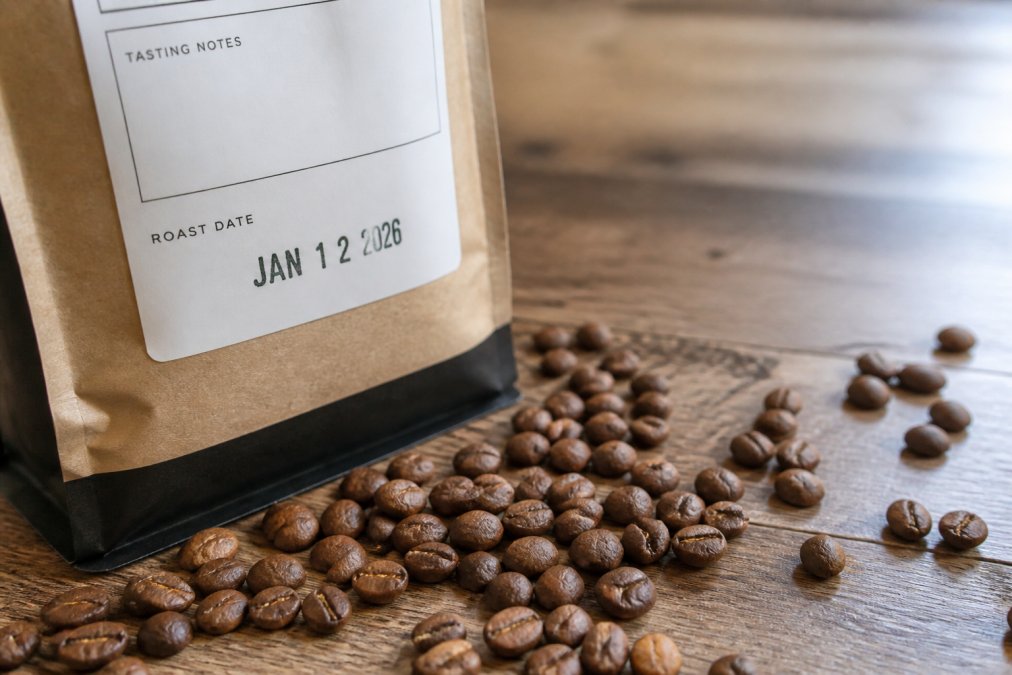
Most grocery store coffee carries no roast date at all. That's the tell. If a roaster is proud of when the beans were roasted, they print it. When they don't, freshness is usually the reason.
Roast Date vs Best By Date: What the Label Actually Tells You
A roast date tells you when the beans were roasted. A best by date tells you when the roaster thinks the coffee will still be acceptable to drink. Those are two very different pieces of information.
Roast date vs best by date comes down to transparency. The roast date is a fact. The best by date is a judgment call, often set months out to satisfy retail shelf-life rules rather than to protect flavor.
Here's how the two compare:
| Label Type | What It Means | Typical Window | Usefulness |
|---|---|---|---|
| Roast date | Exact day beans were roasted | Printed at roast | High |
| Best by date | Roaster's guess at shelf life | Often 6-12 months out | Low |
| No date | Unknown freshness | Unknown | None |
A bag stamped "best by" a year from now tells you almost nothing. A bag stamped with a roast date two days ago tells you everything you need to know. When you buy fresh roasted coffee online, look for the roast date first.
Best Coffee Beans for Home Espresso: What to Look For
The best coffee beans for home espresso share a few traits: a roast profile built for pressure, enough rest time after roasting, and a flavor profile that holds up against milk or stands alone as a shot.
Espresso is unforgiving. It pushes hot water through finely ground coffee at high pressure, so the bean needs structure. Darker roasts and blends tend to perform well because they extract consistently and resist the sourness that under-extracted light roasts can show.
For espresso, look for:
- A medium to dark roast, or a blend built specifically for espresso
- Beans rested at least 5-7 days after the roast date before brewing
- A flavor profile with chocolate, caramel, or nutty notes that survive pressure extraction
The 6 Bean Blend from theITDGroup LLC is a dark roast built for espresso, blending coffees from around the world.

How to Store Coffee Beans for Maximum Freshness
Learning how to store coffee beans for maximum freshness means understanding what you're actually fighting. Freshly roasted beans are still alive in a chemical sense: they off-gas carbon dioxide for days after roasting, and once that CO2 slows, oxygen moves in and oxidation begins. Storage is really about managing that gas exchange and slowing oxidation.
Here's how the main container types compare:
| Container | Oxygen Control | Light Blocking | Notes |
|---|---|---|---|
| Original valve bag | Good (one-way valve) | Depends on bag | Best default; squeeze out air before resealing |
| Airtight opaque canister | Good once sealed | Yes | Good for daily use; avoid clear glass |
| Clear glass jar | Poor | No | Light degrades oils; use only if kept in a dark cabinet |
| Vacuum-sealed bag | Excellent | Depends on bag | Best for long-term freezer storage |
A few mechanics worth knowing:
- Degassing window. Beans release most of their CO2 in the first 3-7 days post-roast. Sealing them airtight during that window can trap gas and cause pressure buildup; the one-way valve solves this.
- Oxygen is the main enemy. Every time you open a container, fresh oxygen enters. Buy in quantities you'll finish within 2-4 weeks rather than months.
- Heat accelerates staling. A cabinet near the stove or on top of the fridge cycles through temperature swings that speed oxidation.
- Moisture ruins beans fast. That's why the fridge is a bad idea, condensation forms every time you pull the container out.
Whole Bean vs Ground: Which Should You Buy Online?
Whole bean coffee stays fresh longer than ground coffee, and the gap is large. Grinding exposes far more surface area to oxygen, so ground coffee stales in days while whole beans hold for weeks. That's the core tradeoff. If you have a grinder, buy whole bean. If you don't, buy ground but plan to finish it fast, and choose a grind matched to your brewer.
| Factor | Whole Bean | Ground |
|---|---|---|
| Freshness window | Weeks | Days |
| Flavor retention | High | Lower |
| Convenience | Needs a grinder | Ready to brew |
| Best for | Enthusiasts, espresso | Drip, quick mornings |
Specialty Coffee Association's freshness guidance
Single Origin vs Blends: Matching Beans to Your Brew Method
Single origin and blends serve different purposes, and matching the bean to your brew method matters more than most buyers realize. This is the brewing method matching angle that generic shop pages skip entirely.
| Brew Method | Best Match | Why |
|---|---|---|
| Espresso | Dark roast, blend | Consistent extraction under pressure |
| Pour-over | Single origin, light-medium | Highlights acidity and nuance |
| Drip | Medium roast, blend | Balanced, forgiving, repeatable |
| French press | Medium-dark, single or blend | Body and richness come through |
Specialty Coffee Association's freshness guidance
Conclusion
Buying fresh roasted coffee online comes down to one habit: check the roast date before anything else. Origin, roast level, and price all matter, but none of them rescue stale beans. Pair that with proper storage and a grind matched to your brewer, and you'll taste the difference in the first cup.
Frequently Asked Questions
How do I know if coffee beans are truly fresh when buying online?
Check for a printed roast date on the bag, not just a best-by date. Fresh roasted coffee beans peak in flavor between 4 and 14 days after roasting. If the bag only shows a best-by date, ask the roaster when the beans were actually roasted. A roast-to-order model means your beans ship within days of roasting, which gives you a clear freshness advantage over grocery store stock that may sit for months.
What is the best coffee bean for home espresso?
Dark and medium-dark roasts work best for home espresso because they produce a syrupy body and bold flavor that stands up to pressure extraction. The 6 Bean Blend is a dark roast blend of coffees from around the world, designed specifically for espresso. For a medium roast option, the House Blend delivers a smooth, clean shot with nutty and sweet chocolate notes. Look for beans roasted within the past two weeks for optimal crema and flavor.
How long do fresh roasted coffee beans stay fresh after delivery?
Whole bean coffee stays at peak flavor for about 2 to 4 weeks after the roast date if stored properly. After that, oxidation gradually dulls the aroma and flavor. Ground coffee loses freshness much faster, often within 1 to 2 weeks. To extend shelf life, keep beans in an airtight container away from light, heat, and moisture. Freezing whole beans in a sealed bag can preserve freshness for up to 2 months.
What is the difference between roast date and best by date on coffee packaging?
A roast date tells you exactly when the beans were roasted, which is the single most useful freshness indicator. A best-by date is a manufacturer's estimate of when quality may decline, but it does not tell you how old the beans actually are when you buy them. Beans roasted 6 months ago can still carry a best-by date months in the future. Always prioritize bags with a visible roast date.
Does buying coffee beans online save money compared to local shops?
Online ordering can save money when you buy directly from a roaster that roasts to order. Prices for 12-ounce bags typically range from $20 to $25, similar to or slightly below specialty cafe retail. The real savings come from freshness: you waste less coffee when beans taste better and brew consistently. Sample packs let you try multiple origins before committing to a full-size bag.
This article was written by theITDGroup LLC team. For the freshest beans, roasted to order and shipped to your door, explore the full collection at theITDGroup LLC.