 how-to
How to Adjust Coffee Strength Without Changing Grind Size
Last Updated: October 30, 2026
Quick Summary
To adjust coffee strength without changing grind size, change the coffee-to-water ratio: add more coffee, use less water, or both. Increase your dose by about 1 gram per 100 grams of water, or cut water by 10 to 20 grams, and change only one variable per brew.
- Coffee strength is the amount of dissolved coffee solids; grind size only changes extraction speed.
- Start pour-over at 1:16, drip at 1:17, French press at 1:15, and espresso at 1:2 dose to yield.
- For espresso, keep the grind fixed and adjust dose or yield, never both in the same shot.
- Add water first to weaken coffee, then reduce dose by about half a gram at a time.
- Weigh dose and water with a digital scale instead of measuring by volume with a scoop.
Table of Contents
- Why Coffee Strength and Grind Size Are Separate Levers
- The Coffee-to-Water Ratio: Your Main Strength Control
- How to Make Coffee Stronger Without Touching the Grinder
- How to Make Coffee Weaker Without Ruining the Flavor
- Weak Coffee Troubleshooting: When the Problem Is Not Strength
- Method-by-Method Adjustments for Espresso, Pour-Over, Drip, and French Press
- Build a Repeatable Tasting Workflow With Your Fresh Roast
- Frequently Asked Questions
Why Coffee Strength and Grind Size Are Separate Levers
Most home brewers reach for the grinder the moment a cup tastes off. That instinct is usually wrong.
Coffee strength is the amount of dissolved coffee solids in your cup: more grounds, less water, or both makes it stronger.
Changing grind size to fix strength also changes extraction, which is why so many brews end up sour, bitter, or muddy.
Strength vs. Extraction: What You Are Actually Tasting
Strength is concentration. Extraction is how much of the bean's flavor you pulled out. A strong cup can be under-extracted, and a weak cup can be over-extracted.
Here is the practical split:
- Too weak but tastes fine? Add more coffee or less water. Leave the grinder alone.
- Tastes sour or sharp? That is under-extraction. Grind finer or brew longer.
- Tastes bitter or drying? That is over-extraction. Grind coarser or shorten the brew.
The confusion costs money: people buy a better grinder when the real fix was a scoop of coffee. Keep the two levers separate and you will solve most bad cups in one adjustment.
The Coffee-to-Water Ratio: Your Main Strength Control
The coffee-to-water ratio is the most reliable way to change coffee strength without touching grind size. Change that number and strength moves predictably, every time.
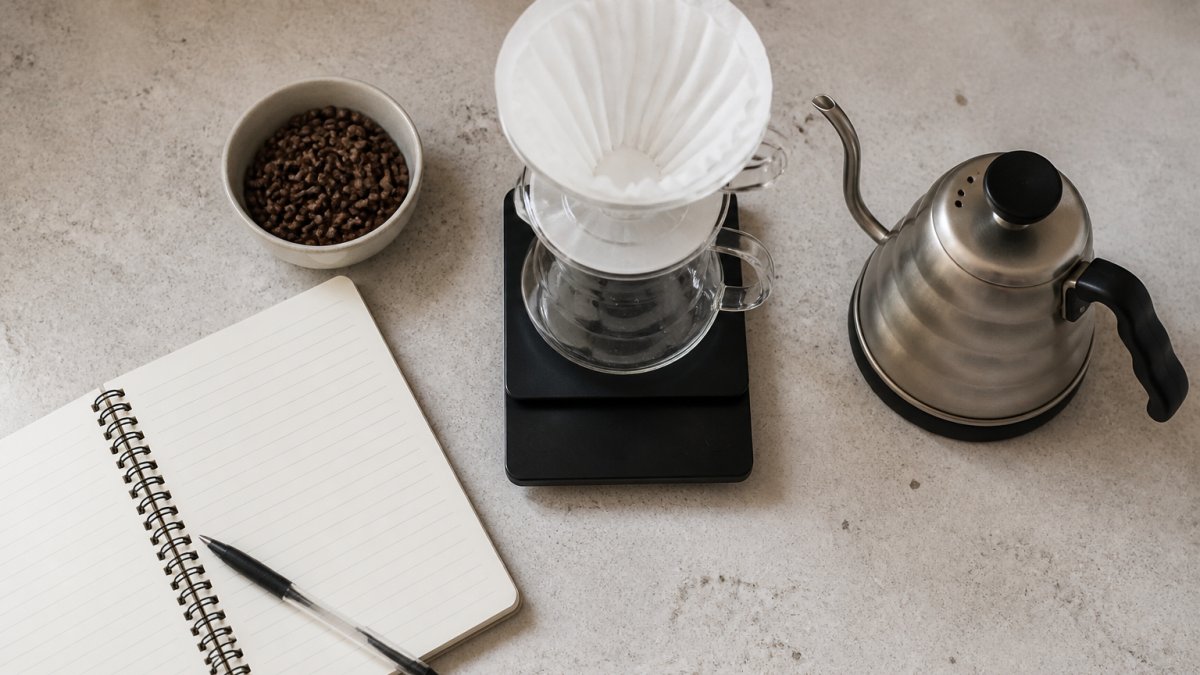
Weigh your coffee and water. Skip the scoop.
Measuring by volume is a common mistake: bean size and roast level change how much fits in a spoon, so two scoops can deliver very different doses.
Starting Ratios by Brew Method
Use these as starting points, then adjust to taste. Ratios are coffee to water by weight.
| Brew Method | Starting Ratio | What It Tastes Like |
|---|---|---|
| Pour-over | 1:16 | Balanced, bright |
| Drip | 1:17 | Smooth, easy drinking |
| French press | 1:15 | Full body, heavier |
| Espresso | 1:2 (dose to yield) | Concentrated shot |
Want a stronger cup? Move toward 1:14. Weaker? Move toward 1:18. Make one change at a time and taste before adjusting again.
If you are new to pour-over and want the full process, our step-by-step pour-over guide walks through the whole brew from bloom to finish. And if grind size still feels like a mystery, this guide on the best grind size for pour over coffee explains it before you start adjusting strength around it.
How to Make Coffee Stronger Without Touching the Grinder
To make coffee stronger without changing grind size, increase the dose, reduce the water, or both. Everything below is just how to do it cleanly.
Follow these steps in order:
- Add coffee first. Increase your dose by about 1 gram per 100 grams of water. Taste.
- Then cut water. Keep the dose and drop water by 10 to 20 grams. Taste again.
- Change one variable per brew. Two changes at once and you will not know what worked.
- Keep the grind fixed. Note your setting and leave it. This is the entire point.
- Record what you did. A short note on dose, water, and taste saves you from repeating mistakes.
A small dose bump often fixes a weak cup with no flavor penalty. Cutting water too far can make a cup taste sharp by concentrating the same extraction into less liquid.
For espresso, strength comes from dose and yield. More coffee in the basket, or less liquid out, gives a stronger shot.
How to Make Coffee Weaker Without Ruining the Flavor
To make coffee weaker, add water or reduce the dose, gradually. Overcorrecting leaves a thin, hollow cup that no amount of tweaking rescues.
Try this order:
- Add water first. Increase brew water by 10 to 20 grams and taste.
- Then reduce dose. Drop coffee by about half a gram at a time.
- Avoid adding water after brewing unless you are making an americano. Post-brew dilution flattens flavor fast.
Water quality matters as well as water volume. The Specialty Coffee Association's water standards set target ranges for mineral content, and they are worth checking if your cups taste flat no matter what you change.
If you dilute with tap water that tastes off on its own, you will taste it in the cup. Filtered water is a cheap fix.
Weak Coffee Troubleshooting: When the Problem Is Not Strength
Weak coffee troubleshooting starts with one question: does the cup taste thin, or sour and thin? Thin alone is a strength problem. Sour and thin together usually means under-extraction, and adding coffee will not fix it.
Run this check before you change anything:
- Does the cup taste watery but clean? Increase dose or reduce water.
- Does it taste sour, sharp, or like green vegetables? Grind finer or brew longer.
- Does it taste bitter and drying? Grind coarser or shorten the brew.
Stale grounds are a frequent culprit. Our guide on why fresh roasted coffee tastes better explains what changes as beans age and why roast date matters more than most labels suggest.
Method-by-Method Adjustments for Espresso, Pour-Over, Drip, and French Press
Each brew method gives you different strength controls, but the grind stays fixed in all of them.
Espresso: Strength comes from dose and yield, not grind. Keep the grind steady and move one of these:
- Dose: Start at 18 grams in a double basket. To go stronger, add 0.5 gram at a time up to about 20 grams, then re-check the shot time. A bigger dose in the same basket can slow the shot, so watch for channeling or a gusher.
- Yield: Keep the dose fixed and cut the yield. A 1:2 ratio (18 grams in, 36 grams out) is a common starting point. For a stronger, more syrupy shot, move toward 1:1.5 (18 grams in, 27 grams out). For a longer, softer shot, move toward 1:2.5.
- Trade-off: Cutting yield too far concentrates both flavor and any extraction faults. If the shot tastes sharp and hollow at 1:1.5, the problem is extraction, not strength, stop cutting yield and fix the grind or puck prep.
If you do not own a machine, our guide on how to make espresso without an espresso machine covers strong, concentrated alternatives you can brew at home.
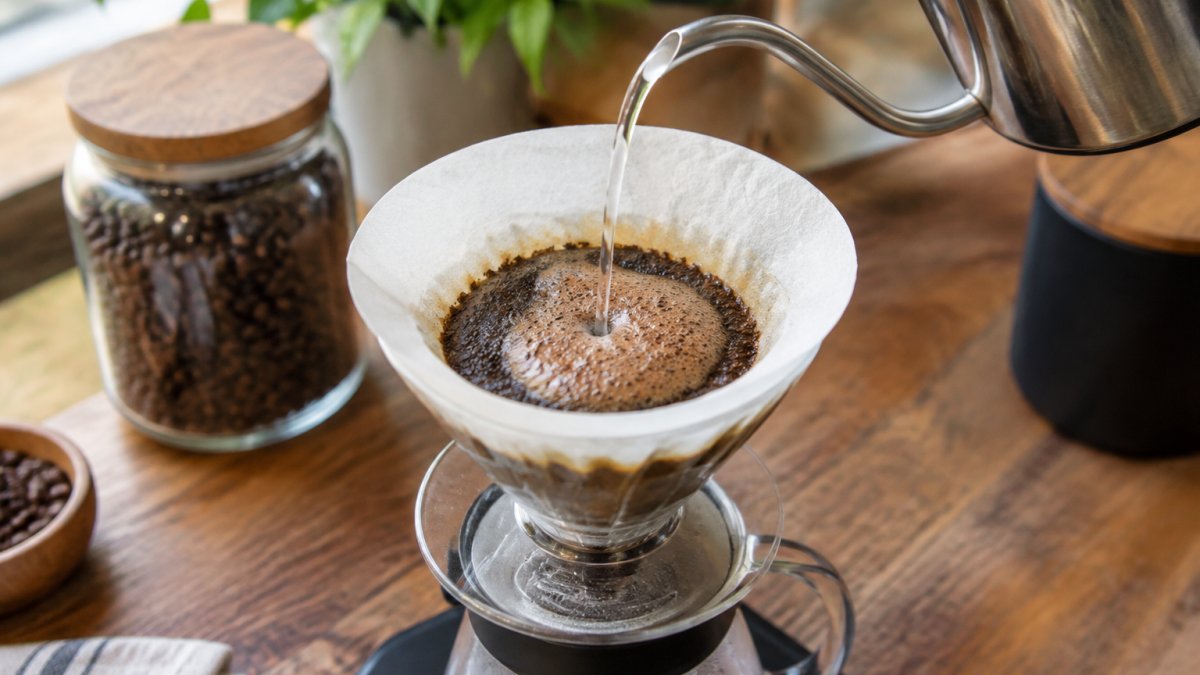
Pour-over: Dose and water volume are your strength levers, but pour technique is a hidden extraction variable.
- Dose: Start at 15 grams of coffee to 240 grams of water (1:16). To go stronger, add 1 gram of coffee and keep water at 240 grams. To go weaker, drop 1 gram.
- Water: If you like the dose, cut water by 10 to 20 grams for a stronger cup. A 15-gram dose at 220 grams of water is roughly 1:14.7.
- Trade-off: Cutting water shortens the contact time and can leave the bed under-extracted. If the cup tastes sour after a water cut, add the water back and increase dose instead.
Drip: Most drip machines are forgiving, so small dose changes show up clearly.
-
Dose: Add or subtract about 1 gram of coffee per 100 grams of water. For a 1,000-gram (about 34-ounce) batch, that is a 10-gram dose change, noticeable but not drastic.
-
Water: Use the machine's markings only as a starting point. If your machine has a small brew basket, a large dose bump can overflow the basket or stall the flow.
-
Trade-off: Drip machines hold water temperature less steadily than a kettle, so a very large dose in a small basket can extract unevenly. Keep dose changes modest and taste before adjusting again.
-
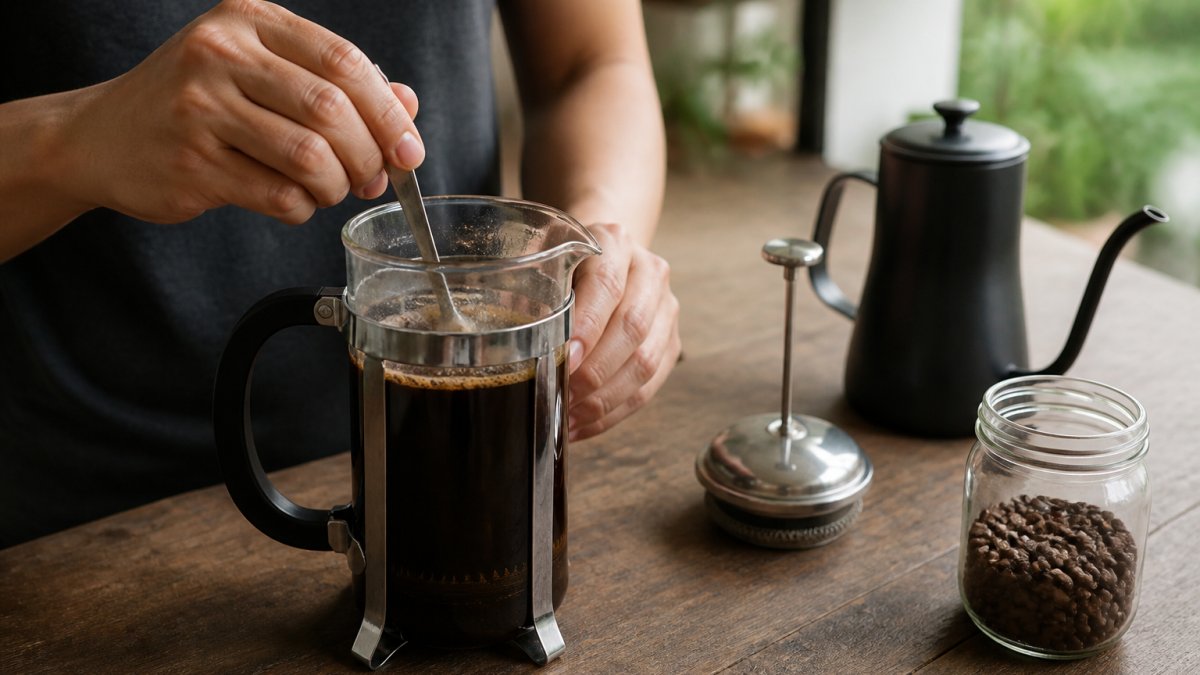
Dose: Start at 30 grams of coffee to 500 grams of water (1:16.7). To go stronger, add 2 grams and keep the steep time the same. To go weaker, drop 2 grams.
-
Steep time: A longer steep extracts more, so if you add coffee for strength, do not also extend the steep or you will overshoot into bitterness. Keep the steep at 4 minutes while you adjust dose.
-
Trade-off: A very fine grind plus a long steep plus a big dose is the classic over-extraction trap. Since the grind is fixed here, use dose and time as your only levers and change one at a time.
The pattern holds everywhere: pick the strength lever for your method, move it in small steps, and leave the grinder setting alone.
Build a Repeatable Tasting Workflow With Your Fresh Roast
A repeatable workflow beats a perfect recipe, because you can actually repeat it. Change one strength variable at a time, measure it, and write down what worked.
What you need:
- A digital scale that reads to 0.1 gram. The single most important tool, it turns dose and water into numbers you can repeat. A basic kitchen scale works; one with a timer is better.
- A notebook or notes app. Record dose, water or yield, time, grind setting, and a one-word taste note.
- Optional: a refractometer. These measure total dissolved solids (TDS), a direct read on strength. Not required and not cheap, but they let you compare brews numerically.
The workflow:
- Start with a known ratio for your brew method from the table above. Weigh the dose to 0.1 gram and the water to 1 gram.
- Lock the grind. Note the setting and do not touch it for the whole session.
- Brew and taste. Name the problem in one word: weak, sour, bitter, or balanced. If sour or bitter, stop, that is extraction, and strength adjustments will not fix it. Go back to the troubleshooting checklist.
- If weak but clean, change one strength variable. Add 1 gram of coffee per 100 grams of water, or cut water by 10 to 20 grams. Not both.
- Brew again and compare. Same bean, same grind, new ratio. Taste side by side if you can.
- Write down the winning recipe. Dose, water or yield, time, grind setting, and the taste note.
- Repeat it tomorrow. Consistency is the whole goal.
A decision path for the first three brews:
- Brew 1: Baseline ratio. Taste. If balanced, stop.
- Brew 2: If weak, add 1 gram of coffee per 100 grams of water. If too strong, cut water by 10 to 20 grams. Taste.
- Brew 3: If still weak, add another 1 gram per 100 grams of water, but check for sharpness. If sharp, you have hit the limit of water reduction.
Practical limits:
- Basket and dripper size. A dose bump only works if the basket or dripper can hold it. An 18-gram espresso basket will not comfortably take 22 grams, and a small pour-over dripper will overflow.
- Serving size. Cutting water reduces the volume in the cup. If you want a full mug, increase dose instead of cutting water.
- Flavor balance. Pushing strength too hard with water reduction alone concentrates everything, including faults.
Freshness makes this workflow work. Freshly roasted beans help keep your brewing notes useful from one cup to the next. theITDGroup LLC roasts each batch to order, so the bag you dial in this week should taste consistent with the next. For a broader look at daily brewing habits, our guide to brewing better morning coffee covers routines that hold up over time.
Frequently Asked Questions
How can I make coffee stronger without changing the grind size?
Increase the dose or reduce the water, which raises your coffee-to-water ratio. For a pour-over, move from 1:16 to 1:14 by adding 2 grams of coffee per 200 grams of water. For drip, add one extra scoop per pot. You can also extend contact time slightly, but keep the change small so you do not push the cup into over-extraction and bitterness.
What is the difference between coffee strength and extraction?
Coffee strength is how much dissolved coffee material is in the cup, measured as total dissolved solids. Extraction is how much of the coffee's soluble material the water pulled out of the grounds. You can have a strong but under-extracted cup (lots of coffee, sour taste) or a weak but over-extracted cup (little coffee, bitter taste). Adjusting ratio changes strength; adjusting grind, time, and temperature changes extraction.
What coffee-to-water ratio makes a stronger cup?
A ratio of 1:14 to 1:15 (one part coffee to 14 or 15 parts water) produces a noticeably stronger cup than the common 1:16 to 1:17 range. For espresso, a 1:1.5 to 1:2 brew ratio in the basket is typical for a strong shot. Weigh both coffee and water in grams on a scale so you can repeat the result.
Does using less water make coffee stronger?
Yes, if you keep the coffee dose the same. Less water means the same amount of dissolved coffee material is concentrated in a smaller volume, so the cup tastes stronger. The trade-off is that less water also means less contact time and less room for the water to extract evenly, so reduce water in small steps and taste after each change rather than cutting it sharply.
Getting coffee strength right is not about buying more gear. It is about knowing which lever to pull and pulling it in small, measured steps. theITDGroup LLC can help you start from a fresher, more consistent base, with beans roasted to order, a fresh roast guarantee, and simple ordering that fits a busy week. Find your perfect roast and dial in a cup that tastes the same every morning.