 how-to
How to Brew Better Morning Coffee: A 2026 Guide
Table of Contents
- Start With the Right Coffee Beans and Grind
- Use the Best Coffee-to-Water Ratio for a Consistent Cup
- Pick Your Brew Method: Drip, Pour-Over, French Press, or Cold Brew
- How to Make Coffee Less Bitter (and Fix Sour or Weak Brews)
- How to Store Coffee Beans So They Stay Fresh
- How to Clean a Coffee Maker (and Keep It Tasting New)
- A Fast Morning Workflow for Better Morning Coffee
- Frequently Asked Questions
- Conclusion: Small Changes, Better Morning Coffee
Last Updated: October 13, 2026
Start With the Right Coffee Beans and Grind
Great morning coffee starts before the water boils. It starts with the bean. At theITDGroup LLC, we roast each batch to order, because how to brew better morning coffee depends on how fresh your coffee is before it ever meets hot water.
Here is the simple truth: stale beans cannot be rescued by any brewing method.
Why Freshly Roasted Beans Make Better Morning Coffee
Coffee beans begin losing aroma and flavor within weeks of roasting. Oxygen, light, and moisture all speed up that decline.
Freshly roasted beans still hold the gases and oils that carry flavor into your cup. Older beans taste flat, papery, or dull.
So what should you look for?
- A roast date on the bag, not just a "best by" date
- Whole beans instead of pre-ground coffee
- Small batches, roasted close to when you buy them
A medium roast like our Breakfast Blend keeps things smooth and balanced. For a bit more depth, the Gourmet Donut Shop blend brings cocoa, caramel, and toffee notes that hold up well in any brewer.

Match Grind Size to Your Brew Method
Grind size is the single biggest lever most people never touch. The wrong grind ruins an otherwise perfect cup.
Here is the rule: the longer water touches the coffee, the coarser the grind should be.
- Drip coffee maker: medium grind
- Pour-over: medium-fine grind
- French press: coarse grind
If you buy pre-ground coffee, match it to your brewer. If you grind at home, a burr grinder gives you even particles, which means even extraction.
Use the Best Coffee-to-Water Ratio for a Consistent Cup
The best coffee-to-water ratio for most people is 1:16 by weight. That means 1 gram of coffee for every 16 grams of water.
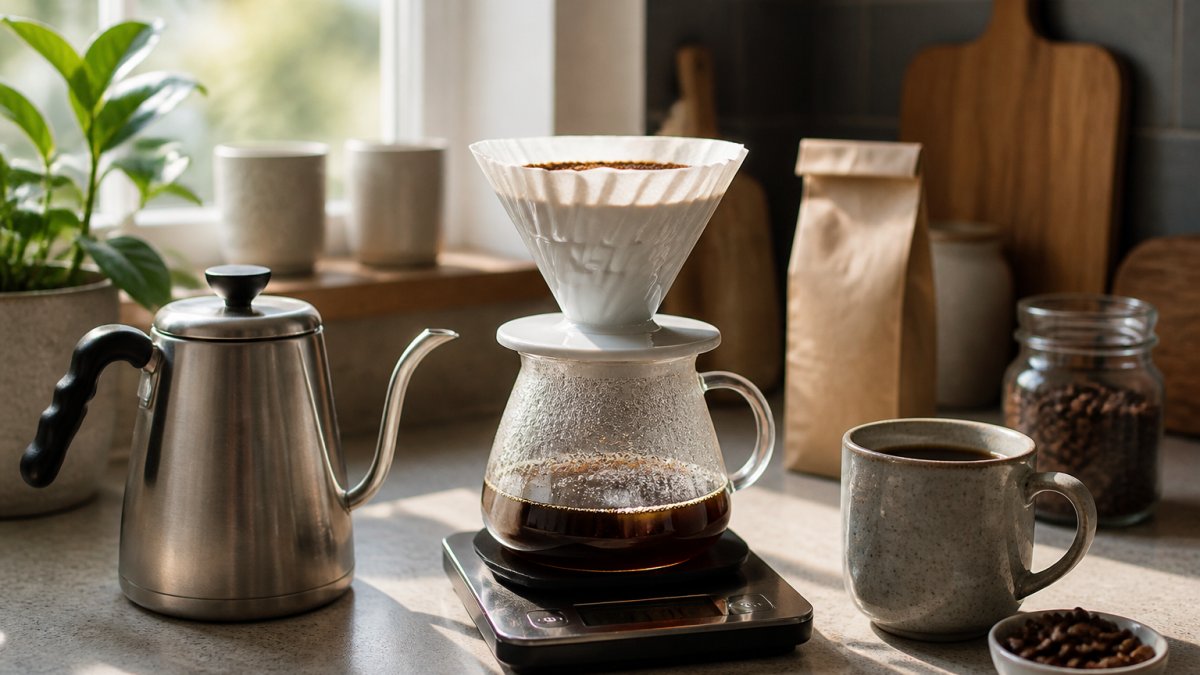
Most home brewers guess. They scoop, they eyeball, and they get a different cup every day. Measuring fixes that.
Weigh It: The 1:16 Starting Point
A kitchen scale costs little and changes everything. Here is a working recipe you can repeat tomorrow.
| Coffee | Water | Approx. Yield |
|---|---|---|
| 15 g | 240 g | 1 large mug |
| 30 g | 480 g | 2 mugs |
| 60 g | 960 g | 4 mugs |
If you do not have a scale yet, remember this: about 2 level tablespoons of ground coffee per 6 ounces of water.
Want it stronger? Move toward 1:15. Want it lighter? Move toward 1:17. Change one thing at a time so you know what worked.
Pick Your Brew Method: Drip, Pour-Over, French Press, or Cold Brew
Each brew method has a personality, and each one has its own working recipe. The right pick depends on how much control you want and how much time you have in the morning. Below are starting recipes for the four most common home methods. Treat them as baselines, then adjust one variable at a time.
Drip Coffee: Set It and Forget It
Drip is the easiest path to a good cup, and it is the method most people already own.
Starting recipe (for a 4-cup / 20 oz batch):
- 35 g medium-ground coffee
- 600 g filtered water
- Water temperature at the brew basket: 195°F to 205°F
Add water, add coffee, press start. The trade-off is control, you cannot adjust pouring technique, so dial in your ratio and grind instead. If your machine has a "bold" or "pre-infusion" setting, use it; a short pre-wet before the main cycle helps the grounds degas and extract more evenly.
Pour-Over: Control for a Cleaner Cup
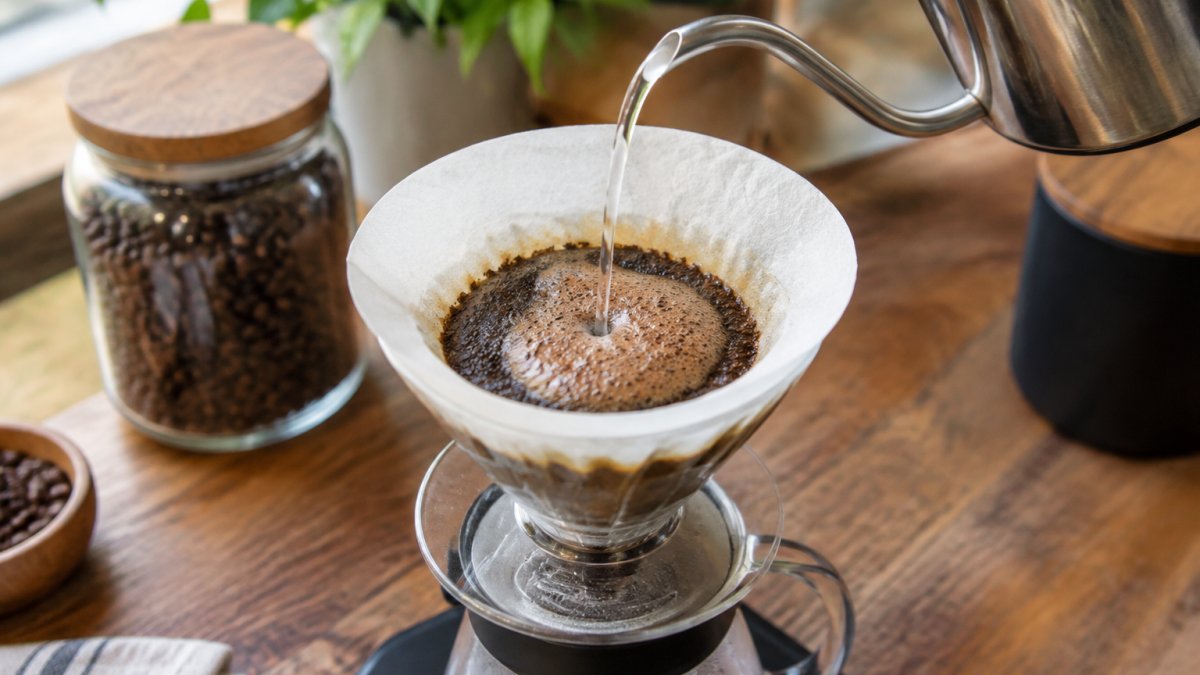
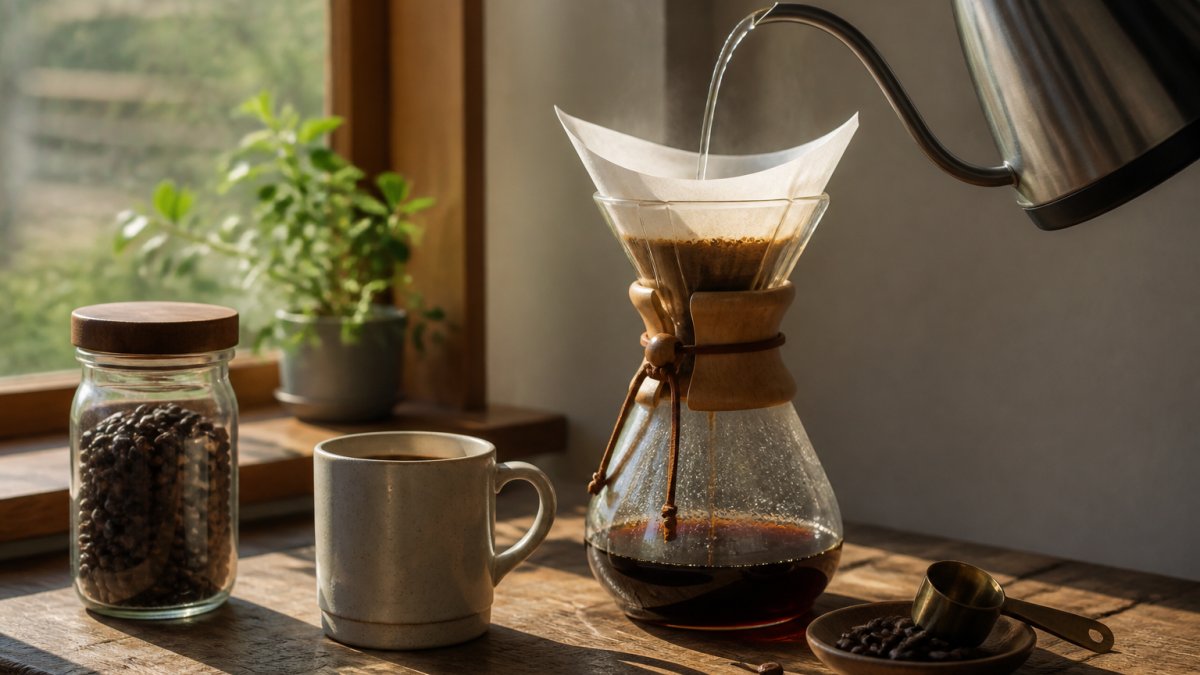
Pour-over gives you the most control and the cleanest flavor. Water passes through the grounds once, so you taste clarity instead of heaviness.
Starting recipe (single 10 oz mug):
- 18 g medium-fine coffee
- 300 g filtered water at 200°F
- Bloom: pour 50 g of water, wait 30 to 45 seconds
A gooseneck kettle helps you pour slowly and evenly. If the drawdown stalls past 4 minutes, your grind is too fine. If it finishes under 2 minutes, go finer. That single feedback loop, time the brew, adjust the grind, is how you dial in pour-over without a recipe book.
French Press: Full-Bodied and Forgiving
French press is the most forgiving method for beginners. It steeps the grounds fully, so small mistakes matter less.
Starting recipe (two 10 oz mugs):
- 30 g coarse-ground coffee
- 500 g filtered water at 200°F
- Add grounds, pour all water, stir once
Expect a rich, full body with more oils than a paper filter allows. Because the mesh lets fine particles through, a coarse, even grind matters more here than in any other method. If your cup turns muddy, your grind is too fine or your grinder is producing too many fines.
Cold Brew: Smooth, Low-Acid, Make-Ahead
Cold brew trades speed for smoothness. It steeps in cold water for 12 to 18 hours, which pulls out flavor with less acidity and bitterness.
Starting recipe (makes about 32 oz of concentrate):
- 100 g extra-coarse coffee
- 800 g cold filtered water
- Steep 14 to 16 hours at room temperature or in the fridge
Use an extra-coarse grind so the filter does not clog. The payoff is convenience: make a batch on Sunday and pour from it all week. Cold brew concentrate keeps about a week in the fridge; dilute only what you are about to drink.
How to Make Coffee Less Bitter (and Fix Sour or Weak Brews)
Learning how to make coffee less bitter comes down to two things: grind size and water temperature. Fix those and most bad cups improve fast.
Bitterness usually means over-extraction. The water pulled too much out of the grounds. Sourness usually means under-extraction, where the water did not pull enough.
Bitter, Sour, Weak, or Muddy: What to Adjust
Use this table to troubleshoot your next cup.
| Problem | Likely Cause | Fix |
|---|---|---|
| Bitter | Grind too fine, water too hot | Coarsen the grind, brew at 195°F to 205°F |
| Sour | Grind too coarse, water too cool | Finer grind, hotter water |
| Weak | Too little coffee | Add coffee or drop water, aim for 1:16 |
| Muddy | Too many fine particles | Use a burr grinder, coarser setting |
Water temperature matters more than most people think. Aim for 195°F to 205°F. Boiling water scorches the grounds and turns a good roast bitter.
Water quality matters too. CDC guidance on drinking water quality explains why filtered water tastes cleaner. That same logic applies to coffee, since coffee is mostly water.
How to Store Coffee Beans So They Stay Fresh
Learning how to store coffee beans is simpler than most guides suggest. Keep them away from air, light, heat, and moisture.
Store whole beans in an airtight, opaque container at room temperature. Skip the fridge, since moisture and odors get in.
Buy in amounts you will finish in two to four weeks.
- Keep the bag sealed between uses
- Store away from the stove and sunlight
- Grind only what you need each morning
This is where roasted-to-order coffee earns its keep.
How to Clean a Coffee Maker (and Keep It Tasting New)
Learning how to clean a coffee maker protects the flavor you worked for. Old oils and mineral buildup turn fresh coffee stale and bitter.
Here is a simple monthly routine:
- Fill the reservoir with equal parts white vinegar and water.
- Run a full brew cycle, then let it sit for 30 minutes.
- Run two or three cycles with clean water to rinse.
- Wipe the basket, carafe, and any removable parts.
For pour-over gear, wash the dripper and carafe with warm soapy water. For French press, take apart the plunger and scrub the mesh. For cold brew, wash the filter after every batch.
A Fast Morning Workflow for Better Morning Coffee
A great cup does not need a long routine, but it does need a plan. The difference between a rushed, mediocre cup and a repeatable good one is almost always what you did the night before. Here is the workflow we would use on a busy weekday, plus a batch option for the mornings you cannot spare five minutes.
The Night-Before Setup (Two Minutes)
Do these before bed and your morning shrinks to almost nothing:
- Fill the kettle or drip reservoir with filtered water so it is ready to go.
- Weigh tomorrow's beans into the grinder hopper or a small airtight jar.
- Set out your brewer, mug, and scale on the counter.
That is it. No measuring, no hunting for the scoop, no rinsing yesterday's grounds while the water heats.
The Five-Minute Morning Sequence
- Minute one: Turn on the kettle or start the drip cycle. If you pre-filled it, you are already ahead.
- Minute two: Grind your pre-weighed beans to match your method.
- Minute three: Add grounds to the brewer and begin your pour or let the cycle run.
- Minute four: While it brews, rinse your mug with hot water, a warm mug keeps the coffee hot longer.
- Minute five: Pour, sip, and note one thing to adjust tomorrow (grind, ratio, or temperature).
Five minutes. One scale. A repeatable cup every time.
The Batch-Brew Shortcut
Some mornings you will not have five minutes. That is what batch brewing is for.
- Cold brew concentrate: Make a 32 oz batch on Sunday, dilute as you pour. It keeps about a week in the fridge.
- Drip thermos batch: Brew a full 8-cup pot into a preheated stainless thermos. It holds temperature well for several hours without the burnt taste of a hotplate.
- Freezer cubes: Pour leftover black coffee into an ice tray. Drop the cubes into iced coffee or a smoothie instead of watering it down.
Cleanup That Takes Under a Minute
Cleanup is where most morning routines fall apart. Handle it immediately and it stays small:
- Drip: Dump the basket and rinse the carafe. A full vinegar descale is a monthly job, not a daily one.
- Pour-over: Rinse the dripper and toss the paper filter. Compost the grounds if you can.
- French press: Rinse the carafe, then take apart the plunger and scrub the mesh every few uses so old oils do not carry over.
If you want to skip the guesswork, our Breakfast Blend is a smooth medium roast built for exactly this kind of morning. For a bolder start, the House Blend brings nutty, sweet chocolate notes with a clean finish.

Frequently Asked Questions
What is the best coffee-to-water ratio for a better-tasting cup?
Start with 1 gram of coffee to 16 grams of water, which is about 2 tablespoons of ground coffee per 6 ounces of water. That ratio gives you a balanced cup without guessing. If you prefer a stronger brew, move to 1:15; for a lighter cup, try 1:17. Weighing your coffee on a digital scale is the most repeatable way to hit the same taste every morning.
How can I make my morning coffee less bitter?
Bitterness usually comes from over-extraction. Try a coarser grind, shorten the brew time, or lower your water temperature slightly below 205°F. If the coffee still tastes harsh, check your coffee-to-water ratio and make sure you are not using too much coffee. A medium roast like a breakfast blend or house blend also tends to taste smoother than a dark roast.
How should I store coffee beans to keep them fresh?
Keep whole beans in an airtight container away from light, heat, and moisture. A cool cupboard works better than the freezer for daily use. Buy only what you will drink in two to three weeks, and grind right before brewing. Whole beans hold their flavor longer than pre-ground coffee, so if you want better morning coffee, store beans whole and grind fresh.
How often should I clean my coffee maker?
Rinse the carafe and basket daily, and give the machine a deeper clean every two to four weeks. For drip makers, run a 1:1 mix of white vinegar and water through a full brew cycle, then run two cycles of plain water. A clean machine removes old oils that make coffee taste stale or bitter, and it keeps your morning routine reliable.
Conclusion: Small Changes, Better Morning Coffee
Better morning coffee rarely comes from one big upgrade. It comes from a few small habits: fresh beans, the right grind, and a measured ratio.
If your mornings are rushed, let the beans do the hard part. theITDGroup LLC roasts to order for maximum flavor and aroma, ships fast and reliably, and offers a fresh roast guarantee on every bag. Find your perfect roast and start tomorrow with a better cup.