 how-to
How to Brew Light Roast Coffee: A Step-by-Step Guide
Last Updated: October 23, 2026
Quick Summary
To brew light roast coffee, use hotter water between 195°F and 205°F with 203°F as the sweet spot, grind medium-fine, and allow enough contact time. Start with a 1:17 coffee-to-water ratio, such as 18 g to 300 ml, then adjust one variable at a time until the cup tastes sweet and balanced.
- Light roast beans are denser and harder to extract, so they need hotter water, a finer grind, and more contact time.
- For pour-over, bloom 18 g of medium-fine grounds with 50 g of water and wait 30 to 45 seconds.
- In a French press, steep 30 g of medium-fine grounds in 500 ml of 205°F water for 5 minutes.
- Sourness means under-extraction, so grind finer, raise temperature toward 203°F, or extend brew time.
- Change only one variable at a time and log each result so you can repeat a good cup.
Table of Contents
- Why Light Roast Coffee Needs a Different Brewing Approach
- What You'll Need Before You Start
- Step-by-Step: How to Brew Light Roast Coffee
- Light Roast Coffee Brewing Temperature: Why Hotter Water Matters
- Light Roast Coffee-to-Water Ratio: Finding Your Starting Point
- The Best Grind Size for Light Roast Coffee
- How to Make Light Roast Coffee Less Sour
- Troubleshooting: Dialing In Your Light Roast Cup
- Frequently Asked Questions
Why Light Roast Coffee Needs a Different Brewing Approach
Light roast coffee is pulled from the roaster earlier than dark roast, leaving beans denser and harder to extract. That density changes everything about how you brew it.
Light roasts hold onto their flavor compounds tightly, so water struggles to pull them out.
The fix comes down to three levers: hotter water, a finer grind, and enough contact time. Get those right and light roast coffee tastes sweet, fruity, and bright. Get them wrong and it tastes like lemon juice.
Below, we'll show you how to pull a clean, sweet cup from a light roast, plus a repeatable recipe and a troubleshooting chart.
What You'll Need Before You Start
Gather your gear first. A scale matters more than any gadget here, because ratios drive everything.
- A digital scale that reads to 0.1 g
- A burr grinder for even particles
- A gooseneck kettle for controlled pouring
Freshness is the quiet variable most people ignore. Beans release gas for days after roasting, and that gas pushes water away during brewing. If you're stocking up, read our guide on how to keep coffee fresh longer. And if you're still choosing beans, our best coffee beans for home brewing roundup covers light roasts built for this method.
Step-by-Step: How to Brew Light Roast Coffee
Here are three repeatable recipes for light roast coffee, each with exact doses, temperatures, grind settings, and timing so you can adjust from a known baseline. Start with the pour-over if you're new to light roast; it offers the most control. Use the immersion or drip recipe for a simpler routine.
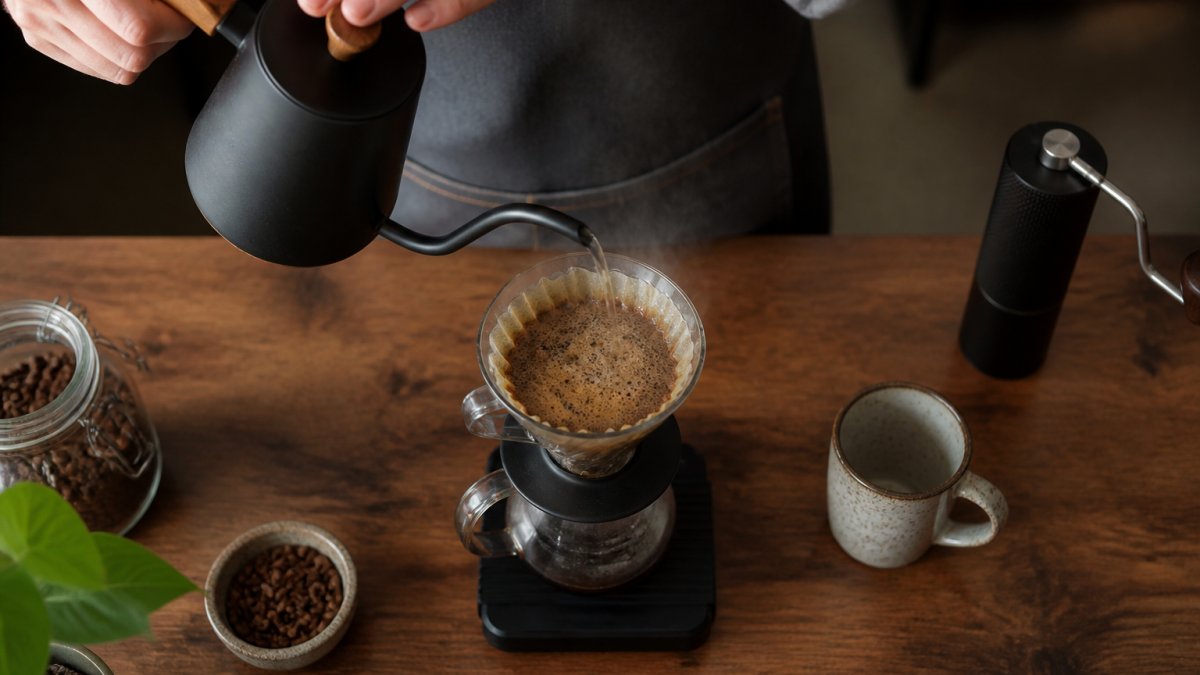
Pour-Over Recipe (18 g to 300 ml)
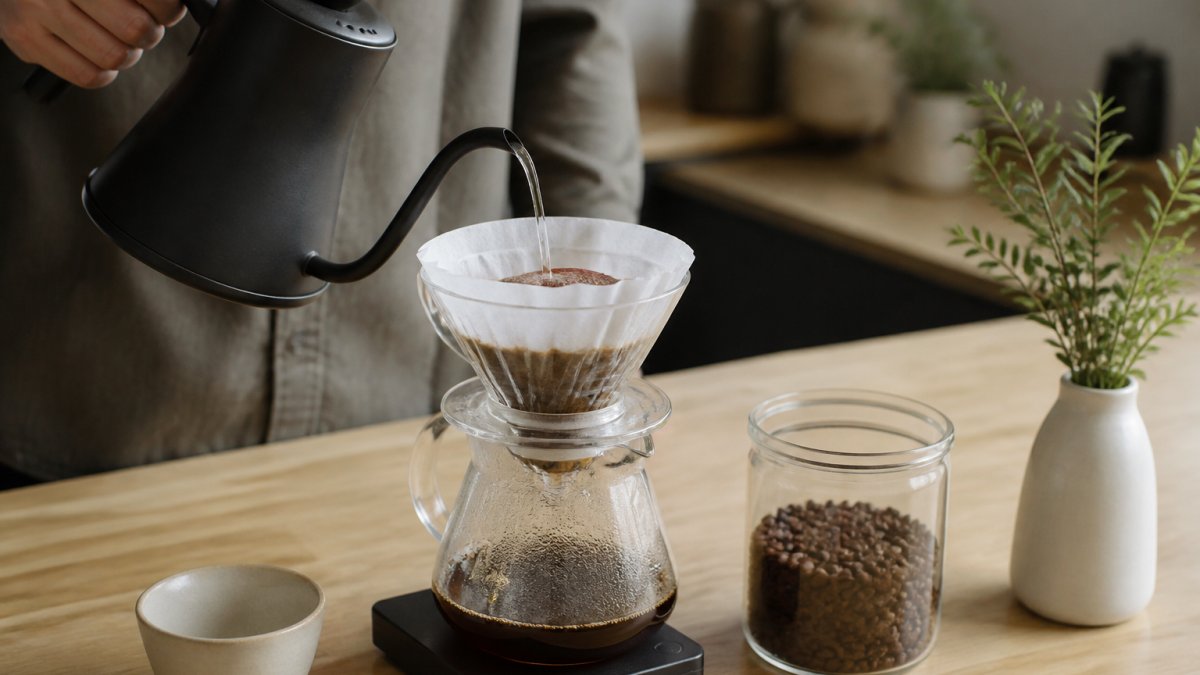
This is our go-to method for light roast. It gives you full control over temperature and pour speed.
- Heat water to 203°F. Just off the boil works too.
- Weigh 18 g of beans and grind medium-fine (about the texture of table salt).
- Rinse the filter with hot water, then discard the rinse.
- Add the grounds and place the dripper on your scale. Tare to zero.
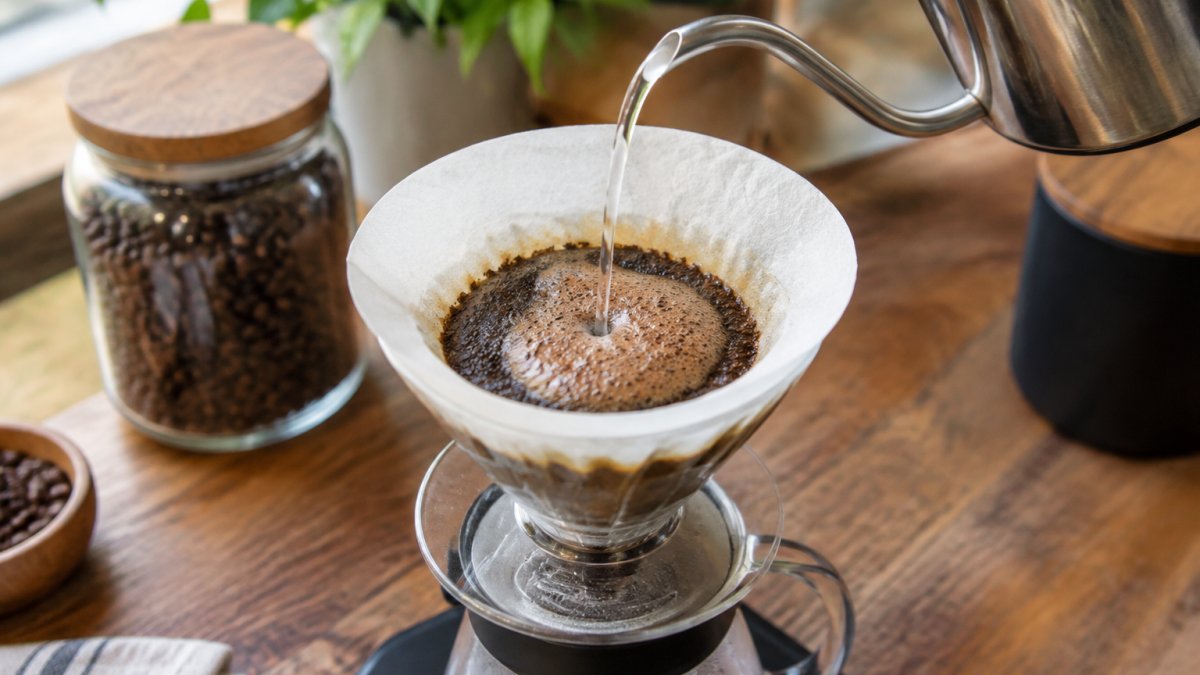
- Bloom with 50 g of water. Pour evenly to saturate all grounds, then wait 30 to 45 seconds. The bed will bubble as trapped gas escapes.
- Pour in slow spirals to reach 300 ml total. Aim to finish pouring by 2:30, keeping the water level about an inch above the bed.
- Finish between 3 and 5 minutes. Drawdown should end around 3:30. If it finishes much faster, grind finer; if it stalls past 5 minutes, grind coarser.
For the complete walkthrough, our step-by-step pour-over method breaks down every pour.
Immersion Recipe (French Press, 30 g to 500 ml)
Immersion brewing is forgiving and highlights body. Light roasts need a finer grind and longer steep than you'd expect.
- Heat water to 205°F.
- Weigh 30 g of beans and grind medium-fine (slightly finer than typical French press).
- Add grounds to the carafe and pour in 500 ml of water, ensuring all grounds are saturated.
- Stir gently with a spoon, then place the lid on with the plunger raised.
- Steep for 5 minutes.
- Press the plunger slowly and pour immediately. Don't let the coffee sit on the grounds after pressing.
If the cup tastes weak or sour, grind finer or extend the steep by 30 seconds. If it's bitter or muddy, grind coarser or shorten the steep.
Drip Machine Recipe (30 g to 500 ml)
No kettle, no problem. A drip machine works if you push the settings.
- Use a 1:17 ratio (about 30 g coffee to 500 ml water)
- Grind medium-fine, slightly finer than usual
- Run a hot cycle; preheat the carafe first
Don't treat a drip machine like a set-and-forget tool. Grind and ratio still decide the cup. For best results, use a machine that heats water to at least 195°F with an even-distributing showerhead.
Adapting These Recipes to Your Beans and Gear
These recipes are starting points, not rigid rules. Light roast beans vary in density by origin, processing, and roast level: a natural-process Ethiopian may extract faster than a washed Colombian. Your grinder matters too, a high-end burr grinder produces fewer fines, so you may need to grind slightly finer. Use the recipes as a baseline, then adjust one variable at a time using the troubleshooting guidance below.
Light Roast Coffee Brewing Temperature: Why Hotter Water Matters
Light roast coffee brewing temperature should sit between 195°F and 205°F, with 203°F as the sweet spot. Standard brewing guidance from the Specialty Coffee Association puts the ideal water temperature in this range for proper extraction.
Dense light roast beans resist extraction. Cooler water, say 190°F, leaves flavor locked inside the grounds, and you get sourness instead of sweetness.
At 203°F the water has enough energy to dissolve the sugars and acids you want. Just off the boil is a safe, practical target.
One caveat: don't go past 205°F, or you'll pull bitter compounds and the cup turns harsh.
Light Roast Coffee-to-Water Ratio: Finding Your Starting Point
The light roast coffee-to-water ratio is your strongest dial for strength. Start at 1:17 and adjust from there.
Here's how the common ratios behave:
| Ratio | Coffee to Water | Result |
|---|---|---|
| 1:15 | 20 g to 300 ml | Bold, heavy body |
| 1:17 | 18 g to 300 ml | Balanced starting point |
| 1:18 | 17 g to 300 ml | Lighter, tea-like |
| 1:20 | 15 g to 300 ml | Delicate, easy to over-extract |
Use the 1:15 ratio if you like a stronger cup. Move to 1:18 or 1:20 if the coffee tastes too intense. The 18 g to 300 ml recipe above is a solid middle ground.
The Best Grind Size for Light Roast Coffee
The best grind size for light roast coffee is medium-fine, closer to fine than coarse.
A finer grind means more contact between water and coffee, which helps extract the stubborn compounds in a light roast.
But there's a ceiling. Grind too fine and the water stalls, the bed clogs, and you get a bitter, muddy cup. Medium-fine is the balance point.
A burr grinder gives you consistent particles, which is what makes dialing in possible. If you're weighing the upgrade, our comparison of burr versus blade grinders explains why consistency wins.
How to Make Light Roast Coffee Less Sour
Sourness in light roast coffee almost always means under-extraction: the water didn't pull enough from the grounds, so bright acids dominate and sweetness never shows up.
The fix is to extract more. Try these in order:
- Grind finer in small steps
- Raise water temperature toward 203°F
- Extend brew time slightly
Change one variable at a time. Taste, then adjust.
Learning to read the cup helps too. Our guide on how to read coffee tasting notes shows you how to tell whether that tartness is a flaw or a feature of the bean.
Troubleshooting: Dialing In Your Light Roast Cup
Dialing in is a controlled process, not guesswork: change one variable at a time, taste the result, and log what you did so you can repeat success. Most light roast problems trace back to under-extraction, but the fix depends on which variable is off. Use this workflow to diagnose and correct your cup.
The One-Variable-at-a-Time Workflow
- Start with a known recipe. Use the pour-over, immersion, or drip recipe above as your baseline. Record the dose, water volume, temperature, grind setting, and total brew time.
- Taste and identify the dominant flaw. Is the cup sour, bitter, weak, or harsh? Each points to a different adjustment.
- Change only one variable. For example, if the cup is sour, grind one step finer. Keep everything else the same.
- Brew again and taste. Compare to your previous cup. Did the flaw improve, worsen, or stay the same?
- Log the result. Note the change and the outcome. A simple notebook or spreadsheet works. Over time, you'll learn how your grinder, water, and beans respond.
- Repeat until the cup tastes balanced. Sweetness should emerge, acidity should be pleasant rather than sharp, and the finish should be clean.
Diagnosing Common Flaws
| Problem | Likely Cause | First Adjustment | If No Improvement |
|---|---|---|---|
| Sour, thin cup | Under-extraction | Grind finer (one step) | Raise water temperature by 2-3°F |
| Bitter, harsh cup | Over-extraction | Grind coarser (one step) | Lower water temperature by 2-3°F |
| Weak but sour | Too little coffee | Tighten ratio to 1:15 | Grind finer |
| Strong but bitter | Too much coffee plus fine grind | Loosen ratio to 1:18 | Coarsen grind |
| Watery and flat | Stale beans or soft water | Use fresher beans | Check water mineral content |
| Slow drawdown (pour-over) | Grind too fine or too many fines | Coarsen grind | Improve pouring technique to avoid clogging |
Tasting Cues: What to Look For
- Sourness hits the sides of your tongue and front of your mouth. It's sharp and unpleasant, like lemon juice. This is under-extraction.
- Bitterness coats the back of your tongue and lingers. It's drying and harsh. This is over-extraction.
- Sweetness is the goal: a round, pleasant sensation in the middle of your tongue. If you taste it, you're close.
Water Chemistry: The Overlooked Variable
Water makes up more than 98% of your cup, so its mineral content matters. Very soft or heavily filtered water lacks the minerals (especially calcium and magnesium) that bind to flavor compounds and carry them into solution, leaving a flat, hollow cup no matter how you adjust grind or temperature. If your coffee tastes weak and lifeless despite fresh beans and careful brewing, try water with moderate mineral content, bottled spring water or a pinch of Epsom salt per gallon can restore brightness and body.
Keeping a Brew Log
A brew log turns guesswork into a repeatable process. Record the date, bean origin and roast date, dose, water volume, temperature, grind setting, brew time, and tasting notes.
For a fresh, dense light roast to dial in, our Ethiopia Natural brings milk chocolate, fruit, and caramel notes that reward a hot, fine brew. The Tanzania offers pear, jasmine, and strawberry for a brighter profile.


One note on equipment sources: the National Coffee Association's brewing guidance is a solid reference for baseline ratios and methods as you refine your setup.
Frequently Asked Questions
What temperature should I brew light roast coffee at?
Use water just off the boil, between 200°F and 205°F. Light roast beans are denser and less porous than darker roasts, so they resist extraction. Hotter water pulls out the sweetness and fruit notes that define a light roast. If your kettle lacks a thermometer, boil the water and let it rest for 30 to 45 seconds before pouring. Water below 195°F tends to leave light roast coffee tasting thin and sour.
What is the ideal coffee-to-water ratio for light roast coffee?
Start at 1:16, meaning 18 grams of coffee to about 300 milliliters of water. That lands in the middle of the common 1:15 to 1:18 range and gives you room to adjust. If the cup tastes weak or watery, tighten to 1:15. If it tastes heavy or bitter, loosen toward 1:17 or 1:18. Weigh both the coffee and the water on a scale. Volume scoops vary too much to dial in a light roast coffee recipe reliably.
How do you make light roast coffee less sour?
Sourness in light roast coffee usually means under-extraction. Fix it in this order: grind finer, raise the water temperature toward 205°F, and extend the brew time slightly. Change one variable at a time so you can tell what worked. A 1:16 light roast coffee-to-water ratio is a solid baseline before you adjust. If the cup still tastes sharp after those changes, the beans may be underdeveloped, so try a different lot.
Does light roast coffee need a finer grind?
Generally yes. Light roast beans are denser and hold up better to heat, so a finer grind exposes more surface area and speeds up extraction. For pour-over, aim for a medium-fine grind that looks like table salt. For drip, a medium grind works. If the brew drains too fast and tastes sour, grind finer. If it stalls and tastes bitter, back off. The best grind size for light roast coffee is the one your particular brewer and beans respond to.
Brewing light roast coffee well comes down to three dials: hotter water, a finer grind, and a ratio you can trust. Nail those and the cup turns sweet instead of sour. At theITDGroup LLC, we roast every batch to order so your beans arrive dense, fresh, and ready to dial in, with carefully sourced single origins and a fresh roast guarantee behind each bag. Find your perfect roast and start brewing a brighter cup this week.