 how-to
How to Identify Quality Loose Tea: A Practical Guide
Table of Contents
- Start With the Dry Leaves: Visual Inspection Basics
- Color and Appearance by Tea Type
- How to Tell If Tea Is Fresh: Aroma and Packaging Clues
- Loose Leaf Tea Grades Explained: What the Labels Actually Mean
- How to Choose Loose Leaf Tea: A Step-by-Step Tasting Method
- How to Store Loose Leaf Tea for Long-Lasting Freshness
- Common Defects, Price, and Value: What to Avoid
- Frequently Asked Questions
Last Updated: October 12, 2026
Start With the Dry Leaves: Visual Inspection Basics
Knowing how to identify quality loose tea starts before the water ever boils.
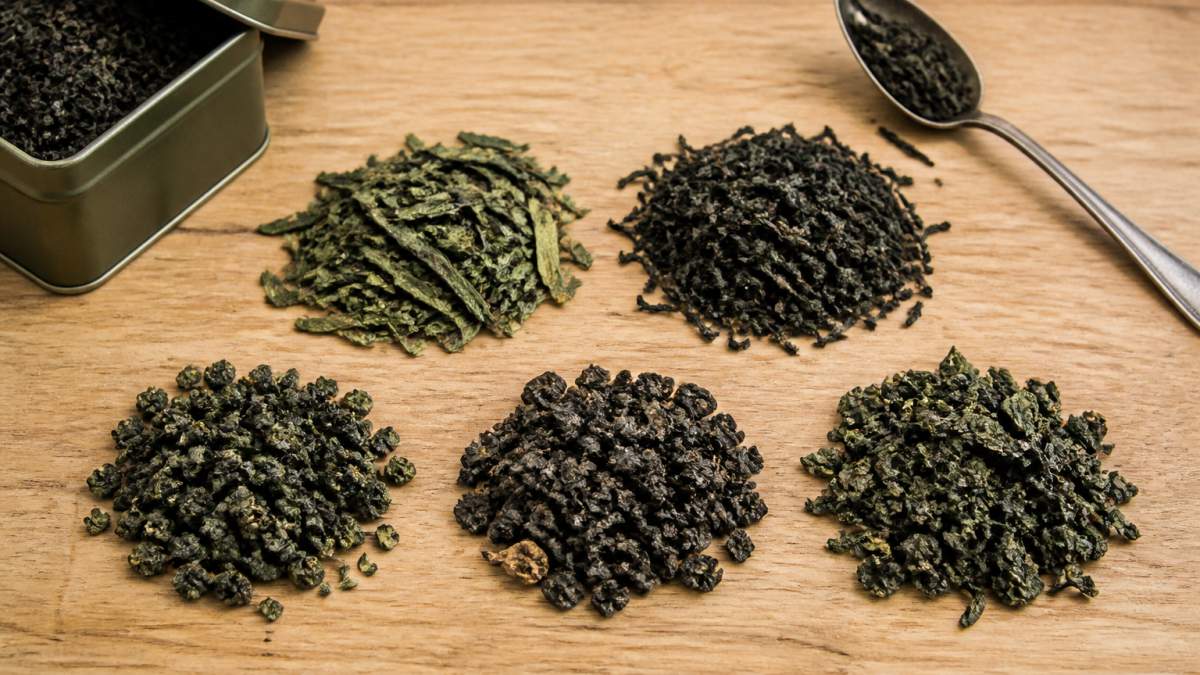
Start by pouring a small amount onto a white plate or sheet of paper. The light background makes color and texture easier to judge.
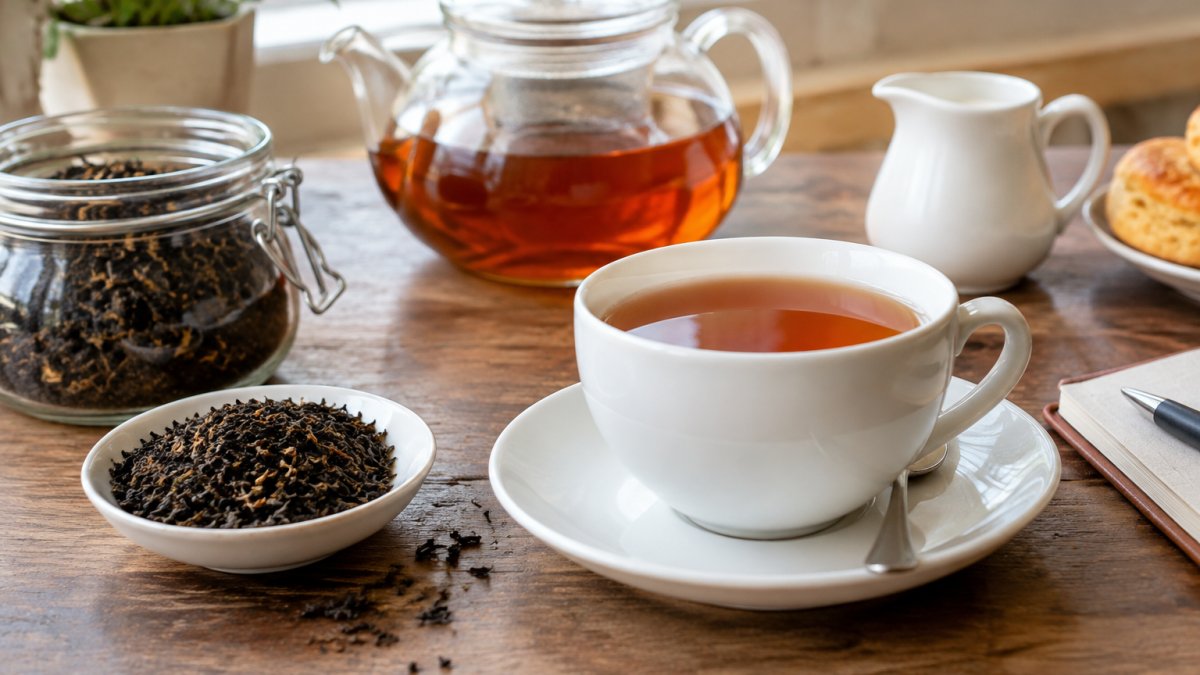
Quality loose tea is tea sold as intact, unbagged leaves rather than crushed dust or fannings, and its quality shows up first in how the dry leaf looks and smells.
Leaf Size, Shape, and Uniformity
Uniformity matters more than size. A batch where most leaves fall in the same size range was sorted properly. Mixed sizes brew unevenly, so some leaves over-steep while others barely open.
Here is what to check:
- Are most leaves roughly the same length?
- Do the shapes match the tea type (twisted for oolong, wiry for black, flat for some greens)?
- Are stems and stalks kept to a minimum?
Whole Leaves vs. Broken Leaves, Dust, and Powder
Whole leaves are the clearest sign of quality. Broken leaves brew faster and lose aroma sooner. Dust and powder settle at the bottom of the tin and signal low-grade material.
- Whole leaves: best flavor, best for multiple steepings
- Broken leaves: decent but weaker, common in tea bags
- Dust and powder: lowest grade, bitter and flat
Color and Appearance by Tea Type
Color is not one standard applied to every tea. It is a readout of what processing did to the leaf, and the same cue can mean opposite things depending on the type. A dull green tea is stale; a dull pu-erh may be perfectly normal. Judge each tea against its own style, not against a universal "fresh" look.
Here is how the visual signals shift by type:
- Green tea: Look for vivid green to blue-green with a matte, slightly downy finish. Yellowing, browning, or a flat olive tone points to oxidation or age. Steamed Japanese greens often look darker and glossier than pan-fired Chinese greens, that is style, not defect.
- Black tea: Expect deep brown to near-black with a uniform, slightly glossy surface. Orange or golden tips (the young buds) are a positive sign in many orthodox blacks. Grayish bloom or patchy pale spots usually means the leaf sat in light or air.
- White tea: Silver-white buds covered in fine trichomes (the fuzzy "down") are the plucking standard. Leaves should be pale green-gray to brownish, depending on style. Browned, brittle buds with no fuzz signal rough handling or age.
- Oolong tea: Color ranges from bright green (lightly oxidized, ball-rolled) to amber-brown (heavily oxidized, twisted). Look for tight, evenly rolled pellets or long twisted strips. Broken, powdery pellets or a mix of green and brown fragments in one batch suggest inconsistent oxidation or sorting.
Two cross-type checks apply everywhere:
- Uniformity within the batch. A pile where half the leaves are one color and half another was blended from different lots or processed unevenly. Both brew inconsistently.
- Sheen versus dust. A healthy leaf has a slight natural sheen. A chalky, dusty surface, especially in the tin's corners, means fannings and powder settled out, which is a handling and grade problem regardless of tea type.
How to Tell If Tea Is Fresh: Aroma and Packaging Clues
Freshness is the single biggest factor in how tea tastes. If you want to know how to tell if tea is fresh, trust your nose first and the package second.
Open the tin and breathe in. Fresh tea smells bright and clear. Stale tea smells flat, dusty, or like old paper. If the aroma makes you pull back, the tea is past its prime.
Packaging tells the rest of the story:
- Opaque bags or tins block light, which protects flavor
- Resealable closures keep air out between uses
- A harvest or roast date beats a vague "best by" label
Dry Aroma vs. Brewed Aroma
Dry aroma is the preview. Brewed aroma is the full picture. A tea can smell promising dry and still fall flat once steeped. That gap tells you something about processing and storage.
Compare the two side by side. If the brewed cup smells weaker than the dry leaf promised, the tea likely sat too long on a shelf.
Loose Leaf Tea Grades Explained: What the Labels Actually Mean
Grades describe leaf size and wholeness, not flavor. That is the part most buyers get wrong. A higher grade does not guarantee a better cup, and a lower grade does not mean bad tea.
Common black tea terms include:
- OP (Orange Pekoe): long, whole leaves
- BOP (Broken Orange Pekoe): smaller broken pieces
- FOP (Flowery Orange Pekoe): includes young buds
Green and oolong teas often skip these labels entirely and use their own naming systems. So a grade stamp is a starting point, not a verdict.
How to Choose Loose Leaf Tea: A Step-by-Step Tasting Method
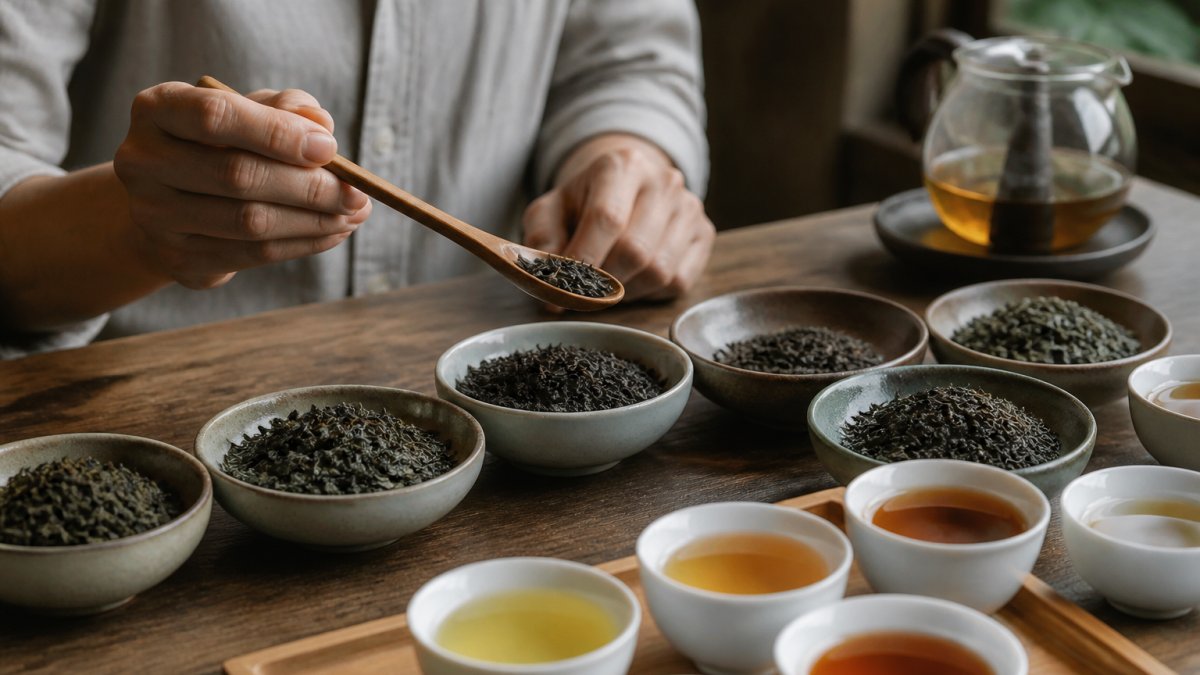
Learning how to choose loose leaf tea comes down to one repeatable method. Use the same amounts, water temperature, and timing every time, so the only variable is the tea itself.
Here is our standard tasting protocol:
- Weigh the leaf. Use about 2.5 grams per 12 ounces of water.
- Heat the water. Match temperature to tea type, around 195 F for most black and oolong teas.
- Steep and time it. Start with 3 minutes, then adjust.
- Slurp, do not sip. Pulling air across the tongue spreads the flavor.
- Note the aftertaste. Wait 30 seconds before judging.
- Re-steep. Good whole leaf tea holds up for a second or third cup.
Taste, Aftertaste, and Wet Leaf Appearance
After brewing, spread the wet leaves on a plate. Whole, unbroken leaves that unfurl evenly point to careful processing. Soggy, torn, or mushy leaves point to the opposite.
Flavor should match the aroma. A smooth cup with a clean finish beats a sharp one that turns bitter. Bitterness that lingers is a defect, not a feature.
How to Store Loose Leaf Tea for Long-Lasting Freshness
Knowing how to store loose leaf tea protects everything you just checked. Air, light, heat, and moisture are the four enemies. Beat all four and your tea stays fresh for months.
- Keep tea in an airtight, opaque container
- Store it away from the stove and sunny counters
- Keep it away from coffee and spices, since tea absorbs odors
- Buy in amounts you will finish within a few months
A French press works well for brewing larger leaf teas, since the mesh filter gives leaves room to expand.
Common Defects, Price, and Value: What to Avoid
Price is a weak quality signal on its own. Two teas can cost the same and differ wildly in how many good cups they produce. The useful question is not "is this expensive?" but "what am I getting per dollar of drinkable tea?"
Separating Defects from Style Variation
Not every unusual smell or look is a flaw. Some are the point of the style. The trick is knowing which is which.
- Stale or flat: Papery, dusty, or "old cupboard" smell with no distinct character. A defect in every tea type.
- Damp or musty: A cellar-like, wet-cardboard note. A defect, usually storage failure, in green, white, black, and oolong. In aged pu-erh, a clean earthy or woody note is normal; a sharp mildew smell is not.
- Smoky: A pine-smoke character is a deliberate style in some black and oolong teas (for example, lapsang souchong). Smoke that smells like ash or burnt plastic is a processing defect.
- Bitter and lingering: Some bitterness is normal in young sheng pu-erh and in some green teas. Bitterness that coats the mouth and does not fade after 30 seconds is a defect across types.
- Torn, shredded, or stem-heavy leaf: A handling and grade problem. A few stems are normal in many whole-leaf styles; a pile that is mostly stems is not.
How to Judge Value Without Guessing
Value comes from four things you can actually check:
- Servings per purchase. Whole leaf tea is typically re-steeped two to four times; broken leaf and fannings usually give one good cup. A 4-ounce tin of whole leaf that yields three steeps can beat a cheaper 4-ounce bag of fannings that yields one.
- Leaf-to-water yield. Weigh a typical serving (about 2.5 grams per 12 ounces) and see how many servings the package actually contains. Divide the price by that number to compare teas on a per-cup basis rather than per-ounce.
- Origin and harvest transparency. A label that names the region, harvest season, and processing method is doing more work than one that says only "premium." Specificity is a proxy for a seller who knows the supply chain.
- Freshness signals. A harvest or packing date beats a vague "best by." Tea does not spoil like food, but it fades, and a faded tea at any price is poor value.
Warning Signs on the Label and in the Tin
- Heavy dust or powder settled at the bottom
- A flat, dusty, or papery smell on opening
- Dull, faded color across the whole batch
- Torn, shredded, or stem-heavy leaves
- A bitter aftertaste that lingers past 30 seconds
A reputable source will share harvest details, tasting notes, and clear brewing guidance. That transparency is worth more than any grade stamp. Our Earl Grey, for example, lists its blend, tasting notes, and brewing method right on the page: 5 to 10 minutes at 195 F. That is the level of detail to expect from any seller you buy from.

Frequently Asked Questions
How can you tell if loose leaf tea is good quality?
Start with the dry leaves. Quality loose tea shows whole, unbroken leaves with fairly consistent size and color for its type. It smells clean and vivid, not dusty or flat. When brewed, it produces a clear liquor and leaves that unfurl to a recognizable leaf shape. If the dry tea is mostly dust or powder, or the brewed cup tastes dull and papery, quality is likely low regardless of what the label claims.
What should high-quality loose tea smell like?
Dry quality loose tea should smell like its type: green tea fresh and grassy, black tea malty or fruity, oolong floral or roasted, and flavored blends like Earl Grey citrus-forward from real bergamot oil. It should never smell musty, like cardboard, or like artificial perfume. A strong, clean aroma that matches the tea's origin is one of the fastest signals of freshness and proper storage.
Does the grade of tea indicate its quality?
Grade describes leaf size and style, not overall quality. Terms like OP (Orange Pekoe) or FTGFOP refer to leaf position and appearance on the bush, not flavor. A high grade of stale tea will still taste stale. Use grades as a starting reference, then confirm quality by inspecting the dry leaves, smelling the aroma, and tasting the brewed tea before committing to a larger purchase.
How should you store loose leaf tea to keep it fresh?
Store loose leaf tea in an airtight, opaque container away from light, heat, and moisture. Keep it away from strong-smelling spices or coffee, since tea absorbs odors quickly. A cool, dark cabinet works better than a countertop jar. For everyday use, buy in quantities you will finish within a few months. If you buy in bulk, keep a small amount out and store the rest sealed.
Tea quality is not a mystery, but it does reward attention. Check the dry leaf, trust your nose, brew with a repeatable method, and store what you buy with care. If you want a starting point, theITDGroup LLC offers small-batch teas with clear tasting notes and brewing guidance, plus roasted-to-order coffee and reliable delivery. Find your perfect roast and taste the difference fresh sourcing makes.