 how-to
How to Make Espresso Without an Espresso Machine
Table of Contents
- What Actually Counts as Espresso (And What Doesn't)
- How to Make Espresso With a Moka Pot
- How to Make Espresso With a French Press
- How to Make Espresso With Instant Coffee
- Espresso Grind Size: Getting It Right Without a Machine
- Comparing the Alternatives: Which Method Fits Your Kitchen
- Troubleshooting Taste and Common Mistakes
- Conclusion
- Frequently Asked Questions
Last Updated: October 20, 2026
What Actually Counts as Espresso (And What Doesn't)
Espresso is a concentrated coffee drink made by forcing hot water through finely ground coffee under pressure, producing a small, intense shot topped with crema.
Here's what most guides get wrong. They promise a "true espresso" from a French press. That's not possible.
- True espresso needs roughly nine bars of pressure from a pump.
- Moka pot coffee reaches one to two bars and lands closer to the real thing than anything else on a stove.
- French press concentrate is full-bodied but silty and lower in pressure.
The difference matters most when you build milk drinks like a cappuccino or flat white. A weak base disappears under steamed milk.
How to Make Espresso With a Moka Pot
The moka pot is the closest you'll get to real espresso on a stovetop.
A common mistake is tamping the coffee. Don't. Fill the basket loosely, level it off, and let the pressure do the work. Packing it tight chokes the flow and gives you a bitter, sputtering brew.
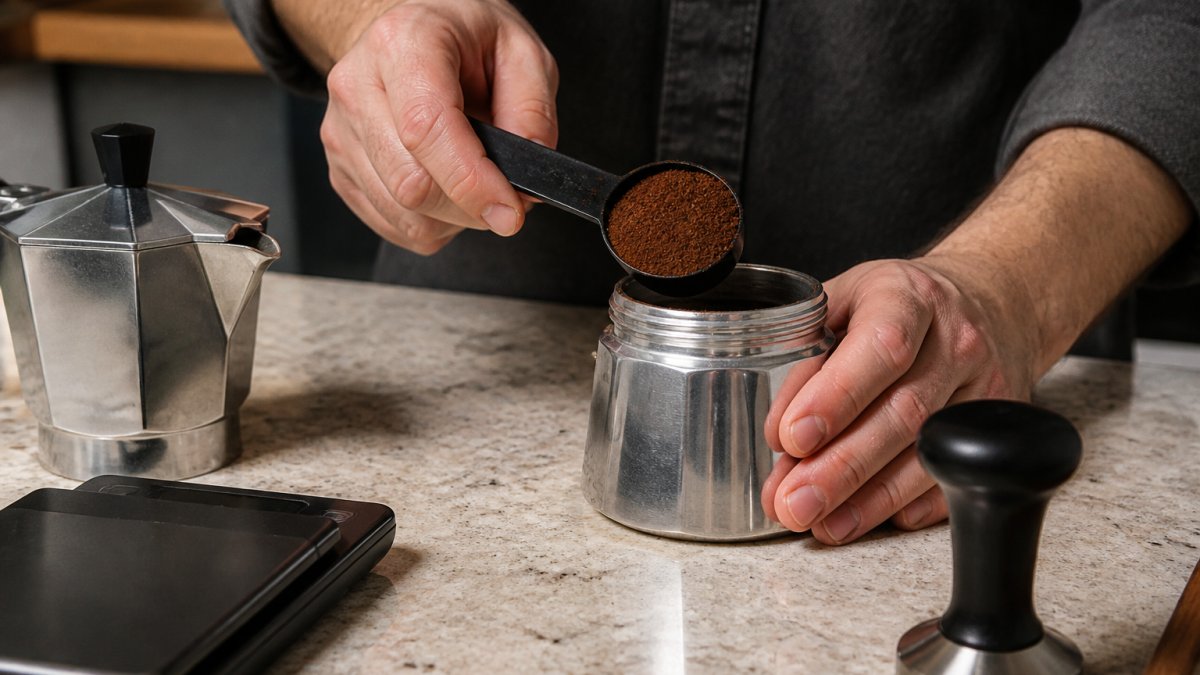
Step-by-Step Moka Pot Method
- Fill the bottom chamber with water just below the safety valve. Use hot water to shorten brew time.
- Add finely ground coffee to the basket. Level it with your finger, don't press.
- Screw the top on firmly and set the pot on medium heat.
- Listen for the gurgle. When the flow turns pale and sputters, pull it off the heat.
- Pour immediately and serve.
Total time: about 5 minutes. Yield: roughly 60 milliliters of strong coffee, close to a double shot.
For this method, a dark roast works best. Our 6 Bean Blend is built for espresso-style brewing, and the Italian Roast brings the darkest, boldest profile if you like a punchy shot.


How to Make Espresso With a French Press
A French press won't give you crema or pressure, but it can produce a concentrated coffee that works well in milk drinks. The trick is a high coffee-to-water ratio and a fine grind. The standard French press recipe uses a coarse grind and a four-minute steep. For espresso-style concentrate, you flip that: fine grounds, less water, shorter time.
The French Press Concentrate Recipe
- Coffee: 20 grams, finely ground (slightly coarser than moka pot)
- Water: 90 milliliters, just off the boil (about 200°F)
- Brew time: 2 minutes, then press slowly over about 20 seconds
Pour the water over the grounds, stir once, and let it sit. Press the plunger down slowly to avoid stirring up silt. Pour through a paper filter if you want a cleaner cup.
The result is strong and full-bodied, though it won't have the same clarity as a machine shot. Use it as a base for a flat white or an iced latte.
Scaling the Recipe for Two
For two servings, use 40 grams of coffee and 180 milliliters of water in a larger press. Keep the same 2-minute steep and press slowly. Don't try to stretch one batch by adding more water after pressing; that dilutes the concentrate and defeats the purpose.
Why the Filter Matters
A standard French press mesh lets fine particles through, which is why the cup turns muddy. Two fixes work:
- Paper filter on top of the mesh: place a cut round of filter paper over the mesh before pressing. It catches the fines and gives a cleaner, more espresso-like body.
- Double-press: press once, then pour through a second paper filter into your cup. Slower, but the cleanest result.
Temperature and Grind Adjustments
- Sour or sharp: the water was too cool or the grind too coarse. Use water just off the boil and grind finer.
- Bitter or ashy: the steep ran long or the grind was too fine. Shorten to 90 seconds and grind coarser.
- Clogged press: the grind is too fine for the mesh. Coarsen it slightly; the concentrate will still be strong at this ratio.
What This Method Is Best For
The French press concentrate shines in iced drinks and milk drinks where body matters more than clarity. It is the most forgiving method on this list, which makes it a good starting point if you are new to concentrated brewing. It is also the easiest to clean, since there is no basket or valve to scrub.
How to Make Espresso With Instant Coffee
Instant coffee is the fastest route to an espresso-like drink, and it's the one method that needs no equipment beyond a cup and a spoon.
Use a 1:2 ratio of instant coffee to hot water for a concentrated base.
For a better result, use a quality instant. Our Instant Coffee comes in a resealable pouch with 30 servings, so it's a practical backup for travel or busy mornings.
What most guides miss: instant coffee tastes flat because it lacks the oils and aromatics that fresh grounds carry.
Espresso Grind Size: Getting It Right Without a Machine
Grind size is the single biggest lever you control without a machine. Get it right and even a moka pot produces a rich, balanced cup.
Espresso grind should feel like fine sand or powdered sugar, just shy of table-salt consistency. It should clump slightly when pinched.
Without a burr grinder, you have options:
- Ask your roaster to grind for moka pot or espresso when you order.
- Use a blade grinder in short pulses and sift out the fines.
- Buy pre-ground coffee sized for your brew method.
A blade grinder gives uneven particles, which means uneven extraction. If you brew often, a burr grinder is the upgrade that changes the most.
Grind Adjustments by Brew Method
| Brew Method | Grind Size | Texture Cue | Brew Time |
|---|---|---|---|
| Moka pot | Fine | Like fine sand | 4-5 minutes |
| French press concentrate | Medium-fine | Slightly gritty | 2 minutes |
| Instant coffee | N/A | Pre-dissolved | 30 seconds |
| True espresso machine | Very fine | Powdered sugar | 25-30 seconds |
If your moka pot brew tastes sour, grind finer. If it tastes bitter or the flow stalls, grind coarser.
Comparing the Alternatives: Which Method Fits Your Kitchen
Each method trades convenience against closeness to real espresso. There's no single winner, only the one that fits how you actually brew. The table below adds the details most guides leave out: what you'll spend, what the cup tastes like, how much you get, and how much cleanup is involved.
| Method | Equipment Needed | Typical Equipment Cost | Closeness to Espresso | Taste Profile | Yield per Batch | Cleanup | Best For |
|---|---|---|---|---|---|---|---|
| Moka pot | Moka pot, stove | About $25-$50 | Closest | Bold, syrupy, light crema | About 60 ml | Moderate: rinse basket and chambers | Milk drinks, daily ritual |
| French press | French press, kettle | About $20-$40 | Moderate | Full-bodied, silty, low crema | About 60 ml | Low: rinse and press | Full-bodied concentrate, iced drinks |
| Instant coffee | Cup, spoon | Under $10 | Lowest | Thin, flat, no crema | About 30 ml | Minimal | Travel, speed |
Costs are typical retail ranges for entry-level equipment; a burr grinder, if you buy one, is the largest single expense and serves every method on this list.
How to Choose
The moka pot wins on authenticity. It's the method we reach for when we want a shot that stands up to steamed milk. A French press is more forgiving and easier to clean, which makes it a good starting point. Instant coffee is the fallback you keep in the cupboard for busy mornings.
- Choose the moka pot if you want the closest thing to a real shot and don't mind a few minutes of stovetop attention and a basket to rinse.
- Choose the French press if you already own one, want the least fuss, or plan to pour over ice.
- Choose instant only when speed or travel rules out the other two; treat it as a convenience, not a daily ritual.
What None of Them Deliver
None of these methods produce true espresso. They lack the roughly nine bars of pressure a pump provides, so crema is thin or absent and the texture is lighter.
If you're choosing beans for any of these methods, freshness matters more than anything else. Our African Espresso blends beans from Kenya, Tanzania, and Ethiopia for a bright, medium-dark shot, and the Blonde brings a sweeter profile if you prefer a gentler cup.

Troubleshooting Taste and Common Mistakes
Most bad home espresso comes down to three things: grind, dose, and water temperature. Fix those and the cup improves fast.
- Sour or sharp taste: under-extracted. Grind finer or brew slightly longer.
- Bitter or ashy taste: over-extracted. Grind coarser or shorten the brew.
- Weak, watery shot: too little coffee. Increase the dose.
- Stalled moka pot flow: coffee packed too tight. Fill loosely and level only.
A common mistake is eyeballing the dose. Weigh your coffee if you can. Twenty grams in, roughly 90 milliliters out is a reliable starting point for a concentrated brew.
Another one: skipping the preheat. Rinse the moka pot and cup with hot water first so the brew doesn't cool on contact.
Conclusion
Brewing espresso-style coffee without a machine takes a little practice, but the payoff is a rich, concentrated cup you control from grind to pour.
The beans matter as much as the method. theITDGroup LLC roasts to order so every batch arrives fresh, with carefully sourced beans from trusted farms and a fresh roast guarantee. Our blends are built to shine in concentrated brews, from the bold Italian Roast to the sweet Blonde.
Find your perfect roast and brew a shot worth slowing down for.
Frequently Asked Questions
Can you really make espresso without an espresso machine?
You can make espresso-style coffee without a machine, but not true 9-bar espresso. A moka pot reaches roughly 1 to 2 bar of pressure and produces the closest result. A French press or instant coffee makes a concentrated coffee that works in milk drinks but lacks real crema. Expect a strong, rich cup rather than a true espresso shot, and adjust your expectations for milk drinks like cappuccino or flat white.
Can a moka pot make real espresso?
A moka pot brews at about 1 to 2 bar of pressure, while true espresso requires roughly 9 bar. So a moka pot makes a strong, concentrated coffee, not true espresso. Many people still call it stovetop espresso because the result is thick and intense. Use finely ground coffee, fill the basket without tamping, and keep the heat moderate to avoid a bitter, burnt taste.
How fine should coffee grounds be for espresso-style coffee?
Aim for a grind that feels like fine table salt, slightly finer than what you would use for a drip brewer. For a moka pot, use a fine grind but do not pack it. For a French press concentrate, use a medium-fine grind so the filter can press cleanly. If the coffee tastes sour and thin, grind finer. If it tastes bitter and muddy, grind coarser.
What is the best way to make espresso without a machine?
A moka pot gives the closest result to espresso because it builds pressure and produces a thick, concentrated cup. A French press concentrate is the next best option for milk drinks, and instant coffee is the fastest fallback. Match the method to your equipment and time. Whichever you choose, use freshly roasted beans and a consistent coffee-to-water ratio for repeatable results.
How do you make espresso with instant coffee?
Dissolve 1 to 2 teaspoons of instant coffee in about 30 milliliters of hot water, then stir vigorously or shake in a sealed jar until a thick foam forms. Use a 1:2 coffee-to-water ratio for a concentrated shot. The foam is not real crema, but it gives the drink a similar look. This method works best for a quick iced latte or a milk-based drink.