 how-to
How to Use a Coffee Press for a Full-Bodied Cup
Last Updated: November 8, 2026
Quick Summary
To use a coffee press, add coarse ground coffee to a preheated carafe, pour water heated to between 195°F and 205°F over the grounds, stir gently, and steep for four minutes. Then press the plunger down slowly with steady pressure and serve immediately so the coffee does not keep steeping.
- Use about 2 tablespoons of coarse ground coffee per 6 ounces of water as a starting point.
- The standard starting ratio for a coffee press is 1:15 to 1:17 by weight.
- Preheat the carafe with hot water so your coffee stays hot longer.
- Do not stir during the four-minute steep, as agitating the grounds over-extracts them.
- Rinse the press with hot water after every use to keep coffee oils from turning rancid.
Table of Contents
- How to Use a Coffee Press for the First Time
- How Many Scoops of Coffee in a French Press
- How Long to Steep French Press Coffee
- How to Make French Press Coffee for One
- Troubleshooting Your Brew by Taste and Texture
- Cleaning, Descaling, and Filter Care
- Find Your Perfect Roast for the Press
- Frequently Asked Questions
How to Use a Coffee Press for the First Time
Learning how to use a coffee press is one of the easiest ways to brew a rich, full-bodied cup at home. A coffee press, also called a French press, is a simple glass or metal carafe with a mesh plunger that steeps coffee grounds in hot water and then separates them. It is often considered one of the most forgiving brew methods for beginners, and it produces a thicker, oilier cup than a paper filter.
The whole process takes about five minutes. Below, we walk you through every step, from grind size to the slow press, so your first cup tastes like your tenth.
What You Need Before You Start
Get your gear together first. A little setup saves a lot of mess later.
- A coffee press in the size you need (3-cup, 8-cup, or 12-cup)
- Coarse ground coffee, freshly ground if possible
- Filtered water (tap water with heavy minerals can taste flat or chalky)
- A kettle for heating water
- A digital scale or measuring spoon
- A timer (your phone works fine)
- A mug for serving
Freshly roasted beans make a noticeable difference in flavor. If you are still choosing beans, our guide to the best coffee beans for home brewing can help you pick a roast that suits press brewing.
Step-by-Step Brewing Instructions
Here is the full method. Follow it once, then adjust to taste.
- Preheat the press. Fill the carafe with hot water, swirl, and pour it out. A warm carafe keeps your coffee hot longer.
- Measure your coffee. Use about 2 tablespoons of coarse ground coffee per 6 ounces of water.
- Add the grounds to the empty, preheated carafe.
- Heat the water to between 195°F and 205°F. Just off the boil is right.
- Pour the water slowly over the grounds, making sure they are fully saturated.
- Stir gently with a spoon to break up any clumps.
- Place the lid on with the plunger pulled up, and start your timer.
- Steep for four minutes. Leave the plunger alone during this time.
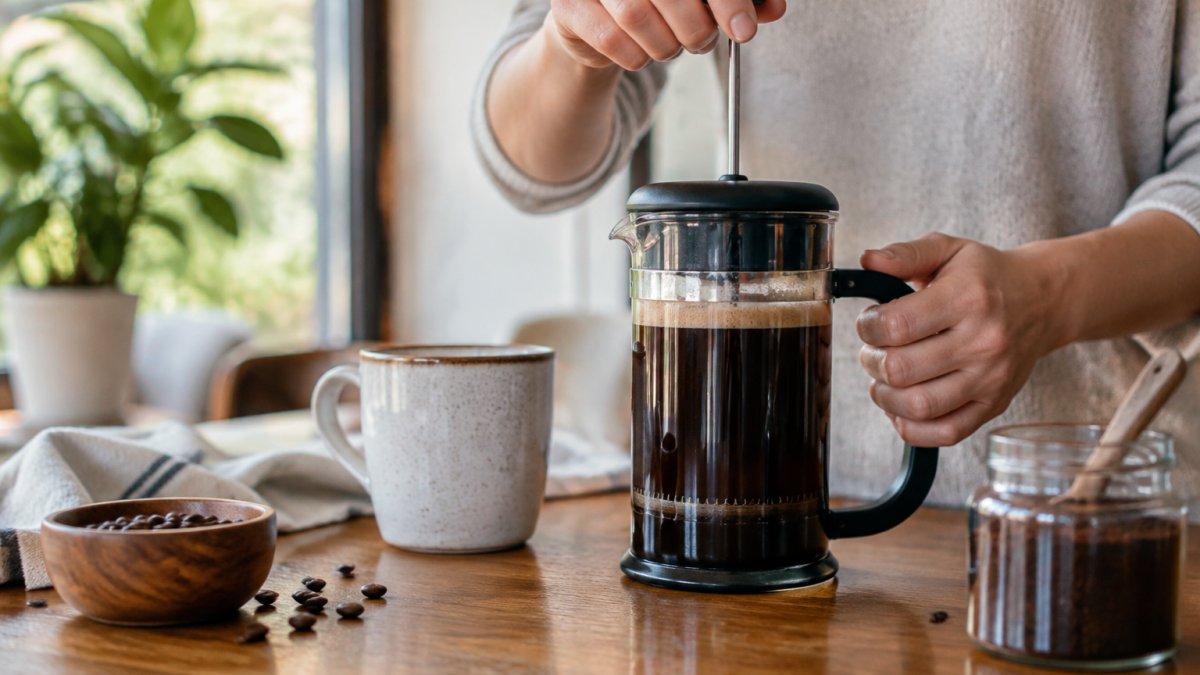
- Press slowly with steady pressure until the plunger reaches the bottom.
- Pour and serve immediately so the coffee does not keep steeping.
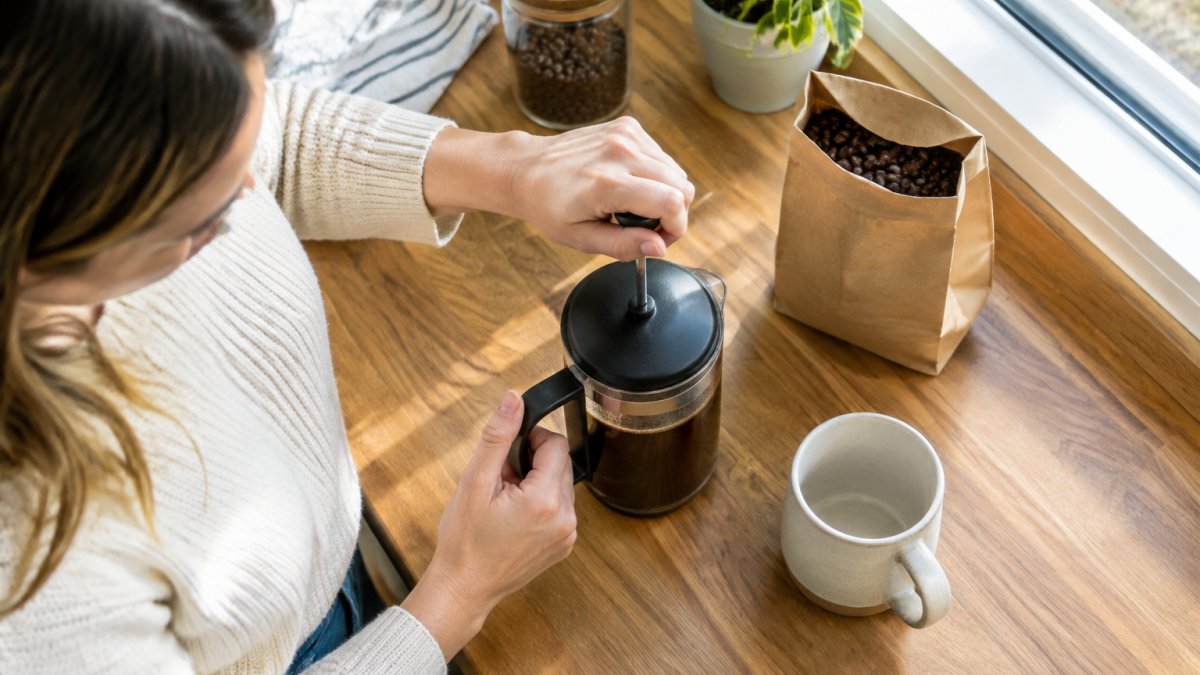
If you want to build stronger everyday habits around this method, our guide to brewing better morning coffee goes deeper into grind, water, and timing.
How Many Scoops of Coffee in a French Press
Use about 2 tablespoons of coarse ground coffee for every 6 fluid ounces of water as a starting point. That is the common scoop convention, but it is not the most reliable one. A tablespoon of coarse grounds can weigh anywhere from 5 to 7 grams depending on the bean, the roast level, and how tightly the grounds settle in the spoon. For a repeatable cup, weigh your coffee.
The standard starting ratio for a coffee press is 1:15 to 1:17 by weight, one part coffee to 15-17 parts water. A 1:15 ratio brews a stronger, heavier cup; 1:17 brews lighter and cleaner. A ratio around 1:16 is a common middle ground for a first batch, then adjust from there.
| Press Size | Water (fl oz) | Water (g) | Coffee at 1:16 (g) | Coffee (tablespoons, approx.) |
|---|---|---|---|---|
| 3-cup | 12 | 355 | 22 | 4 |
| 4-cup | 17 | 500 | 31 | 5-6 |
| 8-cup | 32 | 950 | 59 | 9-11 |
| 12-cup | 48 | 1,420 | 89 | 14-16 |
Coffee at 1:16 (g)
Press sizes are nominal. A "3-cup" press rarely holds three 8-ounce mugs; manufacturers usually rate capacity in 4-ounce cups, so a 3-cup press holds about 12 fluid ounces of usable liquid. Check the markings on your carafe or measure the water you actually pour, then use that number in the chart above rather than the box label.
If you do not own a scale, use the tablespoon column and level each scoop with the back of a knife. Keep the same spoon and the same beans for a week so your scoop becomes a consistent unit. Then change one variable at a time, one extra tablespoon, or 10 fewer grams of water, and note the result.
Watch out: do not confuse fluid ounces with weight ounces. A cup of water weighs about 8.3 ounces on a scale but measures 8 fluid ounces in a measuring cup. When a recipe gives coffee in grams, pair it with water in grams, not fluid ounces, or your ratio will drift.
Start in the middle of these ranges, then adjust the ratio up or down to match your taste. If you want to change strength without changing grind size, the ratio is the lever to pull.
How Long to Steep French Press Coffee
Steep French press coffee for four minutes before pressing the plunger. That four-minute window gives the water enough time to pull flavor and oils from the grounds without turning bitter.
A timer keeps you honest. Set it the moment the last of the water hits the grounds. If you like a stronger cup, add 30 seconds. If it tastes harsh or muddy, pull back to three and a half minutes.
Do not stir during the steep. Agitating the grounds over-extracts them and adds grit to the cup.
How to Make French Press Coffee for One
Scale the recipe down to a single serving: about 1½ to 2 tablespoons of coarse coffee for 8 to 10 ounces of water. A 3-cup press is the right size for one person.
The method stays the same. Preheat, add grounds, pour hot water, stir, steep four minutes, press slowly, and serve. Small presses heat and cool faster, so preheating matters even more here.
One tip from our kitchen: grind just before you brew. Ground coffee loses aroma quickly, and a single serving gives you no room to hide stale beans.
Troubleshooting Your Brew by Taste and Texture
Your cup tells you what went wrong. The four levers you control are grind size, coffee-to-water ratio, water temperature, and steep time. Change one at a time so you know which one fixed the problem.
- Sour, sharp, or thin: the coffee is under-extracted. Grind one notch finer, raise the water temperature toward 205°F, or add 30 seconds to the steep. If the cup is also weak, increase the dose by about 10 percent (for example, 50 g to 55 g on an 8-cup press).
- Bitter, harsh, or drying: the coffee is over-extracted. Grind one notch coarser, drop the water temperature toward 195°F, or cut the steep to 3½ minutes. If it is still bitter after that, reduce the dose slightly.
- Gritty or muddy: fine particles are passing through the mesh. Grind coarser, press more slowly and evenly, and stop pressing as soon as you feel resistance rather than forcing the plunger to the bottom.
- Watery body: increase the coffee-to-water ratio, move from 1:17 toward 1:15, before you change the grind.
- Cool cup: preheat the carafe, brew with water just off the boil, and serve immediately after pressing. A cold carafe can drop the brew temperature by 10°F or more before the steep even starts.
- Inconsistent from batch to batch: the likely culprit is scoop measurement or a burr grinder set by eye. Weigh the coffee and water for three batches in a row and compare.
A common pattern is blaming the beans when the grind is the real problem. Coarse and even is the goal; an uneven grind produces both sour and bitter notes in the same cup because some particles extract faster than others. If your grinder produces a lot of fines, sift them out with a small strainer before brewing.
One more mechanism worth knowing: coffee keeps extracting as long as it sits on the grounds. Leaving brewed coffee in the press after plunging keeps the process going and turns a balanced cup bitter within minutes. Decant the whole carafe into a mug or thermal server as soon as you finish pressing, even if you plan to drink it slowly.
If you need to change strength without touching grind size, our guide on how to adjust coffee strength walks through the options.
Cleaning, Descaling, and Filter Care
Rinse the press with hot water after every use. Coffee oils build up on the mesh and turn rancid, which taints the next batch.
- Daily: rinse the carafe and plunger, then air dry
- Weekly: wash the mesh filter with mild soap and a soft brush
- Monthly: descale the carafe with a mix of equal parts white vinegar and water, soak 30 minutes, then rinse well
Watch out: never put a glass carafe in the dishwasher unless the maker says it is safe, and never press down on an empty press. Both can crack the glass.
Find Your Perfect Roast for the Press
Medium and medium-dark roasts shine in a coffee press. They have enough body to stand up to the mesh filter and enough sweetness to stay smooth.
Our House Blend is a medium roast with a medium body and nutty, sweet chocolate notes. The Brazil Santos offers an elegant, smooth cup with cocoa notes. The Breakfast Blend is a medium roast smooth blend, and the Gourmet Donut Shop is a light-medium roast with cocoa, caramel, and toffee notes.
Want a deeper look at roast selection? Read our guide on the best coffee roast for French press, then grab a bag of our French Roast when you are ready to brew.

Brewing a great cup comes down to a coarse grind, the right ratio, four minutes of patience, and a slow press. At theITDGroup LLC, we roast each batch to order so your beans arrive fresh and full of flavor, with a fresh roast guarantee and reliable delivery to your door. Get started with theITDGroup LLC and taste the difference fresh-roasted beans make in your next press.
Frequently Asked Questions
How do you use a coffee press step by step?
Preheat the carafe with hot water, then discard it. Add coarse ground coffee, pour water heated to 195-205°F over the grounds, and stir gently to saturate them. Place the lid on with the plunger raised and steep for four minutes. Press the plunger down slowly and steadily, then pour and serve immediately.
How many scoops of coffee do you use in a coffee press?
Use about one tablespoon of coarse ground coffee per 4 fluid ounces of water. Adjust the ratio to taste: more coffee for a stronger cup, less for a lighter one. Weighing in grams gives the most repeatable results.
Should you stir coffee in a French press?
Yes, stir gently right after pouring the water. This saturates all the grounds so they extract evenly instead of clumping at the surface. Use a spoon or the handle of a wooden utensil and stir just a few times. Skip aggressive stirring, which can push fine particles through the mesh filter and leave grit in your cup.
Can you use a coffee press to make tea?
A coffee press can be used for loose-leaf tea in general. Clean the mesh filter thoroughly afterward so coffee oils do not carry over into the next cup, and use a dedicated press for tea if you brew both often.