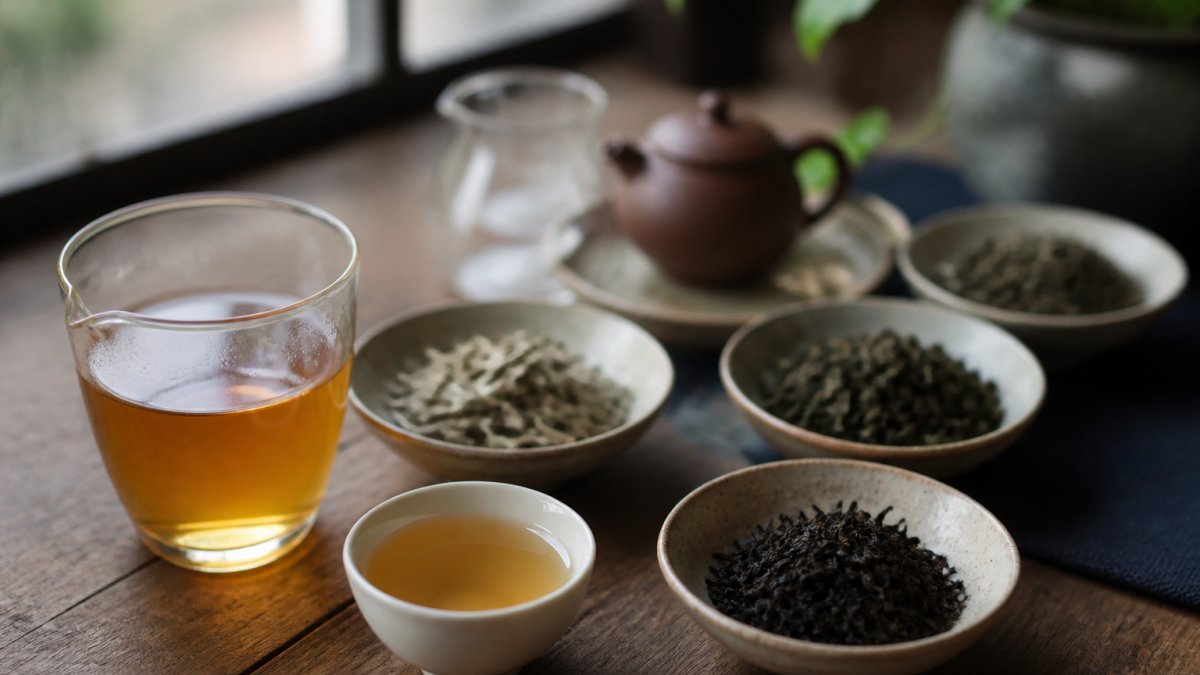
 comparison
Is Artisanal Tea Worth the Price? A 2026 Review
Table of Contents
- The Real Cost of Artisanal Tea: A 2026 Breakdown
- How to Identify High Quality Tea Before You Buy
- Cost Per Cup of Loose Leaf Tea vs. Tea Bags
- Best Ways to Brew Loose Leaf Tea for Maximum Value
- The Steeping Longevity and Storage Factor
- Five Artisanal Teas That Justify Their Price
- When Artisanal Tea Is Not Worth the Price
- Frequently Asked Questions
Last Updated: September 28, 2026
The Real Cost of Artisanal Tea: A 2026 Breakdown
Is artisanal tea worth the price? For most daily drinkers, the honest answer is yes, as long as you measure value by cost per cup and steeping longevity rather than by the price on the bag. This review from theITDGroup LLC breaks down what you actually pay for, when premium tea earns its keep, and when it does not.
The sticker shock is real. A bag of commodity tea costs less than a sandwich; a small tin of single-origin loose leaf can cost as much as a nice dinner. That gap makes people suspicious, and rightly so. But the comparison only makes sense once you convert both into cost per cup. Below, we will show you exactly how to run that math, how to spot quality before you buy, and which teas in our own lineup hold up under scrutiny.
Price vs. Quality: What the Numbers Say
Price and quality rise together up to a point, then they separate. At the low end, every extra dollar buys noticeably better leaf. Past the premium grade tier, you start paying for rarity, vintage, and story more than for what lands in your cup.
That is the diminishing returns problem in one sentence. A tea that costs twice as much is rarely twice as good. It is often 20 to 30 percent better, and for some drinkers that margin is worth every cent.
What most guides miss is that the correlation breaks down in both directions. Some expensive teas are expensive because a middleman marked them up, not because the leaf is better. Some modestly priced teas from a strong harvest season outperform pricier vintage tins that sat in a warehouse too long.
If you are coming from tea bags, expect your first loose leaf purchase to feel like a splurge. It is not. It is a change in unit economics, which we will get to shortly.
How to Identify High Quality Tea Before You Buy
You can judge most tea in about thirty seconds with your eyes and nose. High quality tea shows intact leaves, a clear aroma, and a consistent color across the batch. Broken dust and a flat, papery smell are the two clearest warning signs.
Reading the Leaf: Whole Leaf vs. Fannings
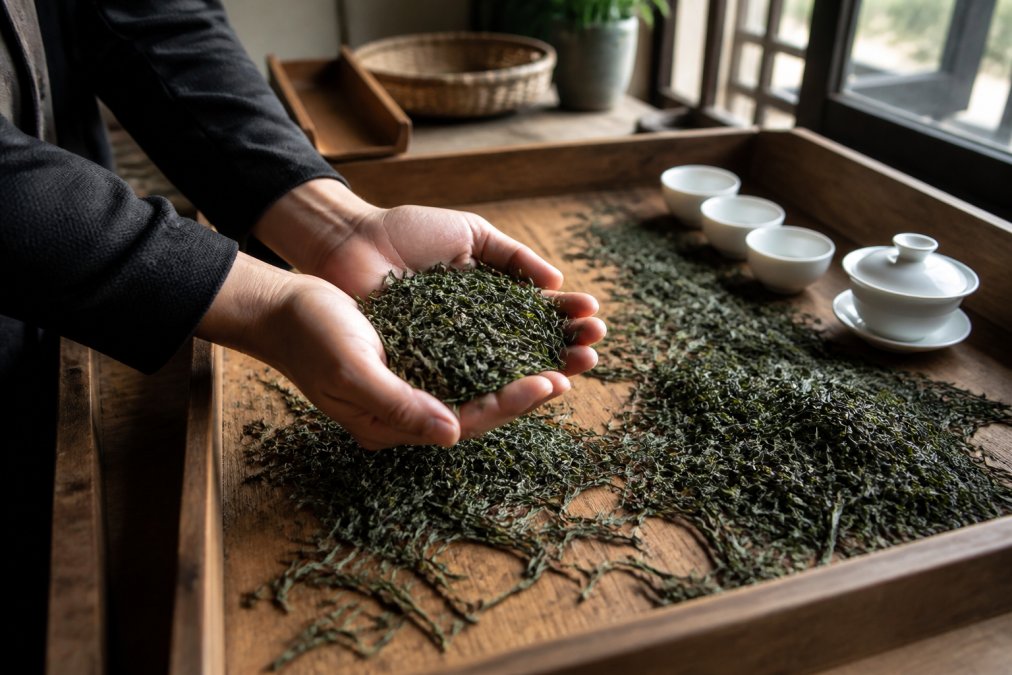
Whole leaf tea is tea that has been kept largely intact through processing, so the leaf unfurls slowly and releases flavor across multiple steepings. Fannings are the tiny broken fragments left over after sorting, and they are what fills most commercial tea bags.
The practical difference is extraction speed. Fannings give up everything in one steep, which is why a tea bag turns bitter if you walk away from it. Whole leaf releases flavor gradually, which gives you a wider window to get the brew right and more than one cup from the same leaves.
A quick test at the store: squeeze the bag or tin through the packaging. If it feels like dust, it is dust.
Terroir, Harvest Season, and Processing Method
Terroir is the combined effect of soil, altitude, and climate on a tea's flavor, and it is the reason two teas from the same cultivar can taste completely different. A high-altitude garden drains well and grows leaf slowly, which concentrates flavor. A lowland garden grows fast and produces thinner, flatter cups.
Harvest season matters just as much. First-flush leaves are tender and bright. Later flushes are fuller and more astringent. Neither is better in the abstract; they suit different palates.
Processing method decides the category. Oxidation levels separate green from oolong from black, and a skilled hand at the withering and rolling stages can rescue a mediocre harvest or ruin a great one. This is where handcrafted tea separates itself from commodity tea: the labor is the product.
Cost Per Cup of Loose Leaf Tea vs. Tea Bags
Loose leaf tea usually wins on cost per cup, and it is not close once you account for re-steeping. A single serving of whole leaf can produce three to five good steeps, while a tea bag gives you one.
Run the math yourself. Weigh out your normal serving, note the price per gram, and divide by the number of steeps you actually get. Most drinkers who do this exercise find their loose leaf habit costs less per cup than the tea bags they were buying.
| Factor | Loose Leaf | Tea Bags |
|---|---|---|
| Leaf form | Whole leaf | Fannings and dust |
| Steeps per serving | 3 to 5 | 1 |
| Flavor development | Gradual, layered | Fast, flat |
| Best for | Daily ritual, gongfu brewing | Convenience, travel |
The catch is that you have to actually re-steep. If you brew once and toss the leaves, you have paid premium prices for a single cup and lost the entire advantage.
Best Ways to Brew Loose Leaf Tea for Maximum Value
The best ways to brew loose leaf tea for value come down to three variables: dose, temperature, and time. Get those right and a mid-priced tea will outperform a careless brew of something twice as expensive.
Start with a ratio of roughly 2.5 grams of leaf per 12 ounces of water, then adjust to taste. Water that is too hot scorches green and white teas and turns them bitter.
Steeping Longevity: Getting More Steeps from One Serving
Steeping longevity is the number of times a serving of leaf can be re-brewed before the flavor collapses, and it is the single most underrated value metric in tea. Whole leaf teas with intact structure hold up longest. Fannings and powders give you one shot.
The Steeping Longevity and Storage Factor
Storage decides whether your expensive tea keeps its value or quietly loses it. Tea is sensitive to light, heat, moisture, and odors, and it will absorb whatever is nearby in your kitchen.
Five Artisanal Teas That Justify Their Price
The clearest way to answer whether artisanal tea is worth the price is to look at specific teas and ask what each one delivers for the money. Five from theITDGroup LLC's lineup make the case well.
| Tea | Character | Steeps Well | Best For |
|---|---|---|---|
| Jasmine | Sweet, silky, fruity | Yes, multiple | First loose leaf purchase |
| Matcha | Refined, lingering | Single preparation | Mindful daily ritual |
| Hojicha | Toasted, umami, smooth | Yes | Beginners, evening cups |
| Earl Grey | Orange, floral, malt | Yes | Milk and sugar drinkers |
| Moroccan Mint | Bright, minty, crisp | Yes | Iced tea, hot afternoons |
When Artisanal Tea Is Not Worth the Price
Artisanal tea is not worth the price when you will not use the leaf well. If you brew once, dump the leaves, and drink it scalding with a heavy hand of sugar, you are paying for nuance you will never taste.
Frequently Asked Questions
What does 'artisanal tea' actually mean?
Artisanal tea refers to tea that is produced in small batches using traditional, handcrafted methods rather than industrial machinery. This includes hand-plucking, careful oxidation control, and small-batch processing. The result is a leaf with more intact structure, complex flavor profiles, and often a higher price point. It is not a regulated term, so the presence of detailed tasting notes, single-origin labeling, and harvest season information are better indicators of quality than the word 'artisanal' alone.
How does processing affect the price of loose leaf tea?
Processing method has a direct impact on cost. Hand-rolled or hand-shaped leaves require more labor hours than machine-cut fannings. Oxidized teas like black and pu-erh go through additional stages that take time and skill. Roasted teas such as hojicha demand precise temperature control to avoid bitterness. Each extra step adds to the final price, but it also builds the flavor profile, aroma, and mouthfeel that commodity tea cannot match.
Does loose leaf tea provide more value per cup than tea bags?
Yes, when you calculate cost per cup. A 2.5g serving of loose leaf tea from a $22.99 pouch can yield multiple steepings, especially for green and oolong varieties. Tea bags often contain fannings, which release flavor quickly but rarely support a second steep. Over a month of daily drinking, the cost per cup of loose leaf tea can be lower than premium bagged options, and the sensory experience is noticeably different.
Are expensive teas actually healthier than budget options?
Price does not guarantee better health outcomes. What matters is the leaf itself. Whole leaf teas retain more of the compounds associated with tea's benefits because the leaf structure is intact. Fannings and dust in commodity bags may have lower concentrations of those compounds. However, a $22.99 pouch of artisanal tea and a $5 box of bags can both deliver antioxidants. The difference is in the quantity of leaf used and how well it steeps.
How can I tell if artisanal tea is worth the price before I buy?
Look for specific markers: a named cultivar, a harvest season, a processing method, and detailed tasting notes covering aroma, mouthfeel, and aftertaste. Teas that list origin and elevation are more likely to justify a higher price. If a product only says 'premium' without any of those details, the sticker shock may not be backed by quality. Start with a single-origin tea like a jasmine or matcha and compare it side by side with your usual bag.