 comparison
Pour Over vs Drip Coffee Taste: Which Brew Wins?
Last Updated: November 1, 2026
Quick Summary
Pour over vs drip taste differs in clarity and body: pour over gives a clean, bright, layered cup with distinct acidity and sweetness, while drip delivers a full-bodied, rounded cup that stands up to milk. Choose pour over for flavor nuance and drip for speed, consistency, and households.
- Pour over takes 3-4 minutes hands-on; drip takes 6-8 minutes unattended.
- The ideal water temperature range is roughly 195°F to 205°F at the point of contact with the grounds.
- Start at a 1:16 coffee-to-water ratio by weight, about 18 grams of coffee to 300 grams of water.
- Pour over uses one paper filter per cup; drip uses one filter per batch.
- Light and medium-light roasts shine in pour over, while medium and medium-dark roasts suit drip.
Table of Contents
- Pour Over vs Drip Coffee Taste: The Quick Comparison
- What Pour-Over Coffee Taste Actually Delivers
- Drip Coffee Taste: Consistent, Full-Bodied, Familiar
- Coffee Grind Size for Pour-Over and Drip Machines
- Pour-Over vs Drip Coffee Brewing Time and Temperature Control
- Water-to-Coffee Ratio, Cost, and Environmental Impact
- Troubleshooting Bitter, Sour, or Weak Cups in Both Methods
- Find Your Perfect Roast for Either Brew Method
- Frequently Asked Questions
Pour Over vs Drip Coffee Taste: The Quick Comparison
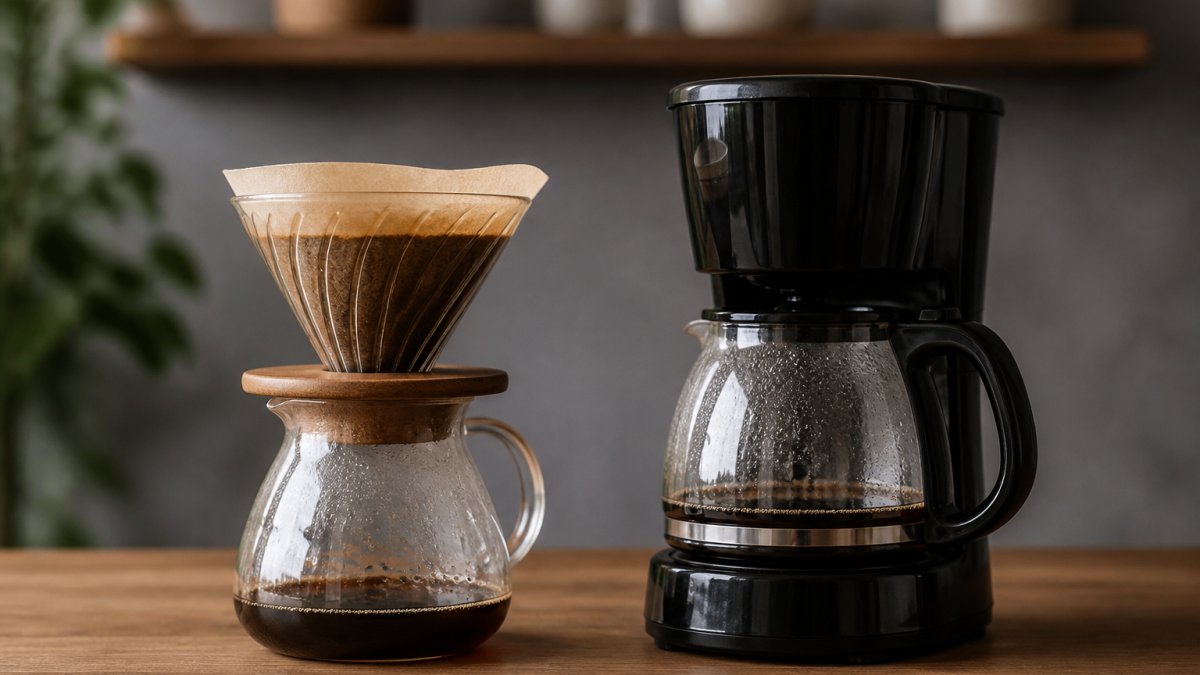
Pour over vs drip comes down to control. Pour over brewing gives you command over every variable, so the cup in front of you is exactly the cup you intended. Drip machines trade that control for speed and repeatability. At theITDGroup LLC, we roast beans for both methods, and the honest answer is that the method matters less than the freshness of what goes in the basket. Below, we break down flavor, grind size, brew time, and cost so you can pick the right setup for your counter.
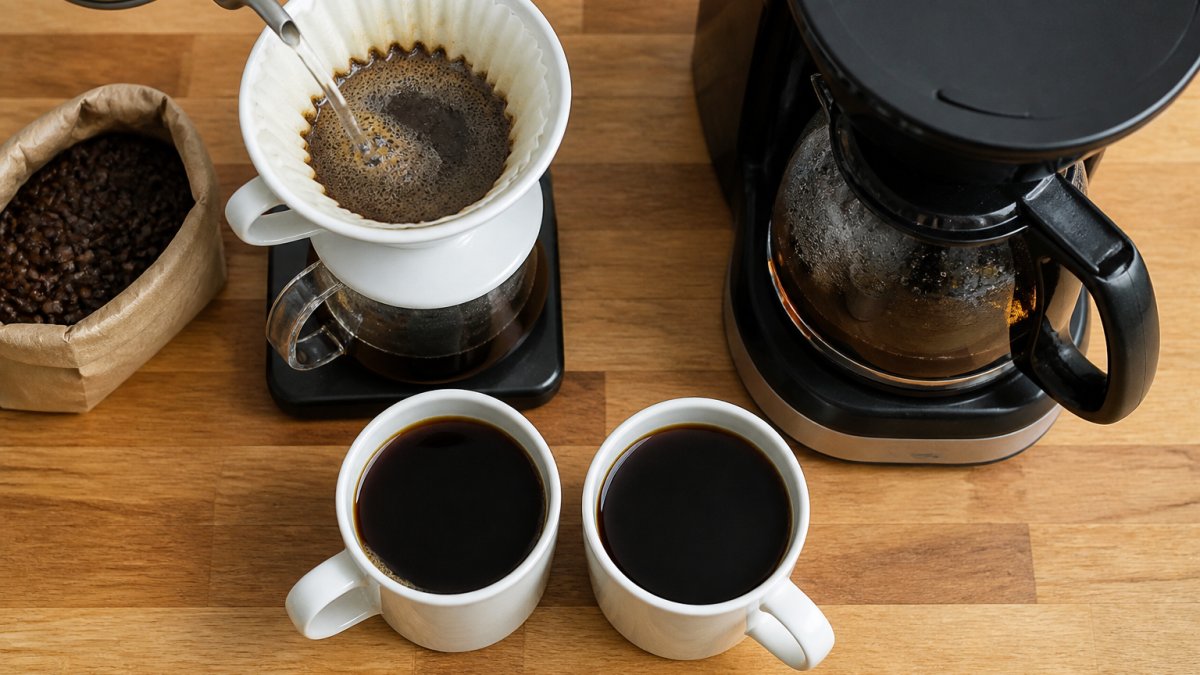
The short version: if you drink coffee black and care about flavor nuance, pour over suits you. If you add milk, brew for a household, or need coffee quickly, drip is the practical choice.
| Factor | Pour Over | Drip Machine |
|---|---|---|
| Flavor profile | Clean, bright, layered | Full-bodied, rounded |
| Control | Full: flow rate, temperature, timing | Limited to grind and ratio |
| Time per cup | 3-4 minutes hands-on | 6-8 minutes unattended |
| Consistency | Depends on your technique | Repeatable batch to batch |
| Cost over time | Low equipment cost, paper filters | Higher upfront, lower per batch |
| Best for | Single cups, flavor exploration | Households, mornings, travel mugs |
What Pour-Over Coffee Taste Actually Delivers
Pour-over coffee taste is defined by clarity. Water passes through the coffee bed once, at a controlled rate, and exits through a paper filter that traps sediment and much of the oil. The result is a cup where acidity and sweetness read as distinct notes rather than blending into one flavor.
That single-pass method, called percolation, is why a light-roasted bean tastes different here than anywhere else. You get the vibrant top notes: dried orange, berry, floral aromas. The clean finish lingers without the coating sensation that heavier brews leave behind.
The trade-off is that pour over punishes carelessness. A slow pour, a stale grind, or water that is too hot all show up in the cup. If you want to taste what a single-origin bean is actually made of, this is the method that tells the truth. How to Brew Pour-Over Coffee at Home: Step-by-Step walks you through making it yourself.
Drip Coffee Taste: Consistent, Full-Bodied, Familiar
Drip coffee taste is rounder and heavier, with the body turned up and the sharp edges softened. Automatic drip brewers saturate the grounds evenly and steep them slightly longer, which pulls more of the coffee's oils and tannins into the carafe.
That is not a flaw. It is why drip coffee stands up to milk, cream, and sugar without disappearing. The bitterness that gives a cup backbone is the same bitterness that cuts through a splash of half-and-half.
Consistency is the other advantage. A machine heats water to a set temperature, delivers it at a steady flow rate, and repeats the same performance tomorrow. Manual brewing depends on your hands being awake. For a household brewing a full carafe before work, that reliability matters more than any flavor note.
Coffee Grind Size for Pour-Over and Drip Machines
Pour-over and drip brewers call for different grind sizes: pour over generally uses a finer grind than drip, because the flow rate through the bed decides how much flavor reaches the cup. This difference is not cosmetic. Grind size controls how fast water moves through the bed, and that flow rate decides how much flavor ends up in your cup.
Too fine in a pour over and the water stalls, over-extracting into bitterness. Too coarse and it rushes through, leaving a sour, thin cup behind. Drip machines are more forgiving but still punish a grind that is far off.
If you want the deeper method-by-method breakdown, read our full guide to the best grind size for pour over coffee.
Pour-Over vs Drip Coffee Brewing Time and Temperature Control
Pour-over vs drip coffee brewing time splits into two different kinds of waiting. Pour over takes about three to four minutes of active attention: a 30-to-45-second bloom, then pulses of water every 30 to 45 seconds, then the final drawdown. Drip takes six to eight minutes from switch-on to carafe, but you can walk away for all of it. The hands-on time is the real difference, pour over asks for your attention, drip asks only for your patience.
Temperature control is where the methods truly separate, and it is worth understanding the mechanism. The Specialty Coffee Association's brewing standards put the ideal water temperature range at roughly 195°F to 205°F (90.5°C to 96°C) at the point of contact with the grounds. A gooseneck kettle with a thermometer or a variable-temperature setting lets you hit a target and hold the pour steady, so you can drop to 195°F for a dark roast or push to 205°F for a light one.
With pour over, buy a kettle with a thermometer and remove the guesswork entirely. The Specialty Coffee Association's brewing standards are the reference point most roasters and equipment makers design around, and they are worth reading once if you want to understand why the numbers above matter.
A practical temperature checklist for each method:
| Control point | Pour Over | Drip Machine |
|---|---|---|
| Target water temp | 195°F-205°F at the bed | 195°F-205°F at the showerhead |
| How you set it | Kettle thermometer or preset | Machine thermostat (fixed on most models) |
| Common failure | Pour too fast, temp drops | Heater cycles outside range |
| Fix | Slow the pour, preheat the dripper | Preheat carafe, choose a machine rated for steady temp |
Water-to-Coffee Ratio, Cost, and Environmental Impact
Precision starts with the ratio, and the two methods demand different levels of it. The widely used starting point in specialty coffee is 1 gram of coffee to 16 grams of water, roughly 1:16 by weight. For a standard 10-ounce mug, that means about 18 grams of coffee (a heaping tablespoon and a half) to 300 grams of water. Pour over rewards this precision because you control every gram going into the dripper.
Here is where the methods diverge in practice:
| Ratio lever | Pour Over | Drip Machine |
|---|---|---|
| Typical starting ratio | 1:16 by weight | 1:16 to 1:18 by volume |
| Measurement tool | Digital scale | Scoop and carafe line |
| Adjustment granularity | 1 gram | Roughly 1 scoop |
| Best for dialing in | Single cups, single origins | Full carafes, blends |
A common pattern is to start at 1:16, taste, then nudge toward 1:15 for more body or 1:17 for more clarity. Pour over lets you make that adjustment cup by cup. A drip machine makes you commit to a whole batch, so dial in your scoop once and leave it.
Per batch, drip is cheaper to run because one filter covers a full carafe and the machine does the work. Per cup, pour over is cheaper on equipment but consumes a filter every time.
Pour over generates one paper filter per cup, though compostable and reusable stainless mesh filters exist and cut that waste to near zero. Drip machines use one paper filter per batch, so waste per cup drops as batch size grows, a full 12-cup carafe spreads one filter across a dozen cups.
Troubleshooting Bitter, Sour, or Weak Cups in Both Methods
Bitterness means over-extraction: the grind is too fine, the water too hot, or the brew time too long. Sourness means under-extraction: too coarse, too cool, or too fast. Weakness usually means too little coffee for the water, not a broken method. Learn how to adjust coffee strength without changing grind size.
Work through one variable at a time. Adjust grind size first, then water temperature, then ratio. Changing all three at once tells you nothing.
Find Your Perfect Roast for Either Brew Method
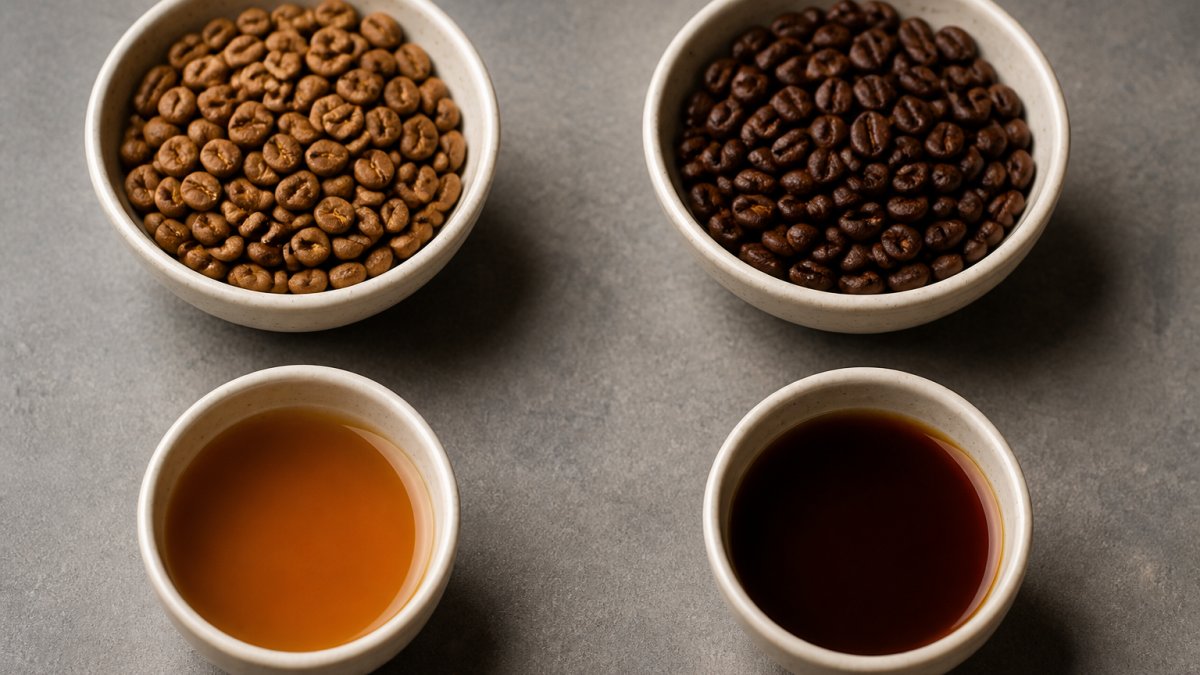
Roast level changes how each method performs. Light and medium-light roasts shine in pour over, where clarity lets their fruit and floral notes through. Medium and medium-dark roasts suit drip, where body and chocolate notes carry the cup.
Our single-origin lineup is roasted to order, so the beans arrive fresh enough to reward either method:
- Ethiopia Natural ($23.99): medium-light, with milk chocolate, fruity, and caramel notes. Our pick for pour over.
- Colombia ($23.99): medium, with dried orange, berry, and chocolate. Balanced across both methods.
- Costa Rica ($23.99): medium, with sweet apple, raisin, and honey. A crowd-pleaser in the drip machine.
- Guatemala ($23.99): medium, with dark chocolate, bright fruit, and butterscotch. Excellent as a full carafe.
- Honduras ($23.99): medium-dark, with caramel, spice, and brown sugar. Built for milk and drip brewing.
Frequently Asked Questions
What is the difference between drip coffee and pour-over coffee?
The difference is in control. A drip machine heats water, releases it at a fixed flow rate over a basket of grounds, and keeps the finished coffee warm on a hot plate. Pour over is manual brewing: you heat the water yourself, pour it in stages with a gooseneck kettle, and manage the bloom and total brew time. That hands-on control gives pour over more room to shape extraction, while drip trades that control for repeatability and speed.
How does pour-over coffee taste compared with drip coffee?
Pour-over coffee taste tends to read cleaner and brighter, with more acidity and defined fruit or floral notes, because the paper filter traps sediment and coffee oils. Drip coffee taste is fuller and rounder, with more body and sweetness, since the machine saturates the grounds evenly and some oils reach the cup. Neither is better in absolute terms. If you drink single-origin beans and want the tasting notes to stand out, pour over shows them off; if you want a smooth, rich cup you can drink on autopilot, drip delivers.
Does pour-over coffee taste better than drip coffee?
Not automatically. Pour over rewards fresh beans, a consistent grind, and a steady pour. Skip those and you get a thin or sour cup that tastes worse than a decent drip brew. A drip machine with a thermal carafe and good water temperature produces a consistent, full-bodied cup with almost no effort. The method that tastes better is the one you will actually use correctly every morning with the beans you buy.
Can you use regular ground coffee to make pour-over coffee?
You can, but the result suffers. Standard pre-ground coffee is usually milled for drip baskets, which is coarser than the medium-fine coffee grind size for pour-over needs. Too-coarse grounds let water pass through too fast, so the cup tastes weak and sour. If pre-ground is your only option, extend the bloom to about 45 seconds and pour slower to increase contact time. Better results come from grinding whole beans just before brewing.
How long does drip coffee take compared with pour over?
Pour-over vs drip coffee brewing time is the clearest practical split. A drip machine takes roughly 5 to 10 minutes including heating, then holds the pot warm. A pour over takes about 3 to 4 minutes of active brewing plus kettle heating time, and you have to stand there for it. Drip wins on multitasking; pour over wins on total hands-on control of extraction.
The real challenge is not choosing a method. It is finding beans fresh enough that the method actually matters. theITDGroup LLC roasts every batch to order, sources single-origin beans from smallholder farms, and ships them to your door so the first cup tastes like the roaster intended. Get started with theITDGroup LLC and taste the difference freshness makes in your pour over or drip brewer.